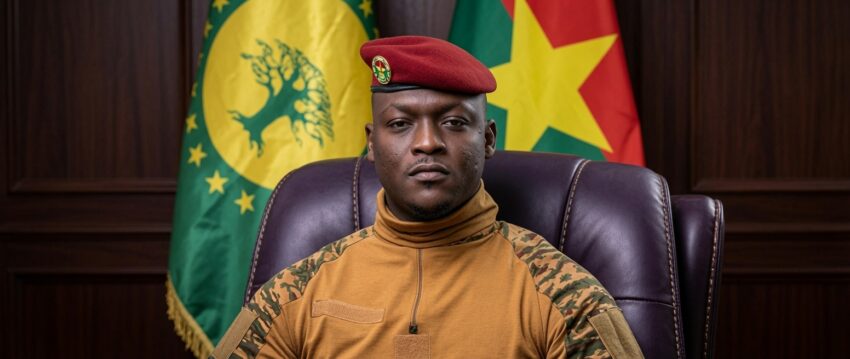
From Moscow to Ankara: Burkina Faso scrambles for a viable military lifeline
The political winds in Ouagadougou have shifted dramatically. Following the breakdown of its Russian military partnership, Burkina Faso’s military junta is now making urgent diplomatic overtures to Türkiye, desperate to secure defense and security support that could halt its worsening insurgency crisis. This sudden pivot reflects a harsh truth: the Kremlin’s promises of rapid stabilization have failed to materialize, leaving the landlocked nation exposed to mounting violence that shows no signs of abating.
The stark contrast between diplomatic rhetoric and battlefield reality has forced Burkina Faso’s leadership into an uncomfortable reckoning. While Moscow once promised an expedited campaign against armed groups, the country’s security vacuum continues to widen, endangering civilian lives, disrupting local economies, and pushing the nation deeper into instability. It is against this backdrop that Ankara has emerged as a critical prospective partner—one that could determine whether Burkina Faso stabilizes or descends further into chaos.
Why the Russian partnership failed to deliver on security promises
The Burkina Faso junta’s 2023 strategic realignment toward Russia was intended to reverse years of insurgent gains and restore state control. Yet despite receiving military hardware and advisory support, the country’s security situation has deteriorated. Terrorist attacks remain frequent, key regions remain under blockade, and the national armed forces struggle to regain territorial dominance.
Military analysts point to several systemic weaknesses exposed in the Russian collaboration:
- Logistical bottlenecks: Delivery delays and maintenance issues have left much of the advanced weaponry inoperable, crippling the junta’s operational capacity.
- Tactical limitations: The Russian model, optimized for conventional warfare, proved ill-suited to address the fluid, decentralized tactics used by Sahelian insurgent groups.
- Political fallout: The partnership alienated long-standing Western partners, reducing access to non-lethal aid, intelligence sharing, and development funding that once complemented national security efforts.
With public confidence eroding and no foreseeable end to the violence, Burkina Faso’s transitional government now faces a stark choice: double down on a failed strategy or seek a new ally capable of delivering tangible results.
Türkiye’s drones and diplomatic pragmatism: A potential game changer?
Ankara’s reputation as a pragmatic global player—and its proven track record of exporting robust defense systems—has made it a prime candidate to fill Burkina Faso’s widening security gap. During bilateral talks in Ankara, Burkinabe officials explicitly highlighted their need for immediate, actionable military support, including:
- Combat drones: Türkiye’s Bayraktar TB2 UAVs have been deployed successfully in conflict zones across the Sahel and the Horn of Africa, offering long-range reconnaissance and precision strike capabilities.
- Counterinsurgency training: The Turkish Armed Forces provide specialized programs tailored to Sahelian terrain, focusing on small-unit tactics and rapid response protocols.
- Short-term security guarantees: Ankara has signaled willingness to deploy Turkish military advisors and peacekeeping personnel to support Burkinabe troops in hotspots, pending long-term institutional reforms.
The junta’s delegation, led by Ambassador Hermann Yirigouin Toé, framed the appeal as a call for international solidarity—but in practice, it amounts to a plea for survival. Without urgent external intervention, Burkina Faso risks losing control of vast rural areas to armed groups, further destabilizing regional security and triggering a humanitarian catastrophe.
The cost of ideological rigidity: Lessons from a failed foreign policy
Burkina Faso’s turn toward Türkiye underscores the dangers of rigid alignment with a single foreign patron. The junta’s earlier shift from Western partners to Russia was driven by ideological opposition to perceived neo-colonial influence. Yet this move not only failed to curb insurgent violence but also triggered economic and diplomatic isolation.
Now, the failure of the Russian alliance has forced a pragmatic retreat. While the junta insists it is pursuing a balanced foreign policy, its desperate outreach to Ankara reveals its strategic miscalculations. The contrast between sovereignist rhetoric and pragmatic dependence exposes a leadership caught between ideology and reality—one that must now accept foreign military support as the price of avoiding state collapse.
As neighboring Sahel states watch closely, Burkina Faso’s trajectory highlights a crucial lesson: no nation can afford to neglect security imperatives in favor of geopolitical posturing, especially when armed groups continue to exploit state weaknesses.
What’s next for Burkina Faso’s security future?
While a Turkish-Burkinabe defense pact could provide temporary relief, long-term stability will require more than foreign firepower. The junta must address root causes of instability—weak governance, poor local integration, and unaddressed socioeconomic grievances—while rebuilding trust with regional partners.
Yet time is not on Ouagadougou’s side. With every delayed operation, insurgents gain ground; with every missed deadline, international patience wears thin. The next few months will be critical in determining whether Burkina Faso can regain control—or whether it becomes another cautionary tale of failed statecraft in the Sahel.
The message from Ankara is clear: support is available, but conditional on real security reform. The junta now faces the ultimate test—choosing between further delay and decisive action before its options vanish entirely.