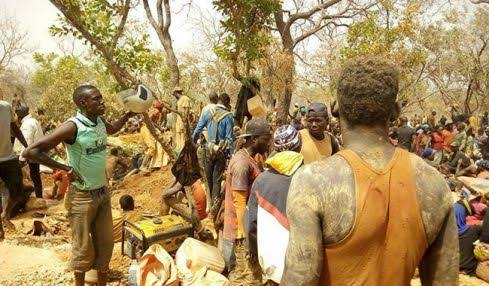
When the only escape from a homeland ravaged by terror and dictatorship leads to brutal repression half a century away, young Burkinabè gold miners are trapped in a cycle of displacement, exploitation, and hopelessness they never imagined. Months after fleeing a collapsing Burkina Faso, they now find themselves hounded out of Guinea’s unregulated mining pits with nothing but shattered dreams and empty pockets.
From Terror to Exile: Burkina Faso’s Youth Seeks Safety Beyond Its Borders
The decision to abandon home is never made lightly, especially when survival itself hangs in the balance. In Burkina Faso, the collapse of state authority and the rise of terrorist violence have left rural communities isolated, towns under siege, and countless young people with no future. Forced conscription by armed groups, arbitrary arrests, and daily threats have pushed thousands of men—many barely out of their teens—onto the dangerous roads of migration, hoping to reach the relative calm of neighboring West African nations.
Guinea, with its gold-rich regions in the north, presented itself as a lifeline. Reports of opportunity in Siguiri’s artisanal mines circulated quickly among communities cut off from formal work. While the Guinean state struggled with its own governance challenges, the informal gold sector offered a semblance of income where none existed at home. But what began as a desperate gamble has now turned into a nightmare of unprecedented scale.
Guinea’s Crackdown Leaves Miners Without Shelter or Support
The turning point came last week when Guinean security forces launched a sweeping operation targeting illegal mining sites across Siguiri, particularly in Kouremalé, Djatéla, and Bouré-Kourda. Bulldozers demolished makeshift shelters, excavators flattened entire mining zones, and security personnel dismantled camp economies built over years. The stated goal: to enforce environmental and regulatory compliance. The human cost: hundreds of Burkinabè miners, already living on the edge, were suddenly stripped of their only source of income.
Without legal protections, work permits, or even basic safety nets, these miners had no recourse. Images emerged of families packing their few belongings into overcrowded buses and taxis, heading back toward Burkina Faso—only to return to a country still torn by violence and economic ruin. Many are now stranded in border towns, unable to afford transport, without access to food, water, or medical care.
Local communities in Siguiri, initially welcoming, have grown weary of hosting displaced foreigners with no means of integration. Tensions have risen as scarce resources strain further, and resentment toward Burkinabè miners—branded as ‘illegal aliens’ and ‘gold thieves’—has intensified.
No Exit, No Return: The Vicious Cycle of Stateless Survival
The plight of these young miners exposes a deeper systemic failure—one that transcends borders and regimes. Burkina Faso’s military rulers have failed to secure their people or restore governance. The Economic Community of West African States (ECOWAS), once seen as a democratic bulwark, now appears powerless to mediate or sanction the junta effectively. Meanwhile, neighboring countries like Guinea are prioritizing short-term enforcement over humanitarian solutions, leaving young migrants marooned in legal limbo.
Humanitarian organizations report rising cases of malnutrition, child labor, and sexual exploitation in makeshift camps along the Burkina Faso–Guinea border. Women and children, once caretakers of families, now beg or sell small trinkets to survive. Older miners, some with mining-related injuries, wander the streets of border cities like Ferkessédougou, hoping to find work that will never materialize.
Without a coordinated regional response—one that includes legal pathways, safe repatriation options, and protection for migrants—the cycle of abandonment will continue. Each destroyed mining camp in Guinea pushes more youth back into the arms of recruiters for armed groups in Burkina Faso, where the illusion of income and ‘protection’ is tragically alluring.
What Future for a Generation Left Behind?
The tragedy isn’t just in the numbers—though they are staggering. It’s in the stories: the 22-year-old miner who left Ouagadougou after his brother was executed by armed men; the 19-year-old woman who was assaulted while working in a pit and now carries the scars of both violence and displacement; the family of five that fled to Kouremalé only to watch their shelter burned to the ground.
Governments in the region must stop treating these young people as threats to be expelled. Instead, they must recognize them as victims of a failure of leadership across West Africa. Diplomacy, humanitarian corridors, and regional investment in job creation—not repression—are the only ways to break this cycle. Until then, the road from Burkina Faso to Guinea will remain a one-way ticket to despair, and the death of the dream of safety.
For now, the next wave of young miners is already preparing to leave Ouagadougou. And the cycle turns once more.