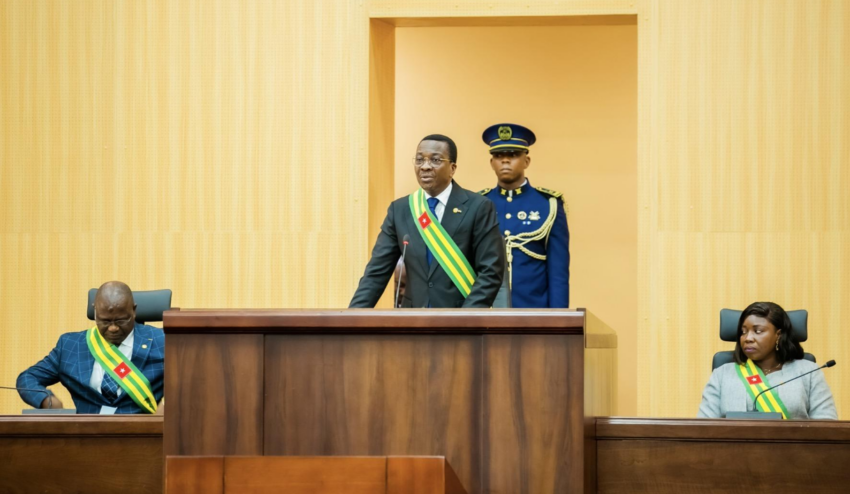
The government of Togo is once again under scrutiny from the Economic Community of West African States (ECOWAS) as regional legal authorities push for clarity on the controversial 2024 constitutional reforms. Nearly nine months after a landmark ruling by the ECOWAS Court of Justice, Lomé has been formally asked to demonstrate the concrete steps taken to align its institutional changes with democratic principles.
ECOWAS court reopens constitutional review, citing persistent violations
In a letter dated October 23, 2026, addressed to Togo’s Minister of Justice, the Acting Chief Registrar of the ECOWAS Court, Dr. Ousmane Diallo, requests detailed information on measures implemented to comply with the January 29, 2026 judgment (Case No. ECW/CCJ/JUD/01/26). This ruling found Togo in breach of Article 23 of the African Charter on Democracy, Elections, and Governance, which requires member states to protect democratic institutions and processes.
The case was brought by the Togolese Human Rights League (LTDH) and twelve other civil society petitioners. While the Court did not invalidate the 2024 Constitution, it emphasized that future reforms must comply with international democratic standards. The latest communication is a formal reminder that those obligations remain unmet, raising concerns about Togo’s commitment to regional legal authority.
From presidential power to parliamentary control – a shift in form, not substance
Togo’s constitutional overhaul, which took effect in March 2024, replaced the presidential system with a parliamentary one. Executive authority was transferred to a newly created office, the President of the Council of Ministers—effectively consolidating power under a different title. Faure Gnassingbé, who has led Togo since 2005 following in the footsteps of his father, who ruled from 1967 to 2005, was appointed to this role in May 2025 based on parliamentary majority.
Critics argue that while the institutional structure has changed, the concentration of power has not diminished. Opposition groups and civil society organizations contend that the reform was engineered to bypass term limits and maintain centralized control without subjecting leadership to a direct popular vote. The ECOWAS ruling calls into question whether Togo’s reforms genuinely advance democratic governance or merely formalize longstanding authoritarian practices.
Regional alliances cast shadow over ECOWAS commitments
Togo’s diplomatic alignment with the military-led regimes of the Alliance of Sahel States (AES)—Mali, Burkina Faso, and Niger—has intensified speculation about its evolving political priorities. Both Lomé and the AES governments emphasize national sovereignty, resistance to external influence, and rejection of regional institutional norms. While Togo remains a member of ECOWAS, its growing ties with juntas that have openly challenged the organization’s democratic principles create a paradox in its regional engagement.
Officials in Lomé justify the rapprochement as a pragmatic effort to foster stability and mediate between opposing blocs within the regional bloc. Yet, the convergence on issues such as power centralization, suppression of dissent, and restricted political space raises questions about Togo’s long-term commitment to democratic governance as defined by ECOWAS. If Lomé continues to embrace alliances that reject shared democratic values, its influence within the regional body—and the credibility of its constitutional reforms—could erode further.
What’s at stake: democratic credibility on the regional stage
The ECOWAS Court’s renewed demand for accountability comes at a pivotal moment for West Africa. As military juntas consolidate control in neighboring countries and democratic standards face increasing pressure, Togo’s response will be closely watched. The government’s obligations extend beyond legal compliance—they reflect broader choices about institutional legitimacy, public trust, and Togo’s role as a member of a rules-based regional community.
Faure Gnassingbé now faces a defining test: Will his administration use this moment to reinforce democratic institutions and restore public confidence, or will it double down on a governance model that prioritizes power retention over transparency and accountability? The answers could reshape the country’s political trajectory and determine whether Togo remains a credible advocate for regional democracy—or becomes another example of institutional reform that serves merely to entrench authoritarian rule.
Key implications for Togo’s future
- Institutional credibility: Failure to respond substantively to ECOWAS could undermine Togo’s standing in regional forums and erode trust in its judiciary and electoral processes.
- Domestic legitimacy: Civil society groups and opposition parties are already mobilizing to demand clarity, potentially escalating pressure for broader reforms.
- International perceptions: Togo’s shifting alliances and ambiguous stance on democratic norms risk marginalizing it within ECOWAS and complicating future cooperation.