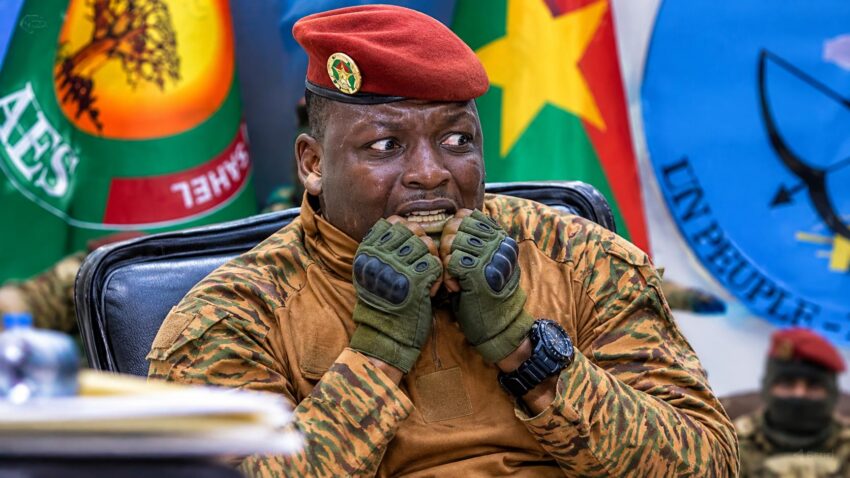
Ibrahim Traoré’s diplomatic pivot toward Russia has long been presented as a bold assertion of Burkina Faso’s sovereignty. Yet his abrupt absence from the Russia-Africa Summit is now casting a shadow over the very cohesion of his transitional government. Sources within the presidential inner circle suggest the decision may stem from security threats raising pressing questions about the stability of Traoré’s leadership and the fragility of his alliances.
From geopolitical showmanship to internal alarm
For months, Traoré cultivated a resolute image through selective alliances with Moscow, positioning himself as a counterweight to former colonial and Western partners. The partnership was framed not only as diplomatic necessity but as a triumph of sovereign decision-making, leveraging Russia’s military and economic engagement to bolster Burkina Faso’s self-reliance.
However, the optics of strength conceal growing unease among those once considered his closest confidants. Recent intelligence from insiders indicates Traoré’s decision to stay away from Moscow is driven by fears of a planned insider attempt to destabilize his rule during his absence particularly from a senior military figure once regarded as a trusted ally.
The propaganda paradox: self-inflicted vulnerabilities
Traoré’s leadership has thrived on a narrative of bold sovereignty: challenging entrenched external dependencies, resisting foreign pressures, and rallying public sentiment with defiant rhetoric. This carefully curated image was amplified through state-aligned media and social platforms, reinforcing a perception of unyielding authority.
But critics argue that such centralized messaging while politically expedient has come at a cost. Public discourse has prioritized symbolic resistance over tangible delivery: security challenges persist, humanitarian conditions remain dire, and economic recovery lags. When performance fails to align with propaganda, cracks emerge not only in public trust but within the very corridors of power from which Traoré draws his legitimacy.
Who gains when the leader hesitates
In transitional regimes born of coups, loyalty is often personal before it’s institutional. The inner circle that once enabled Traoré’s ascent may now be evaluating alternative power configurations. The absence of a decisive presence at a high-profile summit creates a vacuum one that ambitious figures within the transitional government could exploit to consolidate influence or push for a leadership shift.
Yet credible evidence of a coordinated coup remains absent. What is visible is a pattern of escalating precaution: restricted travel for senior officials, reinforced security protocols around key state institutions, and a heightened sensitivity to dissent in military command structures. These are not isolated incidents they form a pattern of defensive governance that underscores internal fragility rather than outward confidence.
Can Burkina Faso afford another power transition?
Each cycle of instability deepens the nation’s crises. A coup attempt, even if unsuccessful, would embolden armed groups, disrupt anti-terror operations, and erode what remains of public confidence in authority. Moreover, it would severely undermine Burkina Faso’s international standing jeopardizing ongoing negotiations with Russia, donors in Europe, and regional partners in West Africa.
The stakes transcend Traoré himself. A leadership vacuum at this juncture could plunge the nation further into chaos, particularly as jihadist violence escalates in the Sahel. The transitional government’s ability to govern hinges not only on external image but on internal harmony a balance the current absence has brutally exposed.
Separating fact from fear: what do we really know?
It remains unverified whether Traoré’s absence in Moscow stems from a direct threat or a calculated risk. Official statements cite logistical delays and scheduling conflicts, but these explanations carry little weight with observers familiar with the political climate.
The more pressing concern is not the specific reason for his non-attendance but the signal it sends. When a head of state cancels major diplomacy to safeguard his position, it reflects a deeper crisis: one where the ruler fears his own apparatus more than external adversaries.
Ultimately, this moment may reveal less about Russia’s role in Burkina Faso’s future than about the durability of Traoré’s grip on power. His strategy of alliancing with Moscow has reshaped Burkina Faso’s geopolitical posture but it cannot compensate for fractures at home.
By Martin Ngu — Journalist