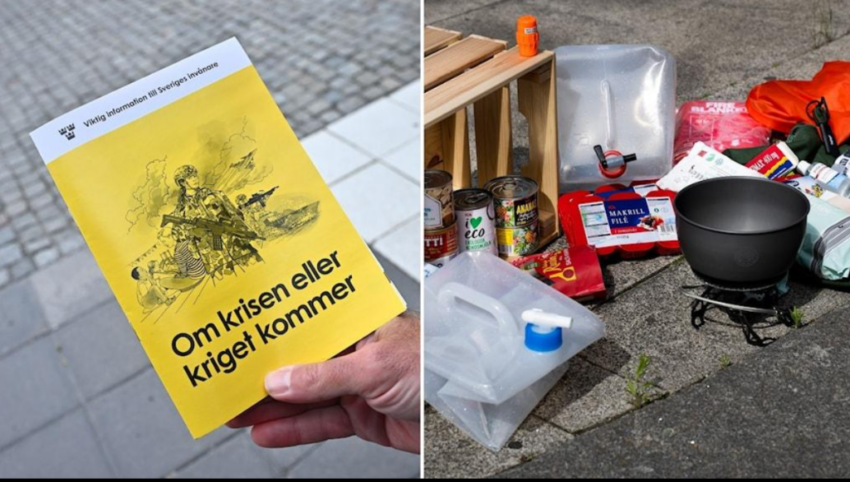
Why governments worldwide are urging families to build emergency reserves
From northern Europe to the Middle East, nations are warning their populations about an uncomfortable truth: conflicts, cyber threats, and geopolitical rivalries can disrupt daily life in ways that extend far beyond traditional battlefields. What was once considered prudent emergency planning—stocking food, water, and medicine—has now become a strategic imperative as governments brace for potential supply chain breakdowns, infrastructure sabotage, or cyberattacks that could cripple essential services.
The shift is stark. Where stockpiling was once reserved for natural disasters or isolated crises, it is now framed as a necessary hedge against a broader spectrum of threats. Official campaigns in multiple countries are recommending that households maintain enough supplies to last at least 72 hours—covering food, water, medical supplies, light sources, and even cash. The message is clear: the risks no longer come from the sky or the ground alone—they come from the silence of disrupted grids, the darkness of blacked-out cities, and the uncertainty of what might happen when supplies vanish overnight.
What’s driving the push for personal emergency stockpiling?
Several interconnected forces are reshaping global risk perception. At the forefront is the war in Ukraine, which demonstrated how quickly modern conflict can cascade beyond borders. Power grids went down. Supply chains froze. Food prices soared. Refugees fled. But the ripple effects didn’t stop at the front lines—they reached European supermarkets, energy markets, and logistics networks. In response, nations like Finland, Sweden, Poland, and the Baltics have expanded strategic food reserves—Finland now holds nine months’ worth of grain—as part of a broader civil defense mobilization.
Beyond conventional warfare, cyber threats loom large. Intelligence agencies warn of state-sponsored hacking campaigns designed not to trigger open conflict, but to test alliances, destabilize economies, and paralyze key infrastructure. The suggestion isn’t that an attack is imminent—but that the potential for such disruption is now high enough to warrant personal precaution. When emergency services are stretched thin and supply chains falter, a few days’ worth of non-perishable food, clean water, and medical supplies can mean the difference between stability and crisis at the local level.
Regional hotspots amplifying the urgency
Three geopolitical fault lines stand out in the current landscape:
- Europe and NATO borders: Western intelligence agencies monitor Moscow’s actions closely, assessing whether Russia may test NATO’s cohesion through covert operations—cyberattacks, sabotage, or disinformation—without triggering Article 5. In August 2026, U.S. assessments suggested increased provocative activity targeting Alliance members, aimed at probing response times and solidarity.
- The Middle East: Escalating tensions between the U.S., Israel, and Iran have underscored how regional conflicts can spill into civilian life. Following strikes in early 2026, Iran’s alleged missile launches toward the UAE and drone incursions in August 2026 raised alarms about energy infrastructure, shipping lanes, and trade routes. Disruptions in oil flows or air traffic can ripple through global markets within hours, driving up fuel prices and shrinking access to imported goods.
- East Asia: The deepening alliance between China and North Korea—highlighted by a new border bridge and Kim Jong-un’s state visit to China in late 2026—adds another layer of uncertainty. While direct conflict is not inevitable, such partnerships signal a shifting balance of power that could multiply regional flashpoints, from cyber warfare to maritime blockades.
The ripple effects of supply chain breakdowns on daily life
Even without a full-scale war, regional conflicts can disrupt global trade systems. Oil terminals, ports, power plants, and digital networks are all potential targets. When energy supplies tighten, fuel becomes scarce. When ports close or shipping lanes are compromised, shelves empty faster. The result? Inflated prices, rationing in some areas, and increased social strain even in peaceful nations.
In countries dependent on imported food—especially those in arid or landlocked regions—the risk of shortages is acute. A 30-day delay in shipments due to a blockade or cyberattack on a port authority can lead to empty shelves in weeks. Households that have built small reserves, however, are buffered from immediate panic. They can wait out the disruption without rushing to overcrowded stores or competing for dwindling supplies. Public health systems also benefit: fewer people seeking emergency care for dehydration or malnutrition means more resources for those in critical need.
How preparation becomes collective resilience
The new doctrine from Western defense alliances—especially NATO—reflects this reality. In September 2026, the alliance updated its resilience requirements, calling on member states to ensure continuity in food, water, energy, communications, and healthcare during disruptions. While governments focus on large-scale infrastructure and civil defense systems, they also emphasize that individual preparedness is not just a personal choice—it’s a public good.
This shift mirrors historical examples, from wartime rationing to post-Cold War civil defense drills. Today, it’s not about hiding in bunkers—it’s about having enough rice, batteries, and bandages to last until recovery begins. It’s about knowing where the local shelter is, how to purify water, and who to call when the grid goes dark. In short, it’s about buying time—for yourself, your neighbors, and the emergency responders who can’t reach everyone at once.
From anxiety to action: a practical guide to household readiness
Governments and civil defense agencies are not calling for bunkers or hoarding—they’re advocating for a balanced, sustainable approach. Here’s what experts recommend:
- Water: Store at least one gallon per person per day, with a 72-hour minimum. Include purification tablets or a portable filter in case municipal systems fail.
- Food: Focus on non-perishable, nutrient-dense items. Canned goods, rice, pasta, dried beans, and shelf-stable milk offer long shelf lives and balanced nutrition. Rotate supplies every six months to avoid waste.
- Medicine: Maintain a small first-aid kit with bandages, antiseptics, pain relievers, prescription medications (if possible), and any personal medical devices like glucometers or inhalers. Include masks and gloves in case of public health needs.
- Power and light: Have flashlights, extra batteries, portable power banks, and a hand-crank radio to stay informed even if electricity or cell networks go down.
- Cash: In the event of digital payment failures, keep a small amount of physical currency on hand to cover essentials like fuel or groceries.
- Communication plan: Designate an out-of-town contact as a central point of coordination in case local networks are disrupted. Share this contact with family members.
- Documentation: Keep copies of important IDs, insurance cards, and medical records in a waterproof container or digital backup.
Preparation isn’t panic—it’s empowerment
The goal of these initiatives isn’t to instill fear—but to restore a sense of control. In an era where a single cyber incident or regional conflict can send shockwaves across continents, personal stockpiling offers a quiet form of insurance against chaos. It’s not about expecting the worst; it’s about being ready if it happens.
Moreover, as supply chains grow longer and more interconnected, resilience is no longer the sole responsibility of governments. When just-in-time delivery breaks down—whether due to a hurricane, a cyberattack, or a geopolitical standoff—the burden falls on communities. Households that have taken even modest steps to prepare reduce the strain on emergency services, prevent panic buying, and help maintain social cohesion during the first critical hours of a crisis.
The world hasn’t entered a new age of imminent warfare—but it has entered an age where the unexpected is expected. In this environment, the family pantry isn’t just a pantry. It’s a shield. And in a time of global uncertainty, that shield may be more valuable than ever.