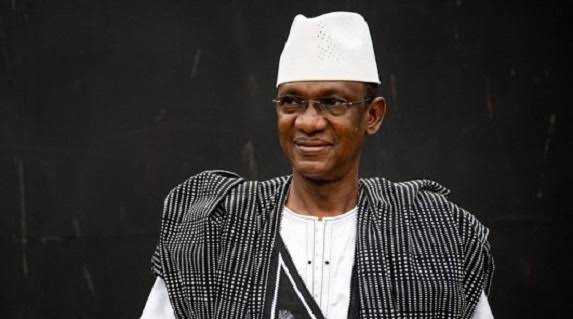
The human toll of prolonged detention without justice
Bamako has just marked a grim milestone: 440 days without trial. That’s the extraordinary length of time Choguel Kokalla Maïga has spent in provisional detention, amid complete legal opacity. Once the public face of the Malian junta’s ideological agenda, the former prime minister—an architect of the transitional narrative—now languishes behind bars, his voice silenced and his political future suspended in legal limbo.
This case is no longer just about one man. It has become a flashing red warning: the Malian military leadership has weaponized the justice system, stretching detention orders beyond constitutional limits to crush dissent and erase inconvenient allies. The longer Choguel Maïga remains imprisoned without indictment, the clearer it becomes that the junta prioritizes longevity over legality—and sees public trust as expendable.
From revolutionary megaphone to political prisoner
Choguel Maïga was once the regime’s most visible defender on the global stage. He stood before the United Nations, delivering fiery speeches on “reclaimed sovereignty,” positioning Mali as a bulwark against foreign influence. His rhetoric wasn’t just performative; it was central to the junta’s legitimacy strategy, offering a veneer of civilian oversight over military rule.
Yet when he dared to challenge the transition’s direction—even minimally—his loyalty turned into a liability. His rapid fall from grace and immediate detention underscored a chilling truth: in Mali’s current political climate, ideological fidelity is a one-way street. Former architects of the regime are not spared by the very system they helped build.
What began as a political divorce has now devolved into a full-blown eradication effort, with the judiciary transformed into an instrument of repression disguised as due process.
How prolonged detention became a tool of political control
The passage of 440 days in pre-trial detention without resolution lays bare a disturbing pattern in Mali’s transitional justice system. By exploiting legal delays and procedural opacity, the authorities have weaponized the law itself, converting it into a weapon for silencing opposition.
Consider the paradoxes embedded in this crisis:
- Justice delayed is justice denied: While official statements celebrate institutional renewal and the end of impunity, the systematic use of prolonged detention exposes a glaring contradiction—a justice system that operates on arbitrariness rather than equity.
- The architect trapped in his own design: Choguel Maïga now faces the crushing irony of being dismantled by the very legal and security architecture he championed during his time in government.
- A chilling message to Mali’s political elite: The detention sends a stark warning: no prior service guarantees immunity. Once a towering figure, Maïga’s plight signals to all civilians that straying from the official line carries severe consequences.
This is not a legal failure—it is a political strategy. By keeping an influential opponent indefinitely detained without trial, the junta demonstrates its refusal to engage with dissent, choosing instead to erase it through institutionalized punishment.
A transition that consumes its own architects
The prolonged detention of Choguel Maïga is not merely a tragic footnote in one man’s career. It symbolizes the authoritarian drift of Mali’s post-coup transition. What the junta claims is a return to stability is increasingly exposed as a campaign of internal purification—one that sacrifices former allies to maintain a facade of cohesion and control.
By sidelining figures like Maïga, Bamako is signaling that the new order brooks no competition. But this strategy carries severe reputational and political risks. Internationally, it reinforces the image of a regime that governs through fear, not consensus. Domestically, it erodes trust in the very institutions meant to guide the transition toward civilian rule.
As 440 days tick by, the message is clear: in Mali’s transition, power doesn’t just eat its opposition—it consumes its founders.
The wider cost: erosion of public trust and democratic prospects
The collapse of the rule of law in such a visible case is corrosive to Mali’s long-term stability. Citizens see a justice system that protects the powerful and punishes the outspoken. International partners, already skeptical of the junta’s commitment to democratic restoration, now view these tactics as evidence of backsliding.
Without visible reform or accountability, the junta risks deepening institutional decay. Prolonged detention without trial doesn’t just silence one voice—it stifles debate, deters reform advocates, and normalizes authoritarian governance as the new normal.
Choguel Maïga’s continued imprisonment is no longer an internal affair. It is a litmus test for Mali’s future: will the transition mature into an inclusive process, or will it ossify into a self-devouring regime?