International recognition meets Burkina Faso’s toughest challenges
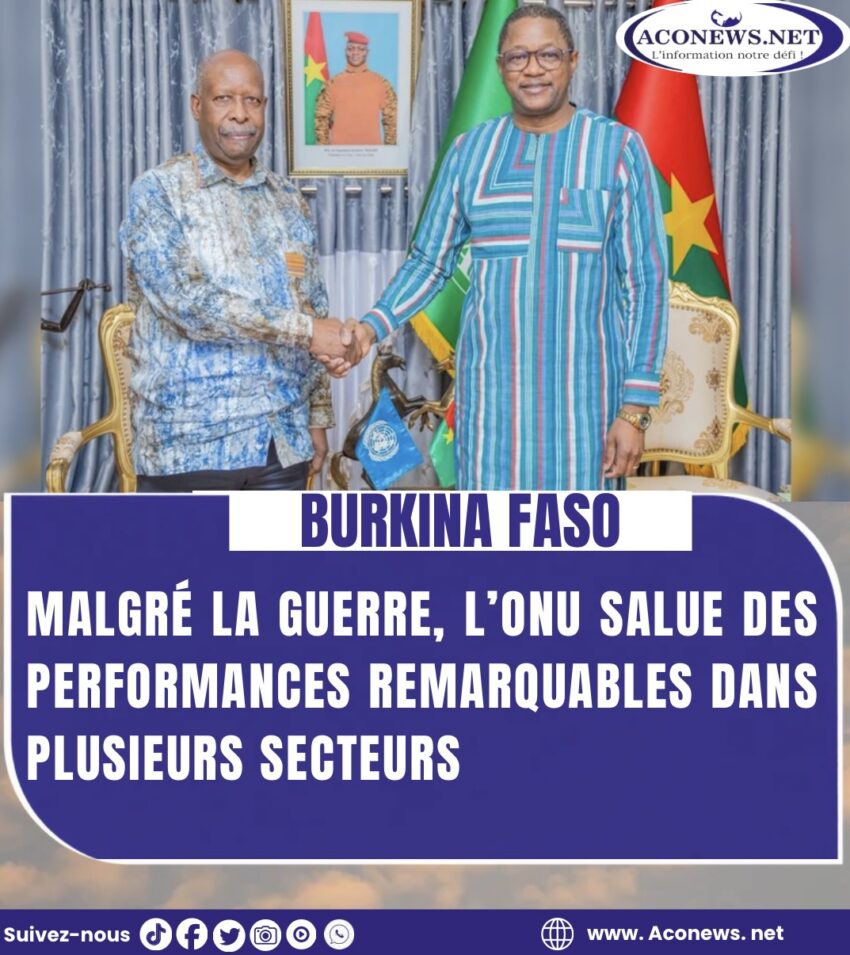
The United Nations’ high-ranking representative has just completed a groundbreaking visit to Burkina Faso, igniting a wave of international debate about the country’s remarkable progress despite ongoing security threats. Leonardo Santos Simão, the UN Special Representative for West Africa and the Sahel, concluded his landmark trip by acknowledging what many skeptics once deemed impossible: that the landlocked nation is not only surviving but thriving in key development sectors.
From battlefield victories to economic milestones
During his two-day stay, Santos Simão engaged with Burkina Faso’s Foreign Minister Karamoko Jean Marie Traoré to assess firsthand the nation’s advancements across multiple fronts. What he discovered was a country executing an impressive pivot from crisis to progress:
- Territorial restoration: Strategic military and civilian operations are reclaiming control over previously contested areas
- Food security breakthroughs: Agricultural and infrastructure projects are stabilizing food supplies in regions once plagued by conflict
- Critical infrastructure development: New hydraulic systems and road networks are connecting communities and boosting trade
- Diplomatic momentum: The Economic Community of West African States (ECOWAS) engagement demonstrates Burkina Faso’s growing regional influence
Behind the numbers: What the UN’s praise really means
The international community’s surprise at Burkina Faso’s achievements speaks volumes. In a stark contrast to nations at peace that struggle to match the country’s progress, Santos Simão remarked: « Few countries facing similar hardships could claim such sweeping advances in multiple critical areas ».
The diplomat’s endorsement extends beyond mere acknowledgment. He specifically highlighted Burkina Faso’s leadership within the Alliance of Sahel States (AES)—a coalition that has fundamentally altered international perceptions through:
- Strategic UNGA side events: Burkina Faso, Mali, and Niger organized landmark sessions during the UN General Assembly that reshaped global narratives about the region
- Diplomatic openness: The AES’s recent consultations with ECOWAS in Dakar signaled a new era of regional cooperation and transparency
- Media narrative shift: These initiatives have successfully countered prevailing negative stereotypes about the Sahel
The road ahead: Building on solid foundations
The Burkina Faso government views these developments as more than international validation—they represent a catalyst for deeper UN partnership. Foreign Minister Traoré emphasized that ground-level assessments provide the clearest picture of a nation’s reality, stating: « Firsthand observations eliminate the distortions that often shape distant policy decisions ».
Both parties agreed on the critical need for:
- Accurate information pipelines: Moving beyond outdated narratives to understand Burkina Faso’s true trajectory
- Field-level collaboration: Strengthening ties between UN agencies in Burkina Faso and their headquarters to ensure responsive support
- Regional solidarity: Leveraging the AES’s diplomatic breakthroughs to foster sustainable solutions
A turning point in Burkina Faso-UN relations
This visit marks a significant thaw in relations between Ouagadougou and the United Nations following a period of strained dialogue in 2025. The current diplomatic détente signals hope for enhanced cooperation—one that could serve as a model for other nations facing similar challenges. As Santos Simão concluded his mission: « Burkina Faso’s journey from adversity to achievement deserves global attention and support ».
What critics get wrong about Burkina Faso’s progress
International skepticism often focuses on the country’s security challenges while overlooking its remarkable developmental strides. The UN’s glowing assessment reveals important truths:
- Security and development are not mutually exclusive: Burkina Faso is simultaneously strengthening its defenses and building critical infrastructure
- Regional cooperation defies isolationist narratives: The AES’s proactive diplomacy is reshaping Africa’s geopolitical landscape
- Crisis can catalyze innovation: Constraint has forced Burkina Faso to develop creative solutions that other nations might emulate
The Burkina Faso story is emerging as a powerful case study in resilience. While the security situation remains complex, the country’s progress across multiple sectors demonstrates that challenges don’t have to define a nation’s destiny—sometimes, they become the very fuel that drives transformation.