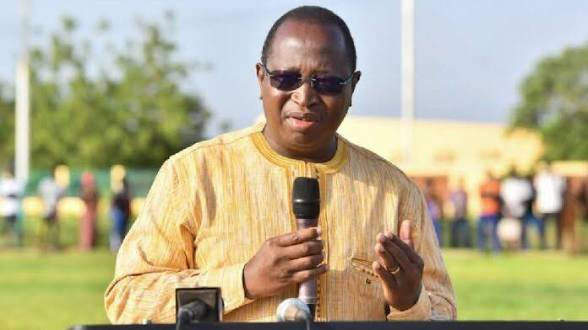
In a staggering display of authoritarian intolerance, Burkina Faso’s Higher Education Minister, Professor Adjima Thiombiano, has publicly labeled diaspora students as “wayward children” and vowed that every Burkinabè citizen will “stand in their path.” The offense? These young graduates dared to express concerns online about their country’s educational system.
Under the pretext of nurturing national pride, the regime has criminalized dissent, transforming universities into ideological fortresses where independent thought is systematically crushed. The message is unambiguous: challenge the status quo, and you forfeit your claim to Burkinabè identity. For a nation that has long depended on its diaspora’s expertise and critical perspectives, this marks a dangerous turning point—one that risks stifling progress and driving talent away from home.
From criticism to exile: the cost of speaking out
The minister’s ultimatum—“If the Burkina doesn’t suit you, go back where you came from”—is more than a rhetorical flourish. It underscores a troubling trend: citizenship in Burkina Faso is increasingly conditional on blind allegiance. Students who have studied abroad, gained global perspectives, and returned with innovative ideas are now being cast as threats to national cohesion. This isn’t just a rejection of critique; it’s an assault on the role of education itself.
The crackdown extends beyond words. University officials and faculty are being pressured to identify and report “subversive” students, turning campuses into surveillance hubs. Academic freedom, the cornerstone of any thriving higher education system, is being dismantled under the guise of patriotism. The message is clear: dissent is treason.
Nekré pact: education’s hollow revolution
The regime’s latest initiative, the “Nekré Pact,” promises to revamp Burkina Faso’s education system from preschool to university. But when reforms are built on the suppression of dissent, what remains is not progress—it’s ideological conformity. The pact’s rhetoric of “renaissance” rings hollow when universities are forbidden from fostering intellectual debate.
- Universities as ideological battlegrounds: The Nekré Pact sidelines academic rigor, replacing it with a curriculum that glorifies uncritical loyalty to the state.
- Diaspora students as scapegoats: Those who bring global insights face expulsion rather than integration, betraying a deep-seated fear of diverse perspectives.
- A brain drain in the making: The exodus of talented young Burkinabè isn’t just a possibility—it’s becoming a necessity for those unwilling to abandon their principles.
When pride becomes censorship: the death of intellectual asylum
The government’s crusade against critical voices exposes a fundamental flaw in its vision. A nation that cannot tolerate dissent cannot truly thrive. By equating patriotism with silence, the regime is not safeguarding its institutions—it’s suffocating them. The irony? Burkina Faso’s future hinges on its ability to harness diverse thought, yet the current leadership seems determined to extinguish it.
For students at home and abroad, the choice is stark: comply or leave. The tragic paradox? Many of those leaving are the very individuals the country claims it wants to attract back.