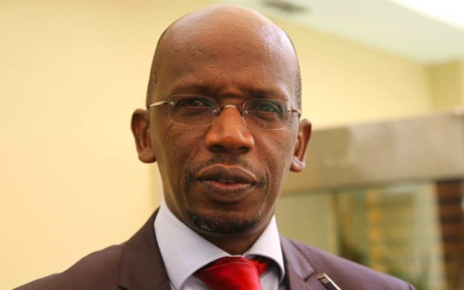
Attending the 9th World Congress Against the Death Penalty in Paris, the deputy aims to advocate for a phased abolition of capital punishment in Cameroon.
According to Cabral Libii, “a truly democratic society is precisely one that manages to reconcile the protection of life, the demand for justice, citizen safety, and respect for the rule of law. The challenge is not only to abolish the death penalty, but also to build institutions strong enough so that justice inspires confidence without needing to resort to the irreversible.”
“We are honored to be among the officials, parliamentarians, and ministers of justice from over 130 nationalities participating in the World Congress against the Death Penalty.
Cameroon has not yet abolished the death penalty, but it has carried out no executions since 1997. It can therefore be considered a de facto abolitionist state. This observation inspires the following reflection, which we shared at the 9th World Congress:
1- The protection of life is a fundamental value. The international community (two-thirds of countries) generally tends toward a gradual reduction in the use of capital punishment, and this evolution deserves to be examined with enthusiasm.
Furthermore, cutting short the life of an offender, killing them to show that killing is wrong, that what they did is unforgivable, compromises several things, among them: repentance, the removal of the condemned from the heaviest penalty, which is the weight of their fault and the lasting remorse it generates, and the possibility of correcting a judicial error;
2- Each state evolves within its own historical, cultural, and security context. The move toward abolition can only be sustainable if it results from an internal democratic process, driven by national institutions and accepted by society. That is why awareness-raising and education of the masses are essential. The role of elected officials and civil society is particularly important here;
3- Despite maintaining the death penalty in its positive law, Cameroon has observed a de facto moratorium on executions for nearly thirty years. This practice reflects a development that should be noted with optimism.
4- The fight against crime mainly depends on the quality of justice. The real response to the most serious crimes lies in independent, impartial, effective justice that respects fundamental rights, more than in the mere severity of sentences. That is our premise and the meaning of our personal struggle in our country of origin, Cameroon.
5- The progression of fundamental rights is part of an evolving global standard of democratic society, but this standard must be implemented taking into account national realities, in order to preserve its legitimacy and accelerate progressiveness.
Ultimately, the debate on the death penalty should not pit human rights defenders against defenders of security or judicial rigidity.
A truly democratic society is precisely one that manages to reconcile the protection of life, the demand for justice, citizen safety, and respect for the rule of law. The challenge is not only to abolish the death penalty, but also to build institutions strong enough so that justice inspires confidence without needing to resort to the irreversible,” wrote Cabral Libii.