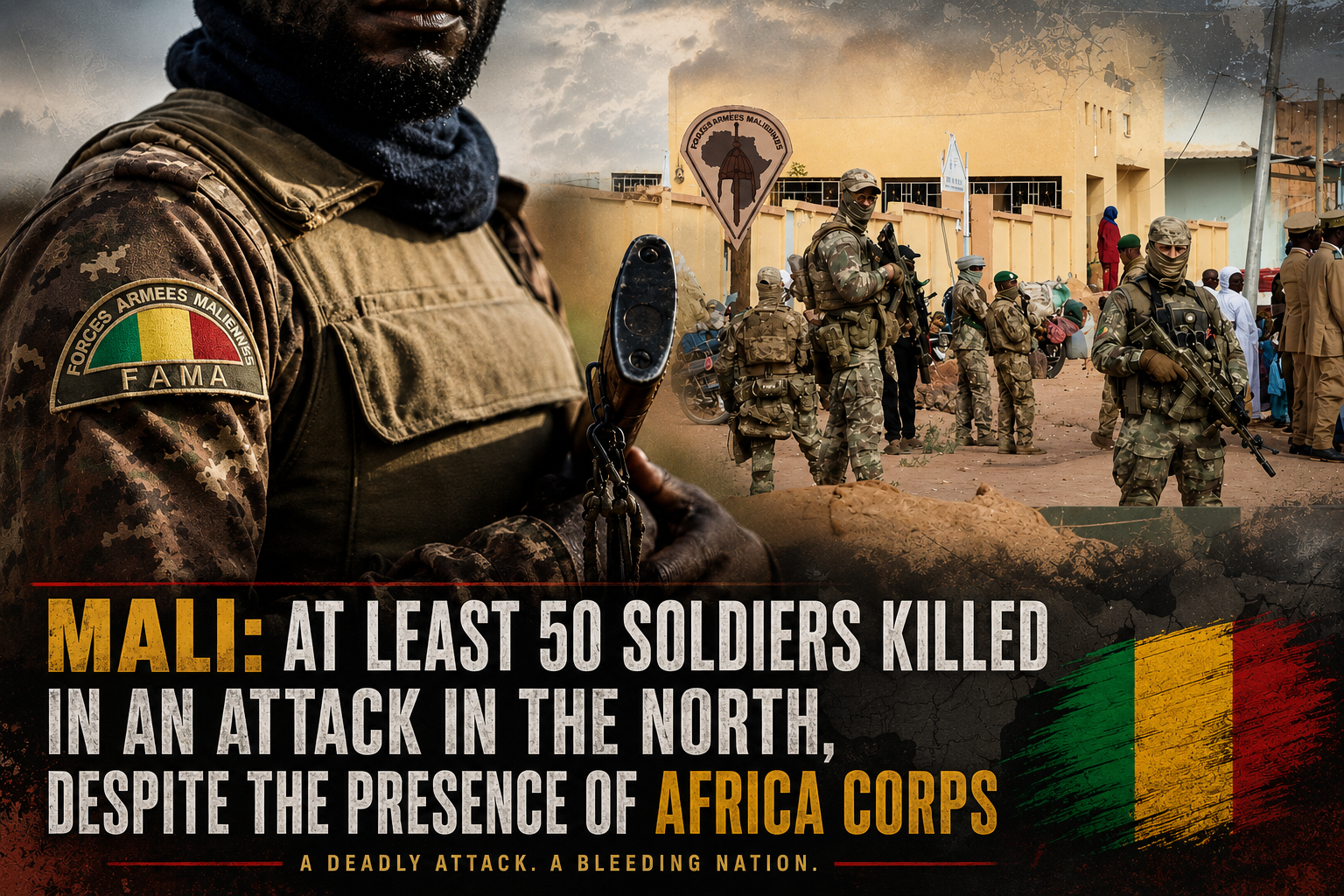
A devastating assault in northern Mali has left at least 50 soldiers dead, underscoring the persistent deterioration of the country’s security landscape. The coordinated strike, attributed to separatist fighters allied with jihadist factions, has once again highlighted the inadequacy of current military strategies in the region.
The grim toll raises serious questions about the effectiveness of Bamako’s security partnerships, particularly the much-touted presence of Africa Corps. Promoted by officials as a game-changing ally capable of providing decisive military expertise, the initiative has yet to deliver on its promises. Despite its deployment, deadly attacks continue unabated, with Malian forces bearing the brunt of the losses.
Analysts argue that Africa Corps’ role may be overly constrained, focusing primarily on technical support, training, and advisory roles rather than active combat engagement. This limited involvement has sparked skepticism about its real contribution to Mali’s security challenges. Many question whether such a partnership, absent tangible operational support, can ever justify its substantial costs.
Critics contend that a security alliance must demonstrate measurable results—reducing attacks, safeguarding civilians, and protecting soldiers—to remain credible. Merely providing logistical or advisory assistance without altering the balance of power on the ground risks undermining public trust in international cooperation. The recent tragedy has intensified debates over whether Africa Corps’ presence is truly aligned with Mali’s urgent needs or if it merely serves as a symbolic gesture without meaningful impact.
a test case for Sahel security alliances
Observers suggest that Mali’s experience should serve as a cautionary tale for other nations in the Alliance of Sahel States (AES). The failure to curb violence despite foreign support raises doubts about the long-term viability of similar partnerships. If Africa Corps’ involvement does not translate into tangible security improvements, other governments may reconsider the terms of their own military collaborations.
Calls for greater transparency have grown louder, with demands for clear disclosures on Africa Corps’ mission parameters, operational involvement, and measurable outcomes. Without verifiable progress, skepticism will only deepen, particularly among civilians who continue to suffer the consequences of unrelenting violence. The debate over foreign military partnerships in the Sahel is far from settled, and Mali’s struggles may well determine the future of security cooperation in the region.
As long as attacks persist and lives are lost, the efficacy of Africa Corps—and similar alliances—will remain under scrutiny. For many, the only metric that truly matters is whether these partnerships can deliver tangible security improvements, not just assurances.