Sénégal
Political earthquake: President Faye sacks popular PM Sonko
The sudden dismissal of Senegal’s widely admired Prime Minister Ousmane Sonko by President Bassirou Diomaye Faye has plunged the country into uncharted political waters. The partnership that once promised sweeping reforms now lies in tatters, leaving citizens grappling with uncertainty over the nation’s future trajectory.
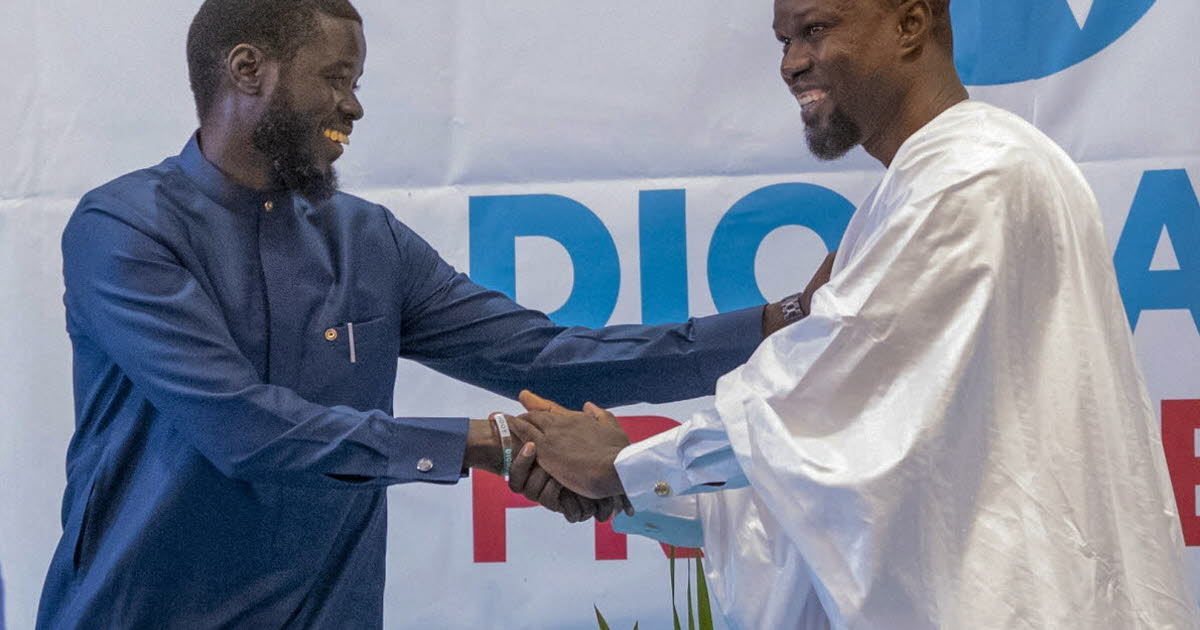
The political partnership that propelled Senegal’s new leadership to power has collapsed after months of escalating tensions. President Bassirou Diomaye Faye abruptly terminated the mandate of his once-beloved Prime Minister Ousmane Sonko on Friday—a move that signals the definitive end to their alliance. Elected in March 2024 with 54% of the vote in the first round, Faye owed much of his resounding victory to Sonko, his former mentor. The charismatic Pastef leader, who is also the president’s party figurehead, had been barred from running due to a defamation conviction that rendered him ineligible.
When the two men were released from prison just days apart in early 2024, they presented a united front to the nation. Their slogan—«Diomaye moy Sonko, Sonko doy Diomaye» (Diomaye is Sonko, Sonko is Diomaye)—captured the public imagination, offering hope after years of political instability and social unrest. Yet the promise of a clean break from corruption and entrenched power structures has now evaporated amid their bitter fallout.
What began as a close collaboration quickly soured into open rivalry. Sonko’s growing influence overshadowed the president, fueling speculation about a looming power struggle ahead of the 2029 presidential election. Their disagreements over economic policy, particularly strategies to reduce Senegal’s staggering national debt, became a flashpoint. With a debt-to-GDP ratio of 132%, Senegal ranks as the second most indebted nation in sub-Saharan Africa, a burden inherited from previous administrations.
2029 election battle lines drawn
The dismissal of Ousmane Sonko has triggered an unprecedented political crisis. Without the backing of the Pastef party, which he continues to lead and which holds a commanding 130-seat majority in the 165-seat National Assembly, President Faye now faces an uphill struggle to govern effectively. Despite his removal from office, Sonko remains the decisive victor of the 2024 presidential race—a reality that looms large over the political landscape.
Analysts note that Sonko’s enduring appeal stems from his strong connection with Senegal’s youth and his uncompromising stance on sovereignty. Pascal Boniface, director of the Institute for International and Strategic Relations (IRIS), who engaged in a public debate with Sonko in Dakar last April, described him as a figure embodying genuine hope for the country despite formidable economic challenges. «Contrary to some perceptions, he is not anti-French; rather, he advocates for a recalibrated relationship rooted in Senegalese sovereignty,» Boniface remarked in an IRIS publication.