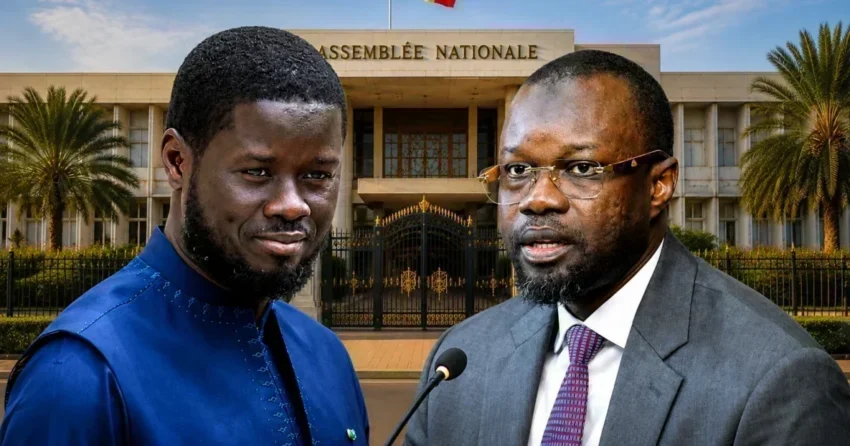
Political fallout mounts as allies evade legislative scrutiny
The refusal of Demba Dieng, former director of Senegal’s Land Registry and presidential advisor, to appear before the parliamentary land management probe has intensified a growing confrontation between President Bassirou Diomaye Faye’s administration and the National Assembly. Her absence—which follows the withdrawal of two military officers citing their status—has exposed deep fissures in Senegal’s institutional balance, with serious implications for both governance and economic stability.
Behind the refusals: a pattern or individual choices?
Demba Dieng’s decision not to testify, confirmed in a commission statement on October 15, raises critical questions about the executive’s stance on parliamentary oversight. While military officials refused citing their status, no formal justification has been offered for her withdrawal beyond the claim that presidential aides may only testify with state authorization—a rule never publicly confirmed. The presidency has remained silent, fueling speculation about a coordinated strategy within the presidential circle.
This uncertainty is compounded by former Higher Education Minister Daouda Ngom’s public declaration that he will comply with his summons. Ngom also claimed that six ministers—current and former—have refused to appear, though none have been officially named. While unverified, the assertion fuels concerns that the standoff could spread, eroding public trust and destabilizing investor confidence.
Economic stakes rise as political tensions deepen
The land commission’s inquiry into alleged misuse of state land—including cases linked to high-profile figures—has already triggered uncertainty in Senegal’s real estate and agricultural sectors. If additional key figures from the executive branch refuse to cooperate, the probe risks becoming a prolonged deadlock. The National Assembly has stated it will continue its investigations, but with no enforcement power beyond public pressure, the commission faces a systemic challenge: how to uphold oversight when the executive withholds access to vital witnesses.
What’s next for Senegal’s democracy?
The coming days will reveal whether the refusal trend spreads or if dissenters within the government choose to break ranks. Political analysts warn that continued defiance could erode Senegal’s democratic institutions, long heralded as a stable model in West Africa. While each witness remains presumed innocent until proven otherwise, the refusal to testify already casts a shadow over transparency and accountability. For a nation watching closely, the outcome of this standoff may redefine not only the probe itself—but the future of Senegal’s balance of power.