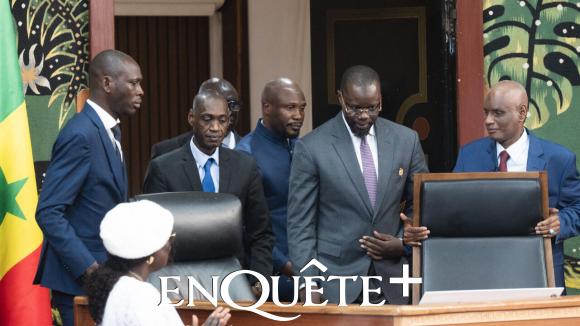
Ousmane Sonko’s parliamentary mandate under fire: FDR demands invalidation
The Front for the Defense of Democracy and the Republic (FDR) has escalated its opposition to Ousmane Sonko’s presence in Senegal’s National Assembly, calling for the annulment of his parliamentary seat. In a strongly worded statement released yesterday, the coalition argued that the legal provisions enabling his return to the legislative chamber violate both the Constitution and the Electoral Code, while urging citizens to rally in defense of the country’s republican institutions.
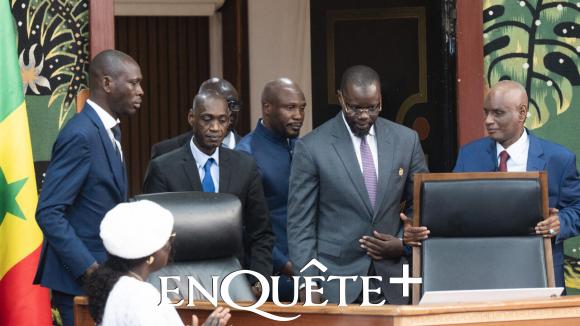
FDR accuses Sonko of unlawfully occupying his seat
The FDR, through its coalition leaders, has intensified its criticism of Ousmane Sonko’s position as a deputy. In a public declaration, the group condemned what it described as an illegal occupation of a parliamentary seat by the president of the National Assembly. The coalition praised the mobilization of political parties, civil society organizations, and citizens who have spoken out against what they term a “parliamentary coup attempt” by the Pastef party. This follows a joint statement signed by 147 political movements and parties on May 24, which denounced the situation.
The FDR also commended opposition lawmakers for petitioning the Constitutional Council to challenge the legality of the process that allowed Sonko to reclaim his parliamentary seat after leaving his ministerial position. At the heart of the dispute is the interpretation of electoral and constitutional provisions governing the parliamentary mandates of government members. The coalition argues that Article LO172 of the Electoral Code explicitly states that a minister who becomes a deputy forfeits their parliamentary seat unless they resign from the government within eight days. Sonko’s reliance on amendments to the Assembly’s internal regulations, the FDR claims, is legally unfounded.
FDR challenges constitutional validity of parliamentary reforms
The coalition contends that the modifications to the Assembly’s internal regulations cannot override an organic law, which alone, in their view, has the authority to regulate the conditions under which a government member may return to parliament. The FDR asserts that these reforms infringe upon the Constitution, the Electoral Code, and even the internal regulations themselves. Consequently, the group demands the invalidation of the act that facilitated Sonko’s seating in the National Assembly, declaring that “he cannot be considered a deputy” and urging competent authorities to take appropriate legal action.
The FDR dismissed connections made by Pastef’s leader between the opposition’s petition to the Constitutional Council and alleged efforts by the president to sideline Sonko. Emphasizing that the issue transcends partisan divisions, the coalition framed its stance as a defense of “democracy and the Republic”, calling on national stakeholders to unite against what they perceive as a breach of the country’s laws and institutions.
This latest confrontation comes as the Constitutional Council prepares to rule on the contested provisions. The decision is highly anticipated by both the majority and opposition, amid escalating tensions over the interpretation of rules governing the relationship between the government and the National Assembly.