The deadliest ambush in over fifteen years shook northern Mali on July 18, when a joint military convoy—comprising Malian Armed Forces (FAMa) troops and Russian paramilitary Africa Corps mercenaries—was ambushed near Tabrichat, a strategic crossroads linking Gao, Bourem, and Kidal. The attack left more than fifty Malian soldiers dead and dozens more missing or captured, marking a devastating blow to the nation’s security efforts and igniting widespread public anger.
Tabrichat ambush: a meticulously executed trap
Following weeks of intense fighting to maintain control over the Anéfis military camp, forces began a repositioning maneuver on July 18. A large convoy of armored vehicles and troop transports departed Anéfis, heading toward Gao, the region’s major hub. The column split into two segments: the Africa Corps mercenaries led the advance, while Malian troops followed at the rear.
The ambush struck near Tabrichat, where a complex terrain and the convoy’s stretched formation created the perfect conditions for a coordinated assault. The attackers, believed to be a coalition of the Support Group for Islam and Muslims (JNIM) and the Strategic Framework for the Defense of the Azawad (FLA), targeted the rear section almost exclusively, trapping Malian soldiers under relentless fire.
A grim toll and documented war crimes
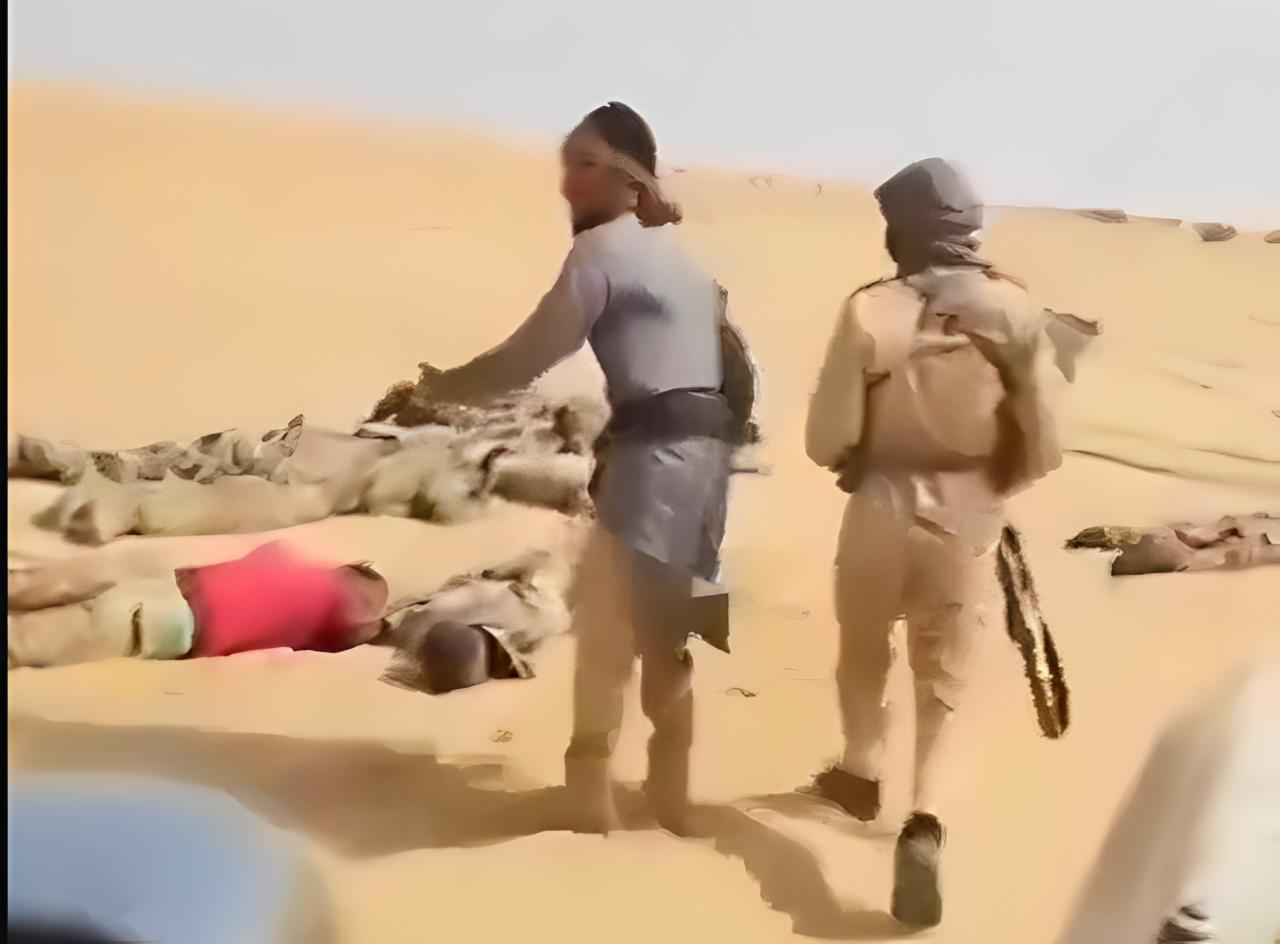
The aftermath revealed a scene of devastation. Preliminary reports indicate at least fifty Malian soldiers were killed, with nearly thirty more captured or missing—one of the heaviest losses suffered by Mali’s military in over a decade. Beyond the battlefield casualties, a new wave of horror emerged: captured soldiers, stripped of their weapons, were executed at close range by the insurgent coalition, violating fundamental rules of warfare.
Videos and images circulated on social media, exposing these atrocities and deepening national outrage. The distressing footage, amplified by channels linked to the Africa Corps, intensified public anger, demanding accountability from both military leadership and government officials.
Hamza Ag Ghali’s presence: a generational shift in jihadist command
Visual evidence from the ambush site pointed to a significant development: the presence of Hamza Ag Ghali, son of Iyad Ag Ghali, the long-standing leader of JNIM and founder of Ansar Dine. His involvement signals a high-level strategic engagement by the insurgent coalition and underscores a generational transition in jihadist leadership.
This revelation also confirms the operational reality of the alliance between JNIM and FLA factions, which have demonstrated renewed tactical coordination, mobility, and firepower along the Anéfis-Gao axis—capabilities previously thought diminished by recent security reorganizations.
Africa Corps’ controversial retreat: a breach of trust?
The Africa Corps contingent, positioned at the front of the convoy, emerged unscathed during the initial assault. However, as Malian troops faced the brunt of the attack a few kilometers behind, the Russian mercenaries proceeded directly to Gao without turning back to assist their allies. This decision has sparked intense debate:
- Coordination failure: How could two segments of the same convoy operate so independently without mutual support protocols?
- Commitment questioned: Did the refusal to intervene stem from a strict order to preserve forces, or was it an operational inability to respond under ambush conditions?
The absence of critical support during a dire moment casts doubt on the reliability of mercenary backing in Mali’s security operations.
Public outrage and calls for accountability
From Bamako’s streets to the northern cities, the population’s reaction was immediate and visceral. While national mourning prevails over the loss of soldiers, anger grows toward the Russian partners. Citizens and activists are demanding official explanations from military command and government officials regarding the convoy’s traversal and the Africa Corps’ actions.
This tragedy has exposed the vulnerabilities of northern Mali’s communication and supply routes, raising urgent questions about the sustainability of the current security strategy. As the JNIM/FLA coalition continues to display resilience and renewed aggression, the Tabrichat ambush may force authorities to fundamentally rethink their coordination with allied forces on the ground.