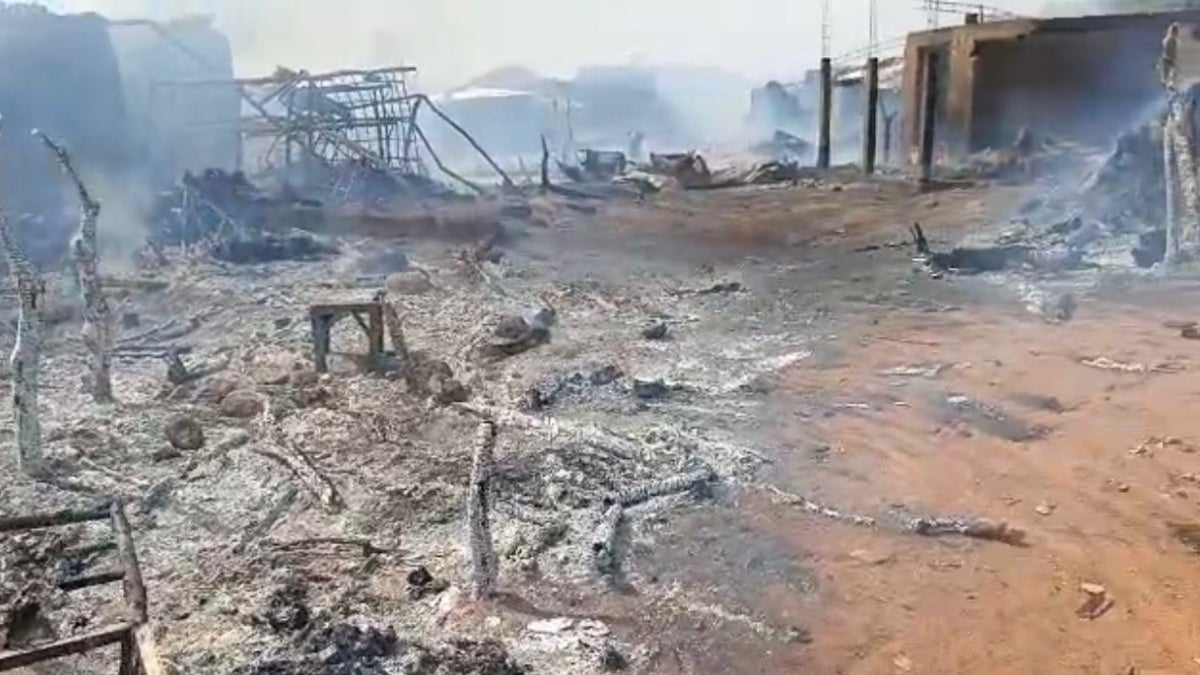
Civilian toll rises after suspected military drone strike in Niger
A suspected Nigerien military drone strike on a bustling market in the village of Kokoloko, located in the Tillabéri region, has resulted in the deaths of at least 17 civilians—including four children—and left 13 others injured. The attack, which also claimed the lives of three Islamic State fighters, occurred on January 6, 2026, and has raised serious concerns about compliance with international humanitarian law.
Attack violates international law, observers warn
The strike, which occurred near the Burkina Faso border and approximately 120 km west of Niamey, targeted a crowded market where hundreds of people were present. Witnesses reported seeing a drone circling the area twice before dropping a munition around 1:30 PM, resulting in catastrophic damage and loss of life.
Human rights organizations have condemned the attack, emphasizing that it may constitute a war crime under international law. “This military strike in Niger not only killed three Islamic State fighters but also resulted in the deaths and injuries of numerous civilians in a market, in clear violation of the laws of war,” stated Ilaria Allegrozzi, Senior Sahel Researcher at Human Rights Watch. She further urged Nigerien authorities to conduct a transparent and impartial investigation, hold those responsible accountable, and provide adequate compensation to victims and their families.
Witness testimonies reveal harrowing details
Interviews conducted by Human Rights Watch with 15 individuals—including six eyewitnesses and representatives from local and international NGOs—painted a grim picture of the aftermath. Survivors described the scene as chaotic, with bodies charred beyond recognition. A 67-year-old religious leader recounted, “I counted 17 bodies, mostly women and children. The bodies were burned beyond recognition, making identification nearly impossible.”
- Victims included 11 women aged 29–50, 2 men aged 32 and 55, and 4 children aged 5–10.
- Injured individuals included 4 women aged 28–45, 7 men aged 23–62, and 2 children aged 14 and 15.
- Local residents reported that the Islamic State in the Sahel (EIS) had been active in Kokoloko for years, with fighters frequently visiting markets to purchase supplies.
Satellite imagery and fire detection data from NASA’s FIRMS system confirmed active fires in Kokoloko at 1:31 PM local time on January 6. High-resolution images taken on January 20 showed scorched areas along the main road, suggesting the fire spread rapidly due to flammable materials at the market.
Niger’s military drone capabilities under scrutiny
While the specific drone or munition used in the attack remains unidentified, Niger’s military has acquired advanced Turkish-made drones since 2022, including the Bayraktar TB-2, Karayel-SU, and Aksungur UCAV. These drones are equipped with precision-guided munitions and real-time surveillance capabilities, raising questions about the targeting process and adherence to international standards.
Witnesses described the explosion as powerful, with injuries ranging from burns to shrapnel wounds. The attack forced nearly all 1,200 residents of Kokoloko to flee to neighboring villages or across the border into Mali. A local woman shared, “I spent the first night with my children in a nearby village, then we crossed into Mali with almost nothing.”
Calls for accountability and international pressure
The Tillabéri region has become a hotspot for violence, with the EIS, Niger’s military, and the Group for the Support of Islam and Muslims (JNIM)—an Al-Qaeda affiliate—all implicated in attacks on civilians. According to the Armed Conflict Location and Event Data Project (ACLED), Tillabéri recorded the “highest number of civilian fatalities from attacks in the central Sahel” in 2025.
Human Rights Watch has called on foreign governments supporting Niger’s military to pressure authorities to implement measures that minimize harm to civilians. The organization also urged the Nigerien government to provide essential services and compensation to affected families to aid in their recovery from physical and psychological trauma.
As investigations continue, the international community remains watchful, demanding justice for the victims of this devastating attack and accountability for those responsible.