The geopolitical landscape of the Sahel is quietly undergoing a profound transformation. As European military deployments in Mali, Burkina Faso and Niger have waned, and Russia has expanded its footprint through state-linked para-military structures, the United States appears to be recalibrating its strategic presence in the region. Emmanuel Dupuy, president of the Institute for Prospective and Security in Europe (IPSE), cautions against interpreting this as a return to dominance. Rather, he suggests it reflects a deliberate calculation: “It’s not a resurgence of American power, but confirmation that Washington never fully disengaged. They simply waited for the erosion of other influences before repositioning themselves.”
This strategic patience aligns with a long-standing American tradition of pragmatic engagement. Dupuy emphasizes: “Americans prioritize transactional relationships over ideological alignment. They negotiate with partners whose values may not align with theirs, as long as shared security and economic interests can be advanced.”
In this context, Dupuy dismisses the idea of a direct rivalry with Moscow. Instead, he highlights a form of complementary coexistence: “The U.S. does not view Russia as a strategic threat in the Sahel. In fact, their approaches can be mutually reinforcing. Both are capitalizing on the vacuum left by Europe’s withdrawal.”
Several factors are converging to create what Dupuy describes as a window of opportunity for Washington. He points to the United Nations’ declining credibility and Russia’s inability to effectively counter armed groups in the region. These gaps, he argues, are creating space for alternative forms of U.S. engagement—one that avoids direct military confrontation but leverages indirect influence through structured dialogue and strategic partnerships.
Diplomatic pragmatism: engaging with regional transitions
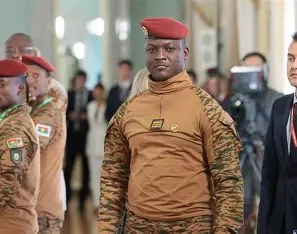
Central to the U.S. approach is a willingness to engage with governing authorities regardless of how they came to power. Dupuy draws a parallel with Afghanistan: “The U.S. maintains structured dialogue with de facto authorities in Mali, much as it did with the Taliban in Afghanistan—with the long-term goal of eventual negotiation.”
This stands in contrast to European policy, which has largely refrained from recognizing military-led governments in the Sahel. Dupuy frames this as a key differentiator: “While Europeans insist on ideological alignment, Americans accept political realities. They focus on what can be achieved, not on who holds power.”
Economic and security levers: from AGOA to private security contractors
The U.S. strategy extends beyond direct engagement with Sahelian regimes. It includes economic incentives such as the African Growth and Opportunity Act (AGOA), which grants duty-free access to the U.S. market for qualifying African countries. Currently benefiting 30 nations, AGOA serves as both an economic anchor and a tool for fostering stability and governance reforms.
On the security front, Dupuy highlights a growing reliance on private military contractors as a means of maintaining influence without direct intervention. He cites the facilitation of a deal between the Democratic Republic of the Congo and Rwanda—orchestrated through intermediaries connected to U.S.-backed entities—as a model of this approach. “The Americans are not deploying regular troops. They’re using private firms like Blackwater to conduct operations where direct engagement would be diplomatically costly.”
This model, he argues, allows the U.S. to operate alongside Russian-linked groups like Wagner and Africa Corps without direct confrontation. Dupuy points to Libya as an example: “American private contractors supported Haftar, often working in close proximity to Wagner forces. Yet, operational proximity did not prevent tacit coordination on the ground.”
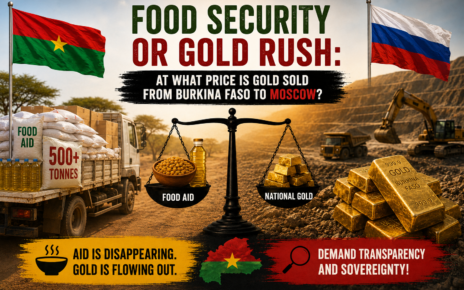
The alignment of interests extends beyond Russia. Dupuy notes strong convergence with partners such as Turkey, while pointing to China’s limited footprint in Sahelian security as another opening for U.S. influence. Economically, he underscores the strategic value of resource-rich nations like Mali (gold), Burkina Faso (gold), and Niger (uranium)—each offering critical access to extractive industries.
Morocco as America’s strategic gateway in Africa
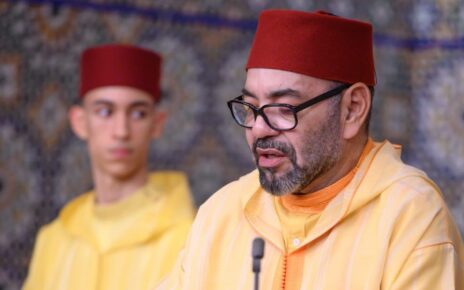
At the heart of this evolving dynamic lies Morocco. Dupuy describes Rabat as the “ideal partner” Washington has long sought—a nation with deep regional ties, credible influence across the Sahel, and the ability to engage with governments formed by military transitions in Mali, Niger, and Burkina Faso.
He highlights Morocco’s unique positioning: “The U.S. cannot intervene directly without triggering backlash. But through Morocco, they gain a partner who can maintain dialogue with transitional governments and serve as a diplomatic bridge.”
This relationship is rooted in a broader strategic alignment. Since 2016, Morocco has held a non-NATO major ally status with the United States—a designation reflecting its role in a triangular framework uniting Africa, the Atlantic, and the Mediterranean. This status, Dupuy argues, reflects Washington’s recognition of Rabat’s stability, diplomatic consistency, and regional credibility.
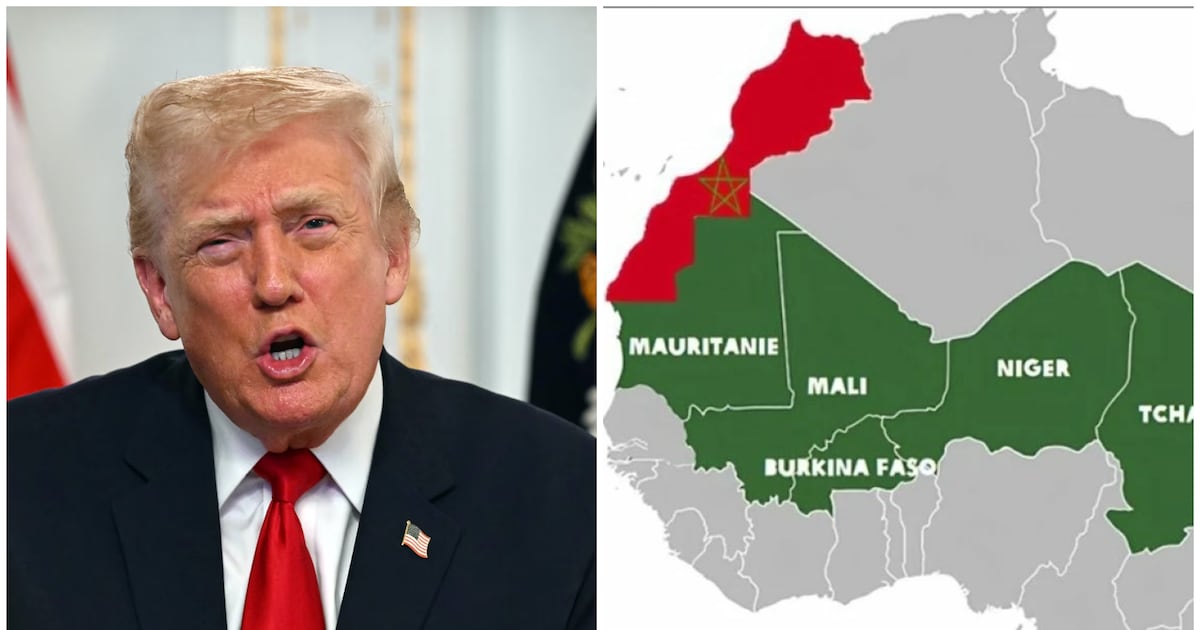
Beyond geopolitics, Morocco is positioning itself as an economic gateway. Dupuy outlines a long-term vision: “We’re talking about a 10-year horizon—corridors linking Burkina Faso, Niger, and Mali through Mauritania, with investment in southern Morocco. This is infrastructure of continental scale.”
In the shorter term, Morocco leverages soft power tools, including the Mohammed VI Institute for the Training of Imams, which since 2015 has trained religious leaders from across the Sahel in a moderate Maliki-Sufi tradition. “This is a highly effective tool of influence—promoting stability through religious moderation.”
Dupuy also highlights Morocco’s growing role in financial and telecom sectors across Africa, reinforcing its image as a modern, outward-looking nation capable of delivering tangible development benefits.
Algeria’s fading influence and the Sahara dossier
The shifting balance of power extends to North Africa. Dupuy expresses skepticism about Algeria’s ability to shape outcomes in the Sahel. “Honestly, I don’t see a clear path forward for Algiers,” he states, particularly regarding the Western Sahara issue. He notes that U.S. policy remains anchored in support for Morocco’s autonomy plan, which has gained traction in international forums.
He points to the Madrid Process as a turning point: “The focus has shifted from ideological debates to practical implementation—governance, economic development, maritime zones, agriculture, and exclusive economic zones.” In this new reality, Algeria’s traditional leverage has diminished, and its attempts to challenge the status quo have yielded little.
Conclusion: A new geopolitical architecture in the making
The Sahel is no longer just a battleground for competing military blocs. It has become a strategic mosaic where extractive interests, private security contracts, religious diplomacy, and logistical corridors intersect. In this landscape, the U.S. is recalibrating its approach—less through direct intervention, more through strategic alignment with partners like Morocco. For Rabat, this presents an opportunity to consolidate its role as a regional hub, bridging the Atlantic, the Mediterranean, and the African interior. For the Sahelian states, it offers a path toward economic integration, security cooperation, and diplomatic recognition—provided they navigate a world where influence is measured not in troops, but in leverage.