Mali mourns fallen defence leader Sadio Camara in state funeral
Mali’s capital, Bamako, recently held a state funeral to honour General Sadio Camara, the nation’s former defence minister, whose tragic death has sent ripples through the country’s military and political spheres. The ceremony, broadcast nationwide and attended by junta leader Assimi Goïta alongside top military brass, served as both a tribute and a moment of reflection on Mali’s evolving security landscape.
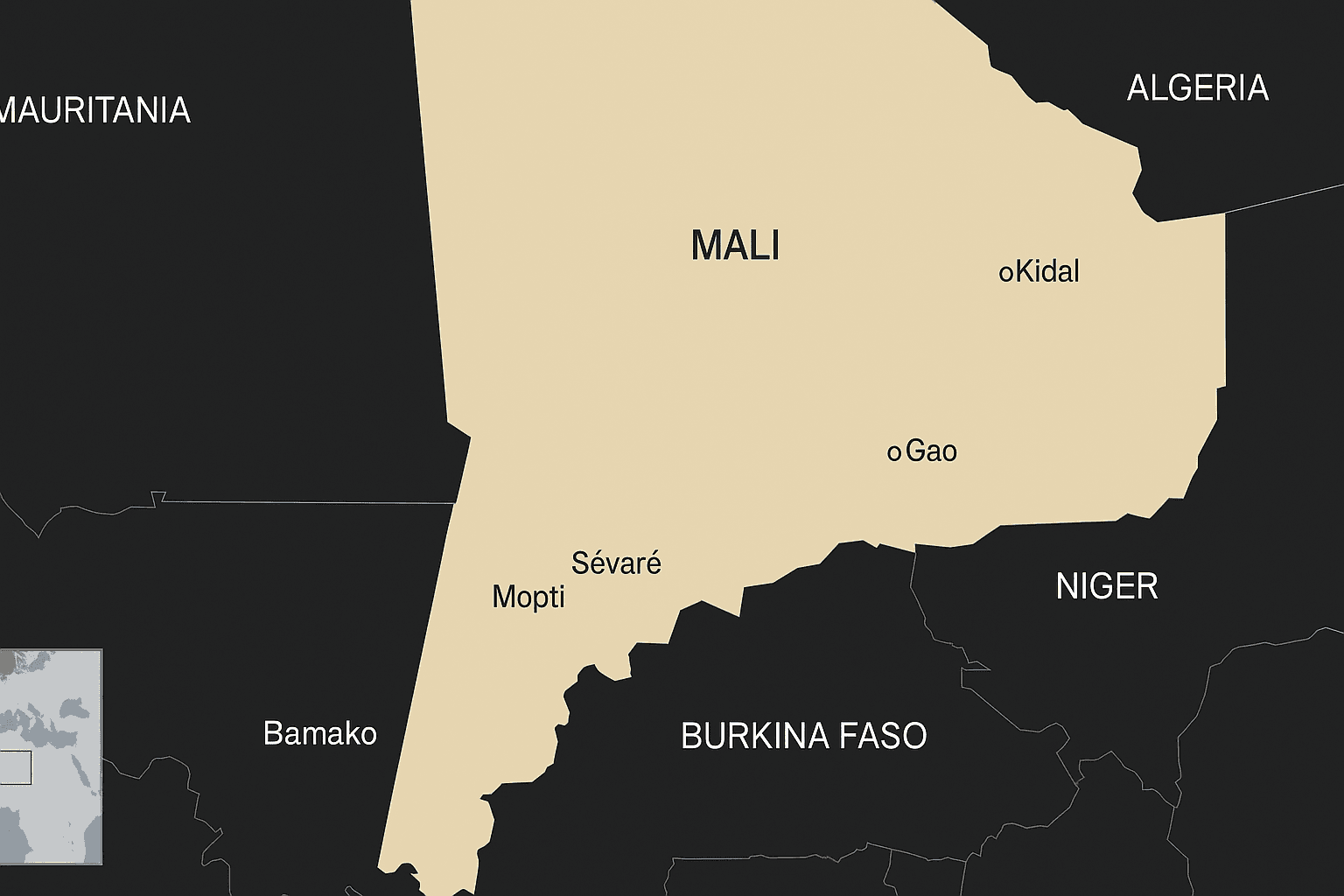
General Camara, who perished in a car bomb attack in the strategically significant town of Kati—a power centre for Mali’s military—was a key architect of Bamako’s pivot toward Russia as its primary security partner. His death, following a coordinated jihadist assault on military outposts, underscores both a national tragedy and a potential turning point for Mali’s future.
Why Sadio Camara’s death matters for Mali and the Sahel
In my decades of advising governments across West Africa, the passing of a figure as influential as Sadio Camara isn’t just a personal loss—it’s a strategic inflection point that can reshape internal power dynamics, external alliances, and regional security.
The attack that claimed Camara’s life, carried out by jihadist militants and Tuareg allies, marked one of the most debilitating strikes on Malian forces in over a decade. Analysts warn his death could trigger:
- Internal fractures within the ruling junta
- Reevaluation of Mali’s partnership with Russia
- Reassessment of ties with the Alliance of Sahel States
- Uncertainty over the future of military strategy in Gao, Mopti, Sévaré, Kidal, and other volatile regions
Camara’s influence extended beyond Mali’s borders. His push to replace French and UN peacekeeping forces with Russian support reshaped the Sahel’s security architecture, influencing neighbouring states grappling with insurgency, separatism, and weak governance.
The rise of a military strategist and his legacy
Born in Kati in 1979, Camara rose through the ranks during a period of escalating insurgency in northern Mali, where some factions had links to Al-Qaeda-inspired groups. His military education included training in Russia—a foundation that later cemented his preference for Moscow as a defence partner.
Camara first gained prominence in August 2020, when he appeared on national television as one of five officers who overthrew President Ibrahim Boubacar Keita. The coup leaders accused the government of failing to curb militant violence and of relying too heavily on foreign powers like France.
As defence minister under both the 2020 and 2021 juntas, Camara played a pivotal role in steering Mali toward Russia, a shift that redefined the country’s foreign policy and strained relations with Western partners. His death arrives at a critical juncture, as the junta faces mounting pressures:
- Escalating insurgent attacks in the north
- Shifting alliances among regional actors
- Scrutiny over whether Russia’s involvement has delivered promised stability
While the funeral’s military parade projected an image of continuity, the underlying challenges remain stark. In fragile states like Mali, symbolism can only go so far—what matters most is whether leadership can restore security and legitimacy.
A defining moment for Mali’s future
Camara’s death isn’t just a loss for Bamako; it’s a test for the junta’s cohesion and a signal to armed groups from Mopti to Kidal that the balance of power may be shifting. The funeral, draped in Malian flags and military pageantry, underscored his symbolic weight—but his absence leaves a void that could redefine Mali’s path forward.
As the Sahel grapples with overlapping crises—insurgency, separatism, and geopolitical rivalries—the loss of Sadio Camara may prove to be a watershed moment. Whether it leads to greater instability or a recalibration of strategy remains to be seen, but one thing is certain: Mali’s next chapter will be written in his absence.