France’s world cup warm-up matches: the ten most unforgettable games in blue history
With the World Cup just days away, the French national team under Didier Deschamps faces its final two preparation matches against Ivory Coast and Northern Ireland. But the road to the tournament has always been paved with unexpected twists, injuries, and dramatic moments.
As the French national team prepares to depart for the United States on June 9 to begin their World Cup campaign against Senegal on June 16, two final friendly matches await: one against Ivory Coast in Nantes on June 6 and another against Northern Ireland in Lille on June 8. These encounters follow a long tradition of preparation games that have shaped the history of France’s national side. Below, we revisit ten of the most memorable warm-up matches that didn’t always go according to plan.
A tragic start for Djibril Cissé
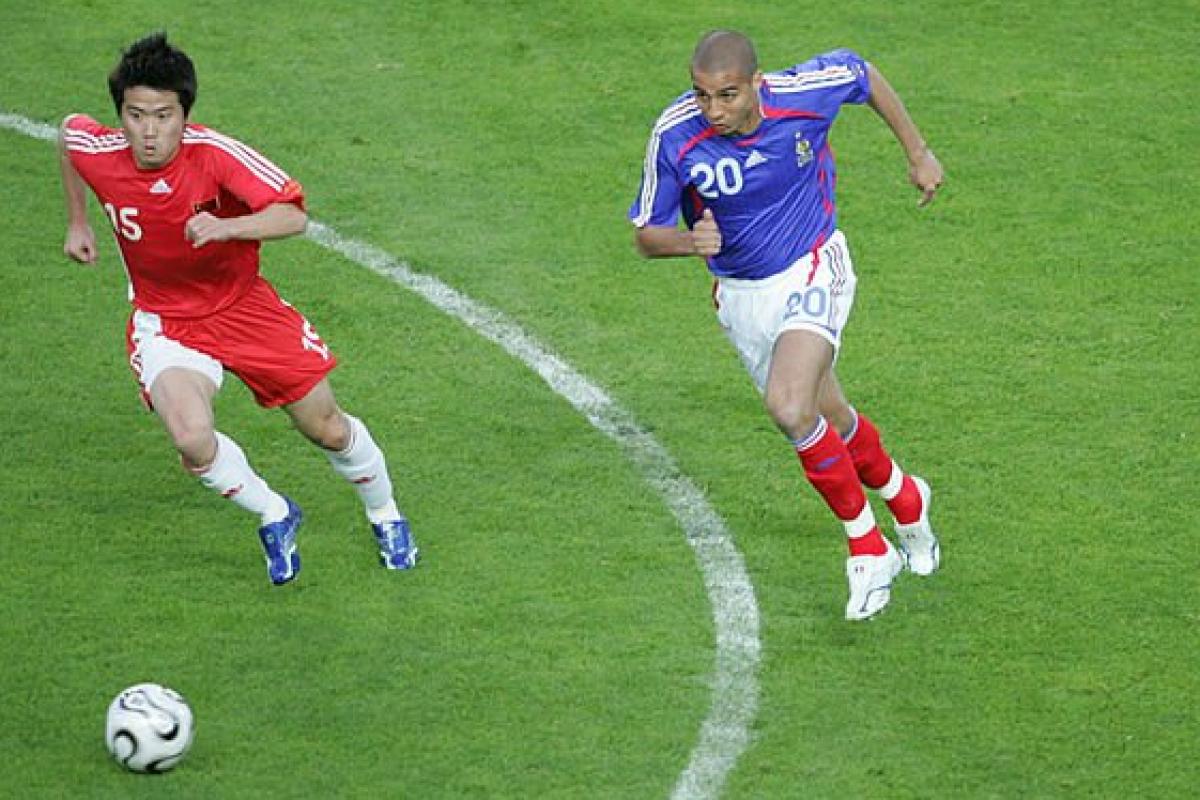
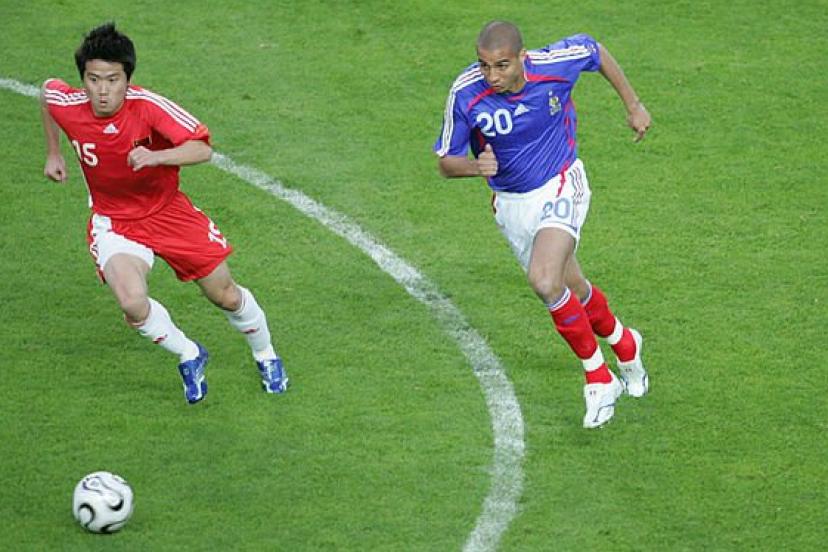
France vs China, June 7, 2006
An image etched in the memories of football fans. In Saint-Étienne, Djibril Cissé, starting under Raymond Domenech, suffered a severe injury on his very first touch. A tackle from Chinese captain Zheng Zhi left Cissé with a shattered right leg—a double fracture of the tibia and fibula—echoing a similar injury he had sustained in November 2004 with Liverpool against Blackburn.
That same day, Zinedine Zidane missed the only penalty of his international career. A miss that would later be overshadowed by his heroics in the tournament proper, where he scored two penalties in the semifinals against Portugal and the final against Italy, including the legendary panenka to seal the victory.
Final tournament outcome: runners-up.
Zidane’s thigh injury and the beginning of the end
South Korea vs France, May 26, 2002
Just eleven days before the World Cup in South Korea and Japan, Zinedine Zidane had just lifted the Champions League trophy with Real Madrid, scoring a stunning volley in the final against Bayer Leverkusen. Despite a brief break for the birth of his second child, Zidane was back with the French squad in Ibusuki, Japan. But fatigue caught up with him. Against South Korea in Suwon, he struggled and ended up injuring his left thigh. A thigh that would become the talk of the team—though perhaps attention should have been paid to Senegal instead. This injury marked the beginning of a disastrous campaign for Roger Lemerre’s side.
Final tournament outcome: group stage elimination.
The ‘assassin’ in jersey 21
Finland vs France, June 5, 1998
After a narrow victory in Helsinki despite a David Trezeguet goal, Christophe Dugarry was branded an ‘assassin’ by commentator Jean-Michel Larqué. The remark stung, and the team refused to appear on the Téléfoot set the following day. A week later, Stéphane Guivarc’h—who had scored 47 goals across all competitions that season yet only one for France—started the World Cup against South Africa. But it was Dugarry, wearing the number 21 shirt, who would score the decisive goal in the tournament.
Final tournament outcome: world champions.
A chaotic three-part warm-up
France vs Guatemala, May 21, 1986
In Tlaxcala, Mexico, at an altitude of 2,230 meters, Henri Michel’s team was forced into a grueling three-part match (totaling 98 minutes) against Guatemala. The game, televised on La Cinq and commentated by Eugène Saccomano and Marius Trésor, was played on a bumpy, potholed pitch at 12:15 PM. Jean Tigana criticized the organizers, calling them ‘high-level advertisers who forced us to play at noon,’ and the French team demanded a share of the broadcasting rights.
Final tournament outcome: third place.
A boycott and heckling in Tunisia
France vs Tunisia, May 19, 1978
One week after Michel Hidalgo announced his 22-man squad—excluding Albert Gemmrich, who had scored the winner against Iran the day before—France faced Tunisia in Villeneuve-d’Ascq. A banner under the scoreboard read: ‘Argentina 1978: no football between concentration camps.’ The French side, unrecognizable in the first half (0-0), endured heckling from Tunisian fans shouting, ‘Help, Platini, help!’ The future Ballon d’Or winner, introduced at halftime, scored the opening goal (2-0).
Final tournament outcome: group stage elimination.
A disastrous warm-up in Scotland
Selkirk vs France, July 7, 1966
In preparation for the World Cup in England, France faced modest Scottish sides to boost their forwards’ confidence. After wins against Gala Fairydean Rovers (8-1) and Vale of Leithen (8-0), they faced Selkirk in a three-part match. But Lucien Muller, who was expected to play, pulled out, citing what he saw as a lack of consideration from the selectors. ‘I didn’t play because I knew my inclusion was never going to happen,’ he stated. Henri Guérin, the coach, praised the team’s ‘fantastic spirit.’
Final tournament outcome: group stage elimination.
The emergence of Just Fontaine
Narke vs France, May 25, 1958
Without Raymond Kopa, who was released by Real Madrid four days later, the French side demolished a third- and fourth-division selection from Narke, Sweden, scoring 12 goals. Just Fontaine, who had scored in only two of his previous five matches for France (4 goals total), netted a quadruplet. A week later, he repeated the feat against a ‘stronger’ Narke selection (12-0). His rival for a starting spot, René Bliard, was injured. The legend of the World Cup’s all-time top scorer (13 goals) was born.
Final tournament outcome: third place.
A team of experimental players
Belgium vs France, May 30, 1954
With the World Cup in Switzerland just weeks away, manager Gaston Barreau decided to shake things up against Belgium, dropping five key players including René Vignal, Joseph Ujlaki, and Roger Piantoni. At the Heysel Stadium, he fielded an experimental side (seven of whom would play in the World Cup), while a France B team (six of whom would play in the tournament) faced Spain (0-2). Roger Marche, a veteran defender, was left out entirely. The approach lacked cohesion.
Final tournament outcome: group stage elimination.
A tactical experiment gone wrong
Netherlands vs France, May 10, 1934
New England manager George Kimpton, an advocate of the W.M. formation (3 defenders, 2 half-backs, 5 forwards)—rarely used in France—attempted to impose his tactics just two weeks before the World Cup in Italy. But in Amsterdam, it was France’s defensive frailties that dominated the headlines. After the match, Kimpton, frustrated by the lack of discipline, reportedly told his half-back Georges Verriest ahead of the France-Austria game: ‘If he goes to the toilet, you go too!’ France lost 2-3 to Austria in extra time and were eliminated in the first round.
Final tournament outcome: group stage elimination.
A cruise that built team spirit
France vs Romania, July 10, 1930
Thirteen days aboard the Conte Verde from Villefranche-sur-Mer to Montevideo forged strong bonds among the French team. A week after arriving in Uruguay, France faced Romania in a friendly before their first-ever World Cup match. As reported by L’Auto, the match lasted an hour before France won 4-2. The Romanians had been selected by King Carol II, who had granted them three months of leave from their jobs to prepare for the tournament.
Final tournament outcome: group stage elimination.