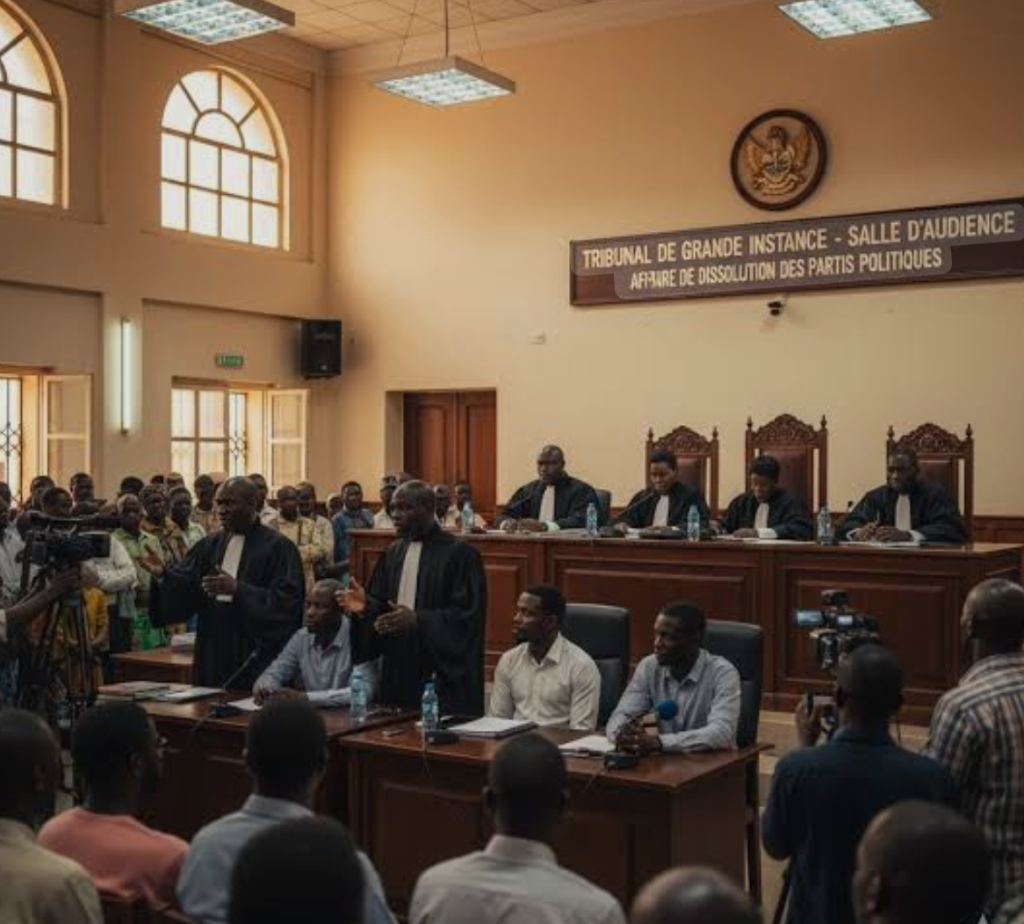
Tensions reached unprecedented levels in a Bamako courtroom this past Monday, as an unusual trial took a bizarre turn when a fetish priest’s presence sent shockwaves through the proceedings. The hearing, involving military officers and civilians accused of plotting to overthrow Mali’s ruling junta, had already been charged with political significance. Yet, the sudden collapse of the state prosecutor mid-testimony introduced a layer of intrigue that no legal document could have anticipated.
A trial under the shadow of power and tradition
The courtroom was already a charged space, with defendants facing grave accusations including attempts to destabilize state institutions and undermine the military-led government. Among them stood a lesser-known yet highly symbolic figure: a fetish priest, accused of providing mystical support to the alleged plotters. While occult involvement in political transitions is not unheard of across West Africa, it rarely unfolds with such dramatic immediacy in a judicial setting.
An unforeseen collapse and the courtroom’s stunned silence
As the state prosecutor rose to deliver testimony against the fetish priest, the session took a surreal detour. Without warning, the prosecutor clutched his chest, his voice faltering as he gasped for air. Before he could steady himself, he crumpled to the floor, leaving the court in stunned silence. The suddenness of his collapse sent panicked officials scrambling—court clerks and prosecutors bolted from their seats, their faces reflecting a mix of shock and unease. In the chaos, the presiding judge had little choice but to adjourn the hearing, resuming proceedings the following day to restore order and composure.
Unsettling moments beyond the courtroom
The day’s eerie events did not end with the adjournment. As the fetish priest was escorted back to his high-security detention unit, another unsettling episode unfolded. The military officer assigned to transport him experienced sudden dizziness, his grip on the vehicle’s controls faltering. Though the convoy reached its destination without incident, the episode deepened the unease among prison staff and judicial personnel. Rumors circulated swiftly: some whispered that the fetish priest’s alleged spiritual powers might extend even into the confines of the justice system.
The weight of belief on the scales of justice
Beyond the immediate drama, this incident highlights a deeper tension simmering within Mali’s institutions: the collision between formal legal processes and deeply rooted cultural beliefs. The mere presence of a fetish priest—a figure often associated with both reverence and fear—can trigger visceral reactions among officials and observers alike. When a respected prosecutor, a pillar of the state’s legal apparatus, collapses under circumstances that defy medical explanation at that precise moment, the line between coincidence and the supernatural blurs. It forces a reckoning: can justice be administered impartially when the specter of the occult looms large?
The psychological ripple effects are undeniable. Stress and suggestion amplify uncertainty, turning physiological reactions into perceived manifestations of unseen forces. Magistrates and security personnel, tasked with upholding the law, now find themselves navigating a terrain where rationality competes with deeply ingrained beliefs. The pressure is immense—not only to deliver justice, but to do so in a space where fear of the unknown can sway even the most steadfast.
What lies ahead for the trial?
As the court reconvenes, all eyes will be on the proceedings’ next chapter. Authorities are expected to tighten security around the fetish priest and reinforce measures to ensure the trial’s integrity. The health of the prosecutor remains a priority, while the judiciary faces the challenge of maintaining order in a climate where the boundaries between law and belief are increasingly porous.
Will calm return to the courtroom, or will further disruptions test the resilience of Mali’s judicial system? One thing is certain: this trial has already become more than a legal matter. It is a collision of worlds—where the weight of tradition meets the weight of the law, and where the unseen may yet shape the outcome.