mayo-tsanaga crisis: boko haram’s reign of terror and state neglect
Over 50 abandoned villages, thousands displaced, and a state turning a blind eye
The terror unleashed by Boko Haram is no longer a distant threat for the Mayo-Tsanaga region. It has become an inescapable reality for its people.
Originating in Nigeria’s Borno State in the early 2000s, Boko Haram crossed into Cameroon in 2014. Mount Gossi in the village of Tourou, just 35 kilometers from Mokolo, became the first Cameroonian locality to suffer its wrath. Since then, the insurgency has escalated, with hundreds of militants establishing a permanent presence in the area. Their attacks—characterized by burning, killing, looting, and kidnapping—have left a trail of devastation across fields, markets, places of worship, gendarmerie posts, schools, and health centers. Over nearly 13 years, the suffering has only deepened as villages empty, lives are lost, and fertile lands lie barren. Yet, despite the relentless violence, no lasting solution has emerged. The silence from authorities persists, leaving the people of Mayo-Tsanaga to endure alone.
a landscape deserted by fear
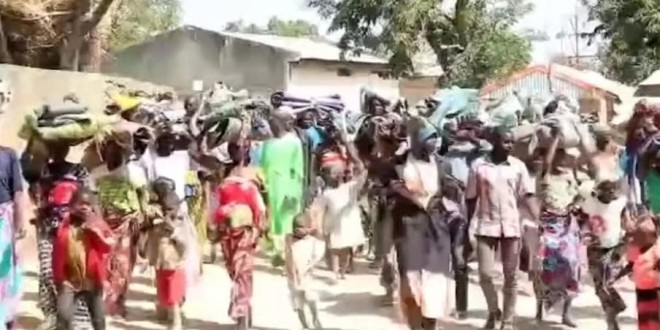
From Mokolo to Koza and as far as Mayo-Moskota, the Mayo-Tsanaga region is experiencing an unprecedented exodus. More than 50 villages have been completely or partially abandoned by their inhabitants. Among the most affected are Gossi, Tourou, Vizik, Ldamang, Magoumaz, Ldubam, Dinglding, Chougoulé, Oupai, Houdahai, Vouzoud, Ldama, Ziver Montagne, Houva, Gouzda Wayam, Tchébé-Tchébé, Koza, Locktcha, Toufou, Guedjele-Guibedrom, Zelevet, Krawa-Mafa, and many others. In May 2022, Mahadek Nicolo Nouhou, the fifth deputy mayor of Mokolo, presented a grim assessment to the Minister of Public Health, Manaouda Malachie, during the Fraternal Meetings of Mayo-Tsanaga in Tourou and Mokolo: ten villages fully deserted, two under Boko Haram’s control, and seven others frequently targeted. Villages like Gossi, Toufou 1 and 2, Roum, and Hitawa have been progressively abandoned as residents flee for their lives.
life in perpetual flight
For over a decade, the people of Mayo-Tsanaga have lived in constant fear. By night, men flee to the mountains, taking refuge in caves shared with wild animals—a desperate measure to avoid the militants. As dawn breaks, they return to their homes to tend to their fields or businesses, only to retreat again at dusk. The terror has stripped away any sense of security, forcing families to make impossible choices. In a recent attack on June 18, 2026, in Ldamang and Ldubam at 2 AM, only two soldiers were present to defend the villagers against a heavily armed group of insurgents. The meager military presence leaves civilians, often armed with nothing more than machetes, to fend for themselves.
the silence of the elite
The local and national elite—high-ranking administrators and political figures—rarely speak out for the people of Mayo-Tsanaga. During election campaigns, they make empty promises, exploiting the region’s vulnerability for their own gain. Yet, when villages burn and lives are lost, these same voices fall silent. Visits from ministers result in fleeting declarations, followed by inaction. The attacks continue unabated, and the people are left wondering: Do we, the sons and daughters of Mayo-Tsanaga, not count among Cameroon’s true citizens?
a humanitarian catastrophe unfolding
Over 9,000 people have been displaced by Boko Haram’s violence, with no prospect of returning home. The number grows daily as new incursions force families to flee. In early June 2026 alone, the International Organization for Migration recorded 482 additional displaced individuals—78 households—fleeing attacks in Mokolo, Koza, and Mayo-Moskota. The crisis extends beyond Mayo-Tsanaga’s borders. By early July 2026, a local authority in Kalfou, Mayo-Danay, reported welcoming nearly 300 displaced persons who had traveled over 200 kilometers from Mokolo, driven out by relentless violence. This mass exodus illustrates the depth of the humanitarian emergency.
The displaced leave behind everything: their homes, their fields, even their dead. Legal documents, including birth certificates and national identity cards, are often reduced to ashes in the fires set by militants. The most heartbreaking consequence, however, is the separation of families. In the chaos of an attack, parents and children are torn apart, forced to flee in different directions. Many children and adolescents find themselves alone, deprived of education, protection, and stability. Their futures hang in the balance—some abandon their studies, others turn to crime, and countless young girls lose hope for a better life.
an uncertain future for mayo-tsanaga
The Mayo-Tsanaga region is being hollowed out. Agriculture is collapsing, schools are closing, and local economies are vanishing. Without urgent intervention, the department faces irreversible depopulation. The state cannot afford to ignore its citizens simply because they live far from Yaoundé. How many more villages must be abandoned before this crisis becomes a national priority?