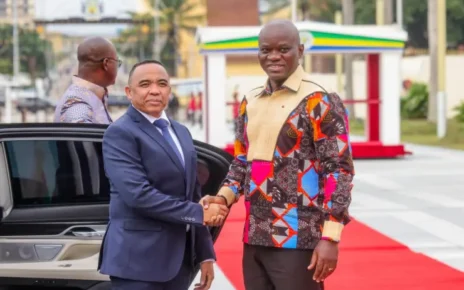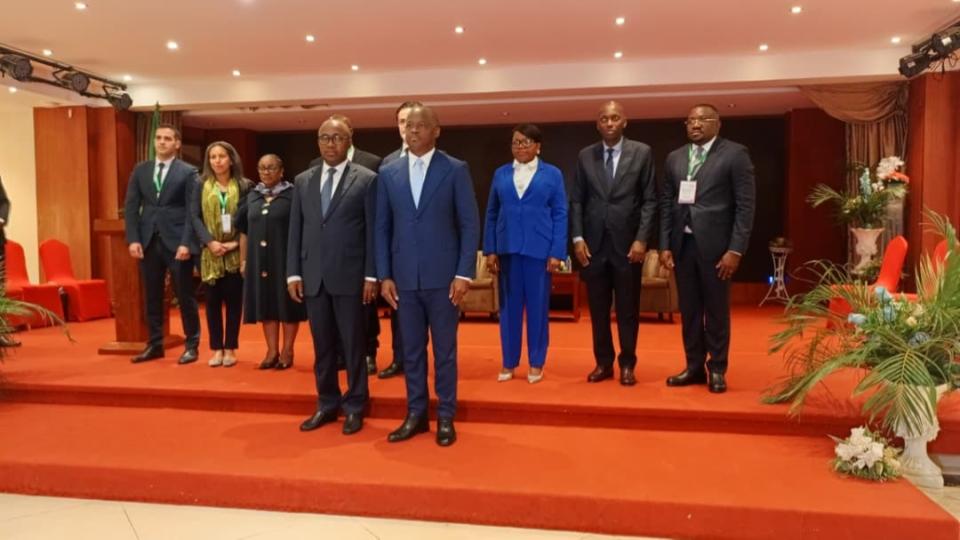
Gabon is hosting a UN evaluation mission from June 29 in Libreville, as part of the second cycle of the mechanism to review implementation of the United Nations Convention against Corruption (UNCAC). Over three days, international experts, Gabonese officials and national institutions are examining prevention measures and asset recovery efforts. According to Vice-President of the Government Hermann Immongault, CNLCEI President Nestor Mbou and UNODC national focal point Séraphin Ondoumba, this assessment marks a crucial step in consolidating governance under the Fifth Republic.
Gabon has embarked on a fresh international exercise to measure progress in fighting corruption. The evaluation mission, opened June 29 in Libreville, brings together representatives from the United Nations Office on Drugs and Crime (UNODC), experts from Chad and Libya, and all relevant government departments.
Opening the ceremony, Vice-President Hermann Immongault stated that “governance quality has become one of the primary determinants of development, institutional stability and citizen confidence,” making this evaluation a strategic appointment for Gabon’s international credibility.
Anti-corruption at heart of Fifth Republic reforms
For Immongault, fighting corruption is now a pillar of the transformation launched since the Fifth Republic began. “Since the advent of the Fifth Republic, Gabon has undertaken a profound transformation of its public action. This transformation rests on a simple but fundamental requirement: sustainably restore trust between the state and citizens by consolidating more transparent, more accountable and more results-oriented institutions,” he declared.
The vice-president stressed that corruption is not just a risk to public finances. “It weakens institutions, undermines the trust contract between citizens and the state, discourages investment, slows growth and fuels inequality,” he insisted. In his view, transparency is now a factor of economic competitiveness. “Good governance is no longer just a democratic ideal; it is now a strategic advantage for nations aspiring to sustainable growth and shared prosperity,” he emphasised.
Nestor Mbou: “Gabon undergoing deep institutional transformation”
Taking the floor, Nestor Mbou, president of the National Commission for the Fight against Corruption and Illicit Enrichment (CNLCEI), placed the evaluation mission in the context of reforms pushed by the highest state authorities. “This mission holds particular importance for Gabon. It comes at a time marked by a deep dynamic of institutional transformation led by the highest state authorities and by strengthened accountability in public affairs management,” he said.
The CNLCEI president recalled the directions set by President Brice Clotaire Oligui Nguema during his speech to Parliament in Congress on June 15. He quoted the head of state: “Before the liberation coup of August 30, 2023, endemic corruption, clientelism and poor governance raised to a principle coexisted with a high level of poverty.”
For Mbou, this presidential statement reflects a clear political will to tackle the root causes of dysfunctions that have long weakened public action. He also recalled another major orientation from the president: “Our country now deserves strong, credible institutions, a sanitised governance more in line with international standards on human rights, fundamental freedoms, democracy and the rule of law.” According to him, these orientations now form “the foundation for the action of public institutions engaged in preventing and fighting corruption.”
Séraphin Ondoumba calls for truthful, cooperative exercise
As UNODC national focal point, Séraphin Ondoumba welcomed international experts, praising the cooperative spirit of the mission. “For Gabon, this exercise holds particular importance. It reflects our country’s ongoing commitment to meet obligations under the United Nations Convention against Corruption and to strengthen national mechanisms for preventing, detecting and repressing acts of corruption,” he indicated.
The focal point noted that the work will mainly focus on preventive measures and asset recovery, two aspects he considers essential for strengthening the rule of law and protecting public resources. He also called on all mobilised administrations to make this “direct dialogue” a “moment of truth, progress and renewed commitment to good governance, transparency and the general interest.”
Three days to assess progress and boost international cooperation
Beyond the review of texts, Gabonese authorities aim to turn this mission into a genuine space for improving public policies. As Nestor Mbou emphasised, “it is not simply about assessing a legal or institutional framework, but also about identifying best practices, recognising progress made, measuring remaining challenges and benefiting from concrete recommendations to accelerate the implementation of our strategy.”
For three days, international experts will exchange with government departments, courts, independent administrative authorities, oversight bodies and civil society representatives to assess the level of implementation of the United Nations Convention against Corruption.
Through this evaluation, Gabon intends to show that fighting corruption is no longer just a legal imperative but has become a strategic axis for governance, state modernisation and strengthening its appeal to investors and international partners.