Gabon: state and faith forge new alliance for stability
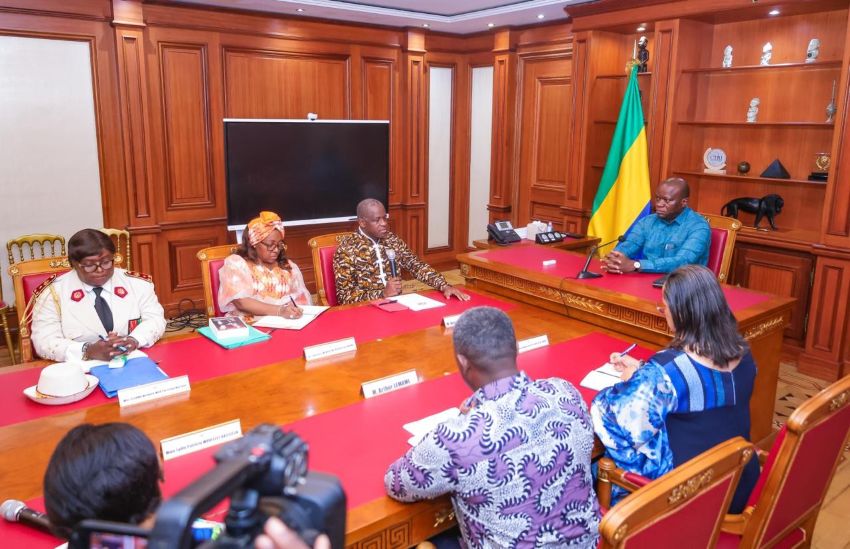
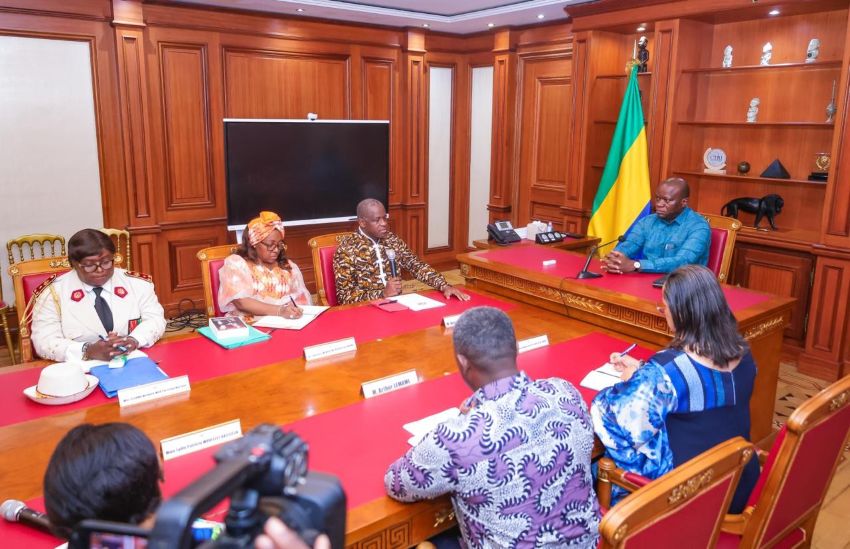
Libreville, June 13 2026 — In periods of profound political transformation, nations often seek stability not only through formal institutions but also through the moral foundations of society. Gabon’s recent meeting between President Brice Clotaire Oligui Nguema and Reverend Louis Sylvain Allogo Engo, leader of the Evangelical Church of Gabon, exemplifies this evolving relationship between state and faith.
The presidential audience went beyond standard protocol, highlighting how religious institutions contribute to national cohesion and the consolidation of the Fifth Republic. As Gabon navigates its post-transition institutional rebuilding, the engagement with spiritual leaders has emerged as a vital tool for governance in Africa, where faith-based organizations often wield greater social influence than some government agencies.
Religious institutions as pillars of national stability
For decades, Gabon’s religious institutions have played a central role in shaping daily life, from education and healthcare to youth mentorship and community mediation. Far from being mere spiritual entities, these organizations serve as trusted bridges between citizens and the state, promoting values of civic responsibility and collective solidarity.
This dynamic is not unique to Gabon. Across Africa, religious bodies frequently act as stabilizing forces, preventing social fractures and fostering peace through their deep-rooted community connections. Their ability to mobilize populations makes them indispensable partners in governance.
The presence of the Vice President during the meeting underscored the strategic importance of these exchanges. The state’s acknowledgment that institutional strength depends not only on legal frameworks but also on sustained dialogue with societal forces reflects a progressive governance approach.
Laïcité as a foundation for partnership
A defining feature of the encounter was President Oligui Nguema’s emphasis on balanced cooperation between the Republic and religious institutions, strictly within the principles of laïcité. This stance is significant: it reaffirms that laïcité does not preclude collaboration but rather establishes a framework where both state and faith operate within their respective domains while contributing to the public good.
The Evangelical Church of Gabon, a major national religious body with a presence across the country, has accompanied the nation through pivotal historical moments. Reverend Engo emphasized the Church’s role in spiritual guidance during critical junctures, reinforcing a relationship built on mutual trust and shared vision for Gabon’s challenges.
Human development at the heart of collaboration
Discussions also addressed the upcoming national synod of the Evangelical Church, scheduled for July 20–26, 2026, in Baraka Mission. The state’s willingness to support this event signals a broader development philosophy—one that values moral guidance, civic education, and community cohesion alongside economic and infrastructural progress.
This approach aligns with contemporary global development models that recognize resilience in nations that integrate economic performance with strong social capital. By prioritizing engagement with spiritual leaders, Gabon’s leadership underscores that modernization thrives not only in ministries and boardrooms but also in the communities where collective values take root.
The presidential audience stands as a symbol of the Fifth Republic’s governance philosophy: one that champions dialogue, consensus-building, and long-term national stability. In an era marked by identity-based divisions, Gabon’s strategy of strengthening ties between public institutions and spiritual communities may prove pivotal in securing its future stability.