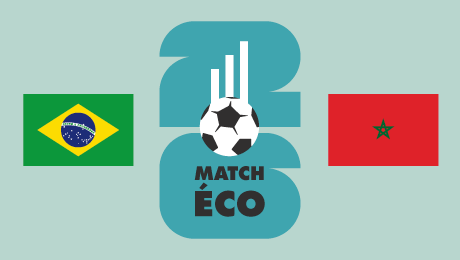
When comparing economic indicators ahead of the 2026 World Cup, the contrast between Brazil and Morocco reveals unexpected insights. While Brazil enters the match with notable strengths, Morocco appears poised to outperform in key financial metrics.
Brazil’s sizeable economy, yet fragile foundations
With a population exceeding 212 million and ranking as the world’s 10th largest economy, Brazil stands as a dominant force in global economics.
In 2024, its GDP per capita (PPP-adjusted) reached $22,000, nearly double Morocco’s $10,000. This gap reflects Brazil’s more advanced economic development, supported by a diversified industrial base, leading agricultural output, and a booming service sector. Yet, beneath this impressive facade lies a concerning fiscal reality.
The country’s public debt stands at 83% of GDP in 2024—higher than Morocco’s 70%. While both nations grapple with high debt levels, Brazil’s trajectory raises concerns among investors due to a persistent budget deficit and steep interest payments. Morocco, meanwhile, is actively pursuing structural reforms to stabilize its finances, particularly in preparation for hosting the World Cup.
Brazil 1 – Morocco 1
Morocco dominates in social and strategic metrics
Morocco’s advantage becomes most apparent in social and strategic areas. In 2026, its minimum wage stands at $275, surpassing Brazil’s $226—a reminder that a higher GDP per capita doesn’t always translate to fairer wages for workers.
The North African nation also outspends Brazil in defense expenditures, allocating 3.5% of GDP compared to Brazil’s 1%. This higher military investment underscores Morocco’s assertive geopolitical strategy amid regional instability. Life expectancy is nearly identical, with Brazil at 76 years and Morocco at 75.
Final score: Brazil 2 – Morocco 3
On economic grounds, Morocco emerges as the surprise victor—mirroring its recent achievements in international sports. Brazil retains undeniable strengths but struggles to distribute its prosperity equitably. Morocco, meanwhile, demonstrates how a developing economy can, through bold policies, compete with far larger players.
Tonight’s match will reveal if this economic prowess translates to victory on the field!