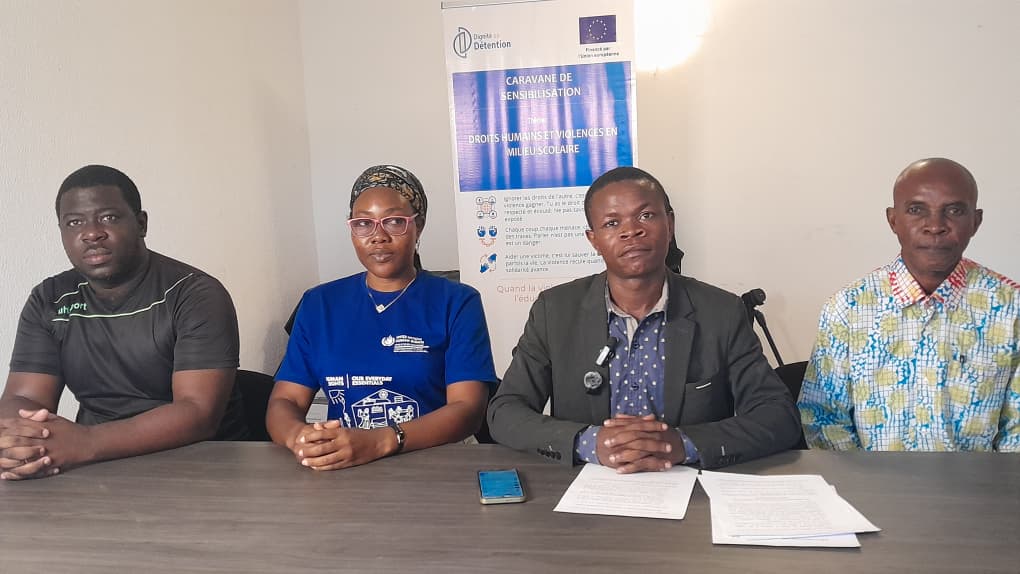
A coalition of Gabonese advocacy groups declared on Saturday in Libreville that they have initiated legal proceedings to challenge a notable increase in cyberattacks, specifically targeting WhatsApp and Facebook accounts.
This collective reported receiving approximately fifty complaints from Gabonese citizens across various demographics. Their analysis of these cyberattack incidents indicates that the widespread adoption of Virtual Private Networks (VPNs)—primarily used to circumvent the nationwide social media suspension implemented on February 17—appears to be a significant factor contributing to these security breaches.
Patrice Thérence Mezui, who serves as the president of the National Human Rights League and spoke on behalf of the coalition, noted, “The telephone numbers associated with these attacks typically begin with +500 or +600. These are international dialing codes. This strongly suggests that the perpetrators are not necessarily operating from within Gabon.”
The collective asserts that this issue, once uncommon, has proliferated significantly since the High Authority of Communication (HAC) officially suspended social media access on February 17, 2026.
“This action represents a clear violation of the Constitution, particularly the section dedicated to fundamental freedoms,” Mr. Mezui emphasized.
“The Court deemed itself without jurisdiction, classifying the contested measure as an administrative act,” he further explained.
Similarly, the Court of First Instance also declared its incompetence. Consequently, the coalition lodged a final appeal with the Conseil d’État. “We are currently awaiting the Conseil d’État’s ruling,” he stated, though he did not specify when this latest complaint was filed.
Immediate lifting of social media suspension demanded
The collective contends that the ongoing suspension of social media platforms directly increases the vulnerability of Gabonese citizens to cyberattacks. They are demanding the immediate termination of this suspension, which was initially temporary but has effectively become permanent. Furthermore, they urge the President of the Republic to enact the social media usage law recently passed by Parliament. Finally, the group proposes initiating discussions on social media policy to achieve a national consensus.
The HAC had previously justified its decision by citing the imperative to combat information disorder, cyber harassment, and hateful content. However, civil society groups argue that the measure is disproportionate and fundamentally contradicts the principles of a state governed by the rule of law.
