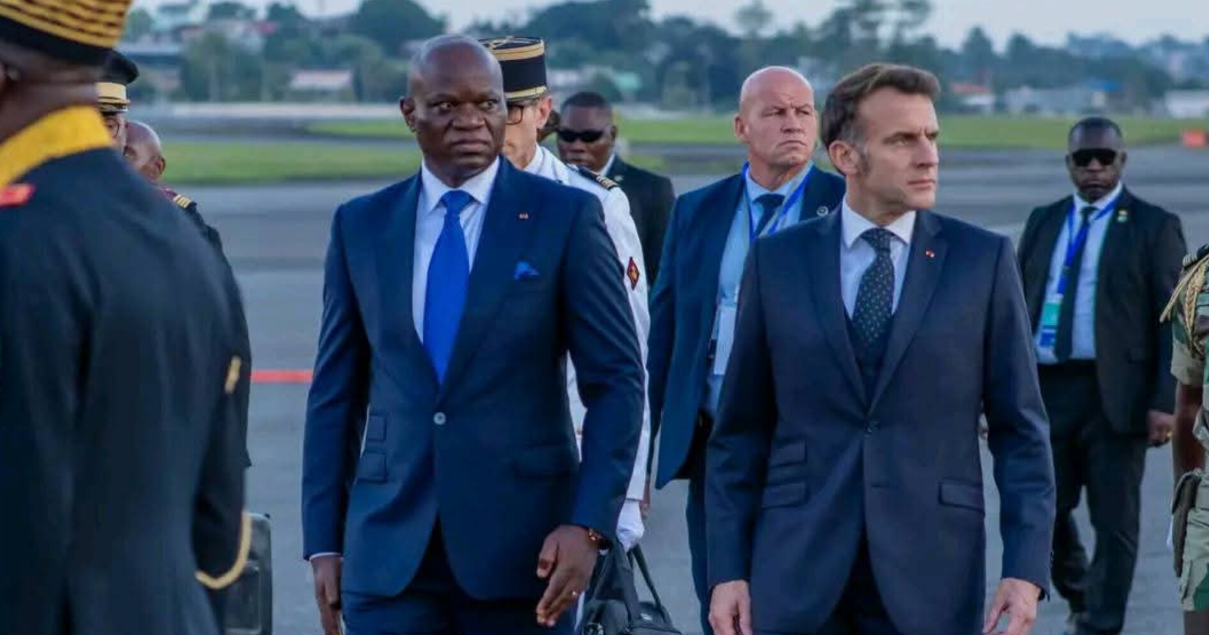
For three intensive days, Gabon’s head of state, General Brice Clotaire Oligui Nguema, embarked on a high-stakes state visit to France. At the heart of his discussions with President Emmanuel Macron were two critical issues: redefining the future of the Camp de Gaulle military base and accelerating the country’s local transformation of manganese. This diplomatic mission was not about dramatic ruptures but about asserting Gabonese sovereignty while reshaping a partnership that aligns with the nation’s long-term ambitions.
Camp de Gaulle: From colonial relic to strategic partnership
The military dimension of the talks reflected Gabon’s determination to rebalance its defense cooperation with France. The Camp de Gaulle, home to the French military presence in Gabon, has long symbolized a post-colonial security arrangement that Libreville now seeks to modernize. While France has already downsized its troop presence in the region, Gabon’s leadership is pushing for a deeper restructuring—not through confrontation, but through negotiation.
The Gabonese proposal is twofold: either transform the base into a jointly managed training center or reduce the French footprint to a minimal technical and counter-piracy role in the Gulf of Guinea. This approach underscores a delicate balance—reclaiming national sovereignty without severing essential security ties that remain vital for regional stability.
For Paris, the challenge lies in adapting to this new reality. After recent setbacks in neighboring Sahelian nations, France is keen to demonstrate that it can evolve its military posture while preserving key partnerships in Central and West Africa. The Gabonese model offers a compelling alternative to the confrontational tactics adopted elsewhere on the continent.
Manganese transformation: Gabon’s path to economic independence
The economic agenda of the visit was equally pivotal. As the world’s second-largest producer of manganese, Gabon has long exported its raw mineral wealth, predominantly to international markets. This extractive model, inherited from colonial times, is now under scrutiny. President Oligui Nguema made it clear to French industrialists and representatives of the mining giant Eramet—via its subsidiary Comilog—that the future of Gabon’s industrial relations hinges on local processing and value addition.
The Gabonese government is demanding a fairer distribution of profits, the creation of skilled jobs for its youth, and substantial financial and technological support to establish high-value processing plants. This strategy aligns with the global energy transition, where manganese is a critical component in electric vehicle battery production. By insisting on local transformation, Gabon aims to capture a larger share of the mineral’s economic benefits and reduce its dependence on raw material exports.
Libreville’s pragmatic diplomacy amid Sahelian isolation
The Gabonese approach stands in stark contrast to the confrontational strategies adopted by the military juntas of the Alliance of Sahel States (AES)—Mali, Niger, and Burkina Faso. While these regimes have embraced anti-Western rhetoric and abrupt policy shifts, Gabon is pursuing a more nuanced path. Rather than severing ties, Libreville is diversifying its partnerships with global players like China, Turkey, and India while maintaining a constructive, if demanding, dialogue with France.
This pragmatic diplomacy challenges the simplistic narrative that equates African sovereignty with the rejection of Western cooperation. Oligui Nguema’s leadership demonstrates that it is possible to assert national interests without resorting to isolationism or diplomatic rupture. The Gabonese model prioritizes economic pragmatism, strategic autonomy, and gradual reform—an approach that contrasts sharply with the instability and economic hardship seen in Sahelian capitals.
Digital repression: The shadow over Gabon’s democratic promises
Yet, the Gabonese government’s international image as a champion of sovereign diplomacy is not without blemishes. Domestically, concerns over media freedom and digital rights have grown. Frequent internet shutdowns, justified under the guise of maintaining public order and combating misinformation, have drawn criticism from civil society and opposition groups. These restrictions cast a pall over Libreville’s claims of openness and democratic progress.
During informal discussions on the sidelines of the state visit, French officials quietly emphasized the importance of upholding fundamental freedoms and freedom of expression. For President Oligui Nguema, the challenge is clear: preserving internal stability without undermining the credibility of his reformist agenda on the global stage. The delicate equilibrium between control and openness will be a defining test for his administration in the months ahead.
Striking the right balance: A new chapter for Gabon
The three-day visit concluded with a strategic roadmap for Gabon’s future relationship with France. By redefining the Camp de Gaulle’s role and accelerating the local processing of manganese, the Gabonese leadership has laid the groundwork for a partnership that prioritizes sovereignty, economic transformation, and pragmatic diplomacy.
However, the success of this vision will depend not only on international negotiations but also on domestic reforms. To fully realize its ambitions, the Gabonese government must address concerns about digital repression and ensure that its commitment to openness extends beyond rhetoric. The transition Gabon envisions—one of balanced power, economic resilience, and democratic integrity—will only be achieved if Libreville walks the talk at home as it does abroad.