Gabon : Cinq Ambassadeurs présentent leurs lettres de créance
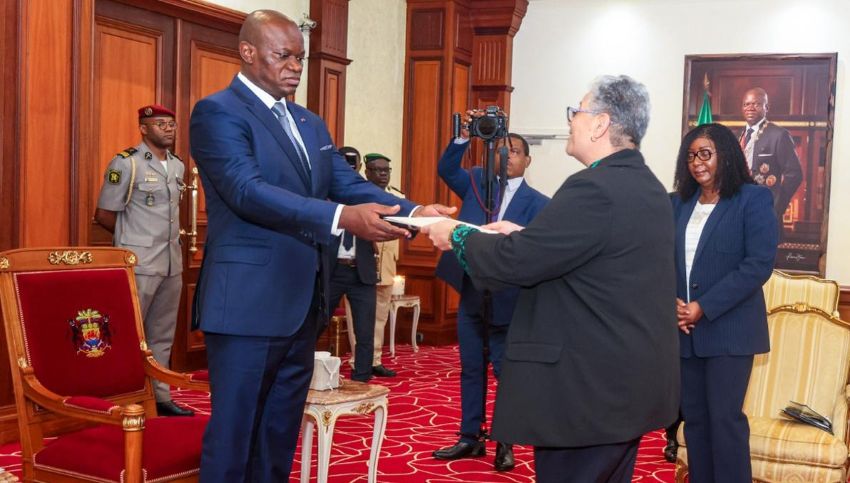
Libreville, June 25, 2026 – The essence of diplomacy extends far beyond formal visits or international summits. It is fundamentally reflected in the signals nations send when they choose to establish, strengthen, or reactivate their representation within another country.
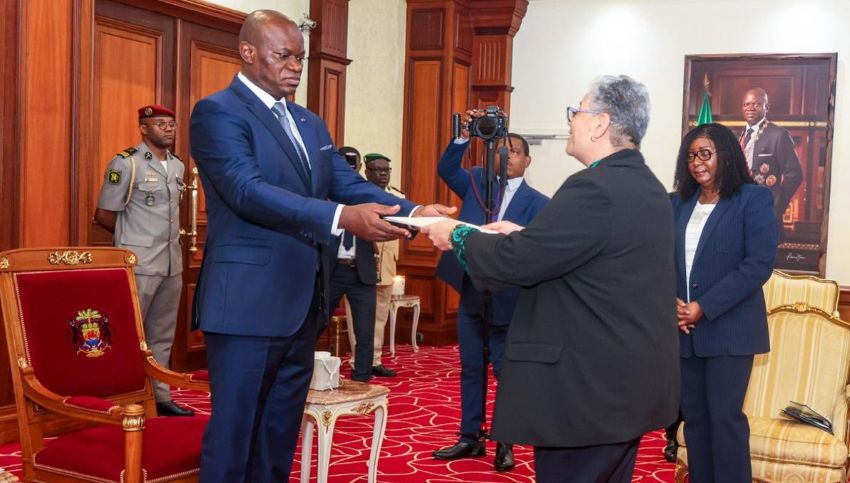
By formally accepting the credentials of five newly accredited ambassadors to the Gabonese Republic, President Brice Clotaire Oligui Nguema presided over an event that transcended mere protocol. This ceremony underscored a growing reality: Gabon is steadily reclaiming a pivotal position in the diplomatic, economic, and strategic landscape of the African continent.
In a global environment characterized by intense competition for resources, investments, and influential partnerships, the simultaneous interest from the Holy See, Chad, Australia, Iran, and Djibouti serves as a clear indicator of the country’s evolving international standing since the political transition initiated in August 2023.
Five Ambassadors, Five Strategic Messages for Gabon’s Future
The new diplomatic representatives, officially welcomed in Libreville on Wednesday, each highlight a distinct facet of Gabon’s foreign policy objectives.
Monseigneur Relwende Kisito Ouédraogo, the Apostolic Nuncio of the Holy See, based in Brazzaville, symbolizes the enduring historical relationship between the Vatican and Gabon. This relationship is built upon principles of dialogue, education, social peace, and humanitarian cooperation.
Fadoul Kittir Zakaria, the Ambassador of Chad, residing in Malabo, reaffirms the robust bonds between Central African states. These nations collectively face shared challenges in maintaining stability, ensuring security, and fostering regional integration.
The accreditation of Leilani Bin-Juda, Australia’s High Commissioner, with residence in Abuja, carries significant economic implications. Her appointment coincides with the Australian group Fortescue’s strategic involvement in the development of the Belinga project and its associated logistical corridor. This ambitious mining and industrial undertaking is recognized as one of Africa’s most significant, promising major advancements in infrastructure, energy, employment opportunities, and the local processing of natural resources.
The appointment of Seyed Gholamreza Mirmohammad Meigoni as Ambassador of the Islamic Republic of Iran opens up fresh avenues for cooperation across industrial, technological, academic, health, and training sectors. This move aligns with Gabon’s strategic intent to diversify its international partners beyond traditional alliances.
Finally, Mohamed Bourhan Ali, the Ambassador of Djibouti, introduces a particularly strategic dimension. Djibouti’s model is globally recognized for its expertise in port, logistics, and maritime operations – key sectors that Libreville is eager to develop to accelerate its economic transformation.
Economic Diplomacy: A Catalyst for Gabonese Development
Beneath these diplomatic accreditations lies a profound shift in Gabonese foreign policy. For an extended period, African diplomacy was often perceived as primarily a ceremonial exercise. However, the new direction championed by Gabonese authorities aims to transform every international relationship into a direct engine for economic development.
The pivotal projects undertaken in recent months are central to this renewed appeal. The advancement of the Belinga corridor, substantial investments in infrastructure, ambitious industrial goals, the local valorization of raw materials, and the active pursuit of new financial partners are progressively reshaping the country’s international image.
This evolution is particularly crucial given the escalating competition among African states to attract foreign capital. In this dynamic environment, Gabon’s ability to simultaneously draw interest from such diverse global players as Australia, Iran, and Djibouti signifies a diplomatic diversification rarely observed in recent years.
A Critical Test for Gabon’s International Credibility
The significance of this ceremony, however, extends beyond the diplomatic sphere; it also serves as a crucial test of credibility.
The interest expressed by these international partners largely rests on the reforms currently underway, the restored institutional stability, and the promise of sustainable economic transformation. This trust, while invaluable, remains delicate.
Recent history demonstrates that international investments are driven more by tangible results than by mere rhetoric. Therefore, the announced partnerships must translate into concrete, visible projects, operational infrastructure, new job creation, and genuine opportunities for the Gabonese population.
It is precisely at this juncture that the true success of this invigorated diplomacy will be determined.
By welcoming five new ambassadors from diverse geographical and strategic backgrounds, Gabon is sending a clear message to the world: the nation no longer wishes to be solely an exporter of natural resources. Instead, it aspires to become a regional hub for investments, industrialization, and international cooperation.
This ambitious vision is now evident in diplomatic circles. The challenge remains to transform it into a lasting economic reality. For the most effective diplomacy is not merely about accumulating foreign representations; it is about transforming international relations into national prosperity.

Related Articles