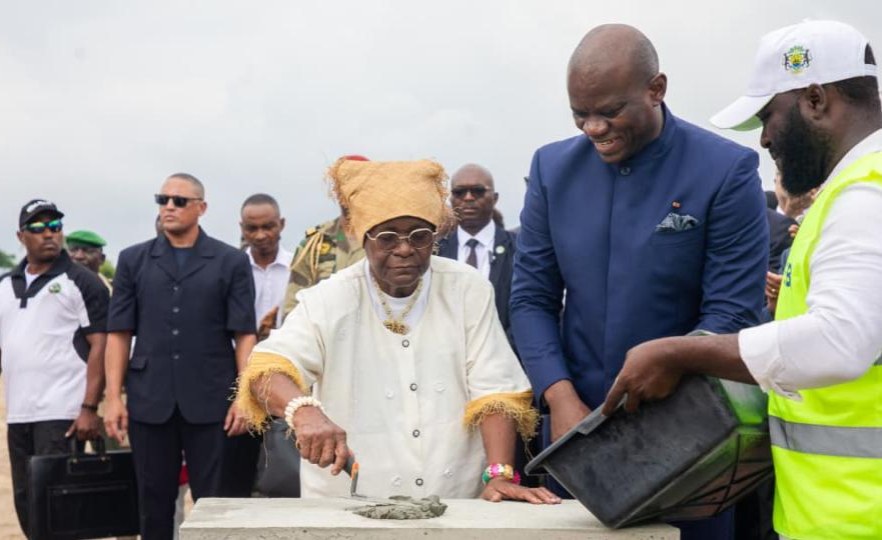
Gabon is laying the groundwork for a transformative shift toward post-petroleum industrial self-reliance. With President General Brice Clotaire Oligui Nguema at the helm, construction has officially begun on the deep-water port of Kobé-Kobé. This colossal integrated project, anchored to one of the planet’s largest untapped iron ore reserves and complemented by cutting-edge rail and energy infrastructure, aims to reshape the nation’s growth trajectory by 2030.
Anchoring Gabon’s economic revival in maritime infrastructure
The coastal stretch of the country’s Estuaire province is about to welcome a premier logistics gateway. The upcoming Kobé-Kobé deep-water terminal will boast a draft of 14 to 16 meters, enabling it to accommodate ultra-large commercial vessels. This technical edge positions Gabon to compete more effectively with major West and Central African ports such as Kribi in Cameroon or Pointe-Noire in Congo.
A fully integrated industrial ecosystem
What sets Kobé-Kobé apart is its interconnected design. The port isn’t an isolated facility; it’s the maritime gateway to a nationwide value chain built around three flagship initiatives:
- Belinga iron ore project in Ogooué-Ivindo province, recognized by geologists as one of the world’s most significant yet untapped high-grade iron ore deposits;
- An all-new rail corridor directly linking the Belinga mining heartland to the Estuaire port complex;
- The future Booué hydroelectric dam, designed to secure the energy independence of mining and processing plants.
By mandating local metallurgical processing before any export, this coordinated strategy seeks to break the historical pattern of extractive rent-based economics. The project gained decisive momentum in April 2026 with the signing of a strategic partnership agreement between Gabon’s government and Africa Global Logistics.
Job creation and social transformation
Officials in Libreville frame Kobé-Kobé as more than infrastructure—it’s a catalyst for social inclusion. Economic impact forecasts anticipate up to 160,000 direct and indirect jobs across construction and operational phases. Young Gabonese professionals stand to gain access to diverse technical roles in civil engineering, port operations, energy engineering, rail maintenance, and metallurgy.
The project also aims to energize the local private sector, integrating small and medium-sized enterprises into supply chains and service provision. By fostering these partnerships, the government hopes to create a multiplier effect that strengthens Gabon’s broader economic fabric.
A strategic pivot toward sustainable industry
Launched during President Brice Clotaire Oligui Nguema’s constitutional mandate, Kobé-Kobé embodies a bold vision: restoring national economic sovereignty by reclaiming control of critical infrastructure. As Gabon prepares for the gradual depletion of its oil reserves—the backbone of state revenue—it is proactively pivoting toward sustainable mining and heavy industry. If current timelines hold, the Kobé-Kobé complex will emerge by 2030 as the cornerstone of Gabon’s industrial emergence.