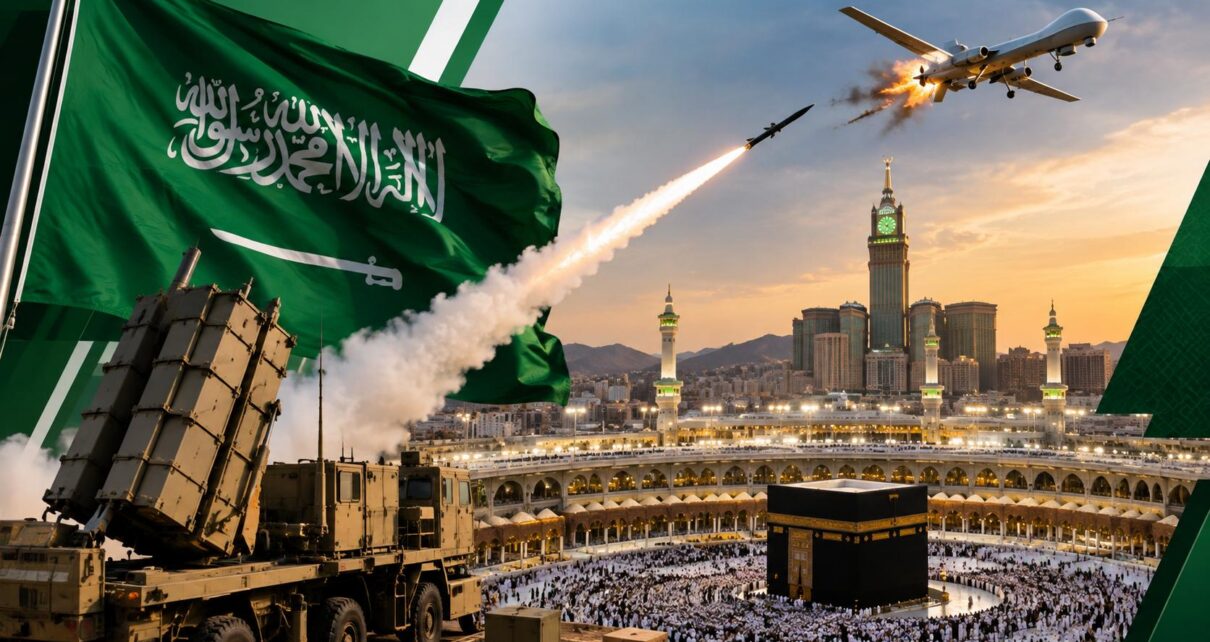
The interception of a Houthi drone targeting the Mecca region has sent shockwaves through Saudi Arabia, underscoring both the immediate dangers to the kingdom’s sacred sites and the long-term economic repercussions. On September 15, Saudi air defenses neutralized an armed drone south of Islam’s holiest city, a move that Saudi military officials warn signals a dangerous escalation in the Yemen conflict.
Saudi air defense foils Houthi attack on Islam’s holiest city
According to defense officials, the drone was detected and destroyed before it could breach the restricted airspace surrounding Mecca. While the operation caused no casualties or property damage, the symbolic weight of the attack cannot be overstated. Mecca, home to the Grand Mosque and a permanent hub for pilgrims and residents, remains a top-tier target for militant groups seeking to maximize terror and disruption.
Symbolic targeting puts Mecca at the center of regional instability
The coordinated statement from the Saudi-led coalition highlighted the intentional nature of the drone’s trajectory. Military spokesperson General Turki Al-Maliki condemned the attack as a deliberate attempt to destabilize Saudi Arabia and endanger civilian lives, including worshipers at the Grand Mosque. He emphasized that targeting a religious site of such global significance represents a dangerous escalation in the ongoing conflict.
Saudi Arabia vows to protect its territory and sacred sites
The incident has prompted Riyadh to reaffirm its commitment to full-spectrum defense measures, including intercepting drones, missiles, and other airborne threats. The coalition warned that any attack on Saudi soil—especially one targeting Mecca—would be met with a proportionate and immediate response to safeguard national security and regional stability.
Yemen war escalates with direct threats to Saudi Arabia’s heartland
This drone interception is the latest in a series of Houthi attacks targeting Saudi Arabia since the 2015 intervention in Yemen. While most strikes have focused on oil infrastructure, airports, or border areas, attempts to penetrate deeper into Saudi territory—particularly toward Mecca—carry enormous psychological and diplomatic impact.
Recurring attacks reveal Houthi resilience and regional fragility
Despite multiple UN-brokered ceasefires and mediation efforts, Houthi forces continue to demonstrate operational capacity, launching drones and ballistic missiles across the frontier. The persistence of these attacks highlights the difficulty of achieving a sustainable peace and raises questions about the long-term security of Saudi Arabia’s western regions.
What’s next for Saudi Arabia’s defense and regional stability?
The successful interception is a tactical victory for Saudi air defenses, but the broader implications extend far beyond immediate security. Analysts warn that each failed attack on Mecca intensifies geopolitical tensions, disrupts pilgrimage seasons, and risks undermining Saudi Arabia’s economic stability—especially in tourism and logistics sectors dependent on regional peace.
Economic fallout looms over Mecca’s religious and commercial hubs
Mecca’s status as a global pilgrimage destination makes it a linchpin of Saudi economic activity. Any perception of vulnerability could deter millions of worshipers, affecting revenues from religious tourism, hospitality, and related industries. Saudi officials have not yet detailed specific countermeasures, but the incident is expected to accelerate investment in advanced missile defense systems and intelligence capabilities.
Diplomatic ripple effects challenge regional peace efforts
The timing of the attack—amid fragile ceasefire negotiations—could derail ongoing peace talks and strengthen hardline factions in both Saudi Arabia and Yemen. Regional observers note that as long as drone and missile attacks continue, the prospects for de-escalation remain slim, with both sides digging in for a prolonged conflict.
With no clear end to the Yemen war in sight, the failed Mecca drone strike serves as a harsh reminder: the safety of Islam’s holiest city is no longer a peripheral concern—it is central to the future of regional security and economic prosperity.