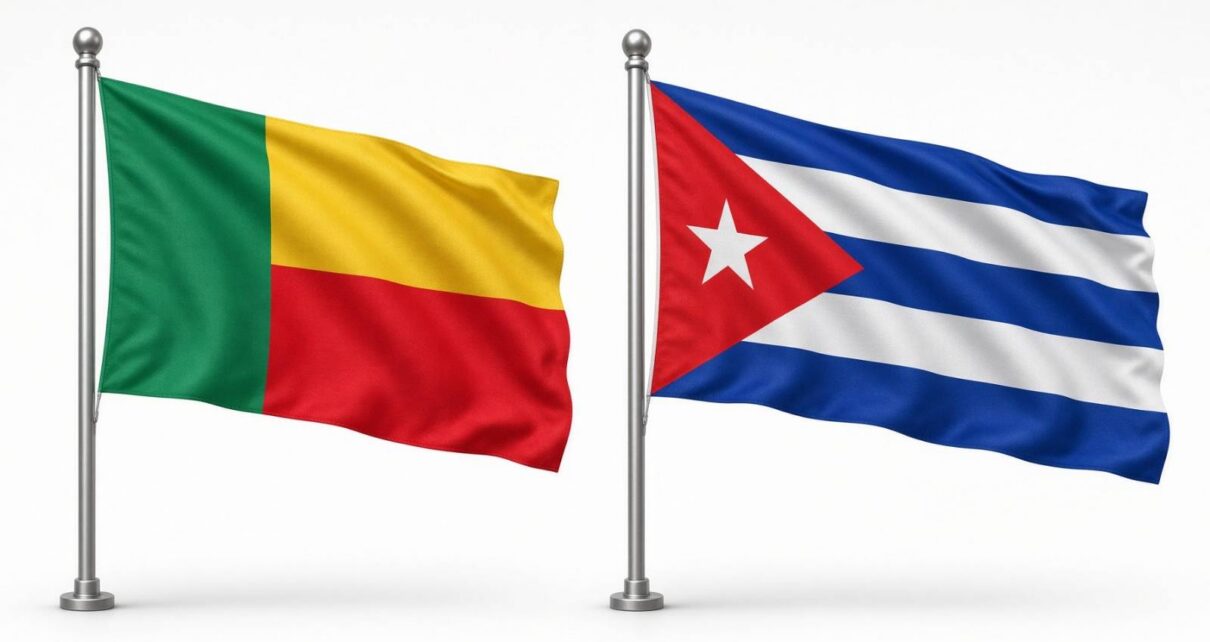
The Republic of Benin and the Republic of Cuba have opened a fresh chapter in a partnership that stretches back decades. During a diplomatic audience held in Cotonou between Cuba’s ambassador, Denisse Amaro Salabarría, and the leadership of Benin’s Chamber of Commerce and Industry (CCI Benin), both sides restated their determination to breathe new life into trade and commercial exchanges. For ordinary traders, small manufacturers and logistics operators, the consequences could be tangible: new export outlets, cheaper access to Cuban pharmaceutical and biotech products, and a busier Port of Cotonou handling goods bound for the wider region.
Why the Cotonou meeting matters well beyond the handshake
Talks between two chambers of commerce rarely make headlines, yet this one carries weight. Benin and Cuba share a long friendship built on cultural affinity and steady South-South solidarity. On the institutional side, the current drive builds on a framework agreement signed in 2002 between the two chambers. As global market conditions shift, Cotonou and Havana now want to update that arrangement and turn it into something more practical: a genuine engine of growth rather than a symbolic partnership.
Two decades of groundwork and a shared ambition to modernise
The relationship is not starting from scratch. The 2002 accord gave both countries a formal channel for business dialogue, and today’s discussions aim to give that channel real momentum. The stated goal is to convert an old diplomatic bond into measurable commercial activity that reaches companies, workers and consumers on both sides of the Atlantic.
What Beninese companies could gain from the relaunch
Speaking during the exchanges, Cuba’s representatives outlined the economic reforms recently adopted on the Caribbean island. Those changes, they argued, create room for Beninese investors and entrepreneurs to move in earlier than competitors from other regions. For Benin’s private sector, that means potential openings in supplying equipment, processed goods and services to a market that is actively restructuring.
Priority sectors identified for future partnerships
- Agro-industry and food production
- Renewable energy
- Tourism and cultural engineering
- Biotechnology and the pharmaceutical industry, an area where Cuba has earned worldwide recognition for its expertise
The Havana international fair as the first real test
To move from intentions to contracts, Beninese businesses have been invited to take part in the Havana International Fair (FIHAV), one of the Caribbean region’s largest commercial gathering points. Attendance there would give Beninese exporters and investors direct contact with Cuban buyers, distributors and public agencies — a far more concrete step than another round of declarations.
Benin pitches itself as West Africa’s gateway
On the Beninese side, the CCI Benin delegation made the case for the country’s geostrategic position as an essential logistics and trading platform in West Africa. Highlighting the continuous modernisation of the Autonomous Port of Cotonou, the Beninese representatives urged Cuban economic operators to treat Benin as their entry point into West African markets. If that message lands, the effects would ripple well past Cotonou: freight volumes, warehousing activity, customs revenue and regional distribution networks could all feel the difference.
What the roadmap means for citizens and the wider economy
The meeting is presented as the starting point of a roadmap built around regular monitoring of the commitments made. That follow-up mechanism matters, because it determines whether the relaunch produces real outcomes — jobs in agro-processing and renewables, new revenue for logistics firms, and a stronger flow of goods between the Gulf of Guinea and the Caribbean. The relaunch of this historic partnership is now officially underway, and its practical results will be measured in trade figures rather than communiqués.