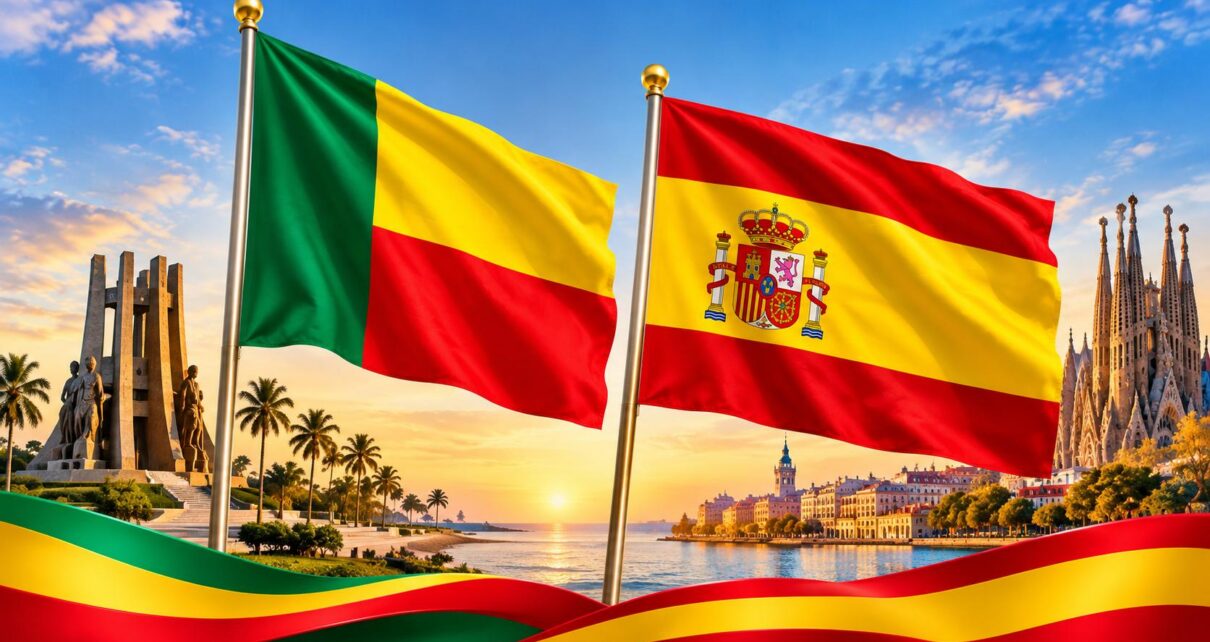
Cotonou and Madrid have moved well beyond the symbolic handshake. The cultural cooperation now taking shape between Benin and the Kingdom of Spain is being designed around results that households, studios and tourism operators can actually count: paid residencies, transferable skills, restored heritage sites and a visitor economy with more to sell. For a creative sector that has long performed above its weight, the significance lies less in the diplomatic choreography than in the income it can generate.
Where the impact will land first
The partnership is not a single announcement but a series of practical channels, each with a direct effect on the people who work in culture and tourism.
- Artistic excellence: structured programmes of cross-border residencies and expert exchanges between visual artists, performers and heritage restorers, giving professionals a route to paid, visible work rather than occasional showcases.
- Heritage protection: Africa and Europe share a determined commitment to preserving and presenting collections, with Spain contributing its long-established know-how in cultural and tourism engineering.
- Creative industries: professionalisation built on training for stage and performance trades, combined with the digitisation of artworks, which opens new markets and new revenue streams for creators.
Why Benin’s creative economy stands to gain the most
By multiplying high-level alliances of this kind, Benin reinforces its position as a cultural heavyweight in West Africa. A deliberate government policy that treats the arts and tourism as pillars of socio-economic development is the engine behind it: the country is demonstrating that cultural diplomacy is one of the most effective ways to assert sovereignty and attract demanding international partners.
The consequences run in both directions. Spanish institutions gain access to a vibrant, fast-moving creative scene, while Beninese artists, technicians and craftspeople gain training, networks and credibility that translate into contracts, commissions and, ultimately, jobs.
What Spain adds: cultural engineering and tourism expertise
Madrid’s contribution is not limited to prestige. Centuries of experience in managing heritage sites, museums and tourism flows give Spanish partners a toolkit that Benin can adapt rather than reinvent. For local operators — galleries, guesthouses, tour guides, transport providers and artisans — that means sites that are better presented, visitors who stay longer and spend more, and a cultural offering that competes on quality rather than novelty.
More than an agreement: an economic signal
This fruitful symbiosis with the Kingdom of Spain points to a new era. It is a human, aesthetic and strategic undertaking that shows how a renewed intercontinental dialogue can be built on mutual respect, a passion for beauty and a constant pursuit of excellence. Read through an economic lens, it is also a signal to investors, entrepreneurs and young professionals: culture in Benin is no longer a side story, it is a sector with a future.