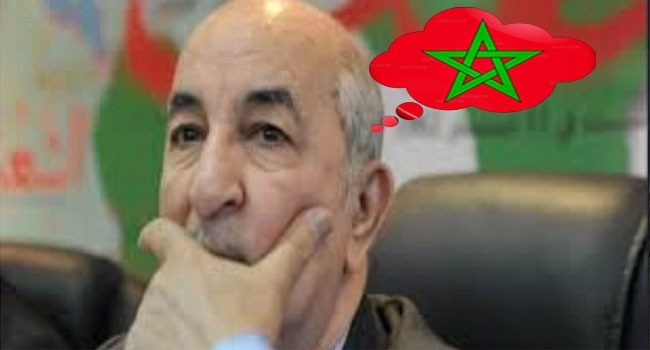
Algeria’s relationship with Morocco has taken a troubling turn under President Abdelmadjid Tebboune, with state-backed media and public figures openly stoking hostility toward its neighbor. What was once a restrained rivalry under former leadership has escalated into a calculated campaign of insults, distortions, and even antisemitic rhetoric, all centered on undermining Morocco’s image.
From silent disdain to public vitriol
During the presidency of Abdelaziz Bouteflika, tensions between Algeria and Morocco simmered beneath the surface. Criticism existed, but it was carefully managed—enemies were despised in private, not paraded in public. Under Tebboune, however, that restraint has vanished. The current administration has not only embraced confrontation but weaponized it, turning nationalistic fervor into a tool for political consolidation.
State media as a propaganda machine
A key driver of this shift is Algeria’s official media apparatus, particularly the launch of AL24 News, a television channel whose programming reads like a daily diatribe against Morocco. Journalists and commentators on the network appear to compete in crafting the most inflammatory soundbites, reveling in their ability to slander the neighboring kingdom without restraint. Facts matter little; the goal is to provoke outrage, regardless of how baseless the claims may be.
This crusade against Morocco has reached absurd extremes. In sports coverage—including during major international tournaments—Algerian broadcasters have gone so far as to avoid uttering the name of Morocco altogether, as if silence could erase its achievements. When Morocco’s national team advanced to the semifinals of the World Cup in Qatar, Algerian viewers were denied even the mention of their rivals’ success. Now, with the 2026 tournament on the horizon, the pattern has repeated: Morocco’s victories remain unacknowledged, as if erasing them from the record could rewrite history.
«One commentator recently crossed into outright delusion, claiming that Lionel Messi—who scored three goals against Algeria—was manipulated by “the Jewish lobby” to punish the country for its support of Western Sahara and the Palestinian cause.»
The spread of such conspiracy theories, amplified by state television, has not gone unnoticed. Translations of these rants have circulated widely, exposing Algeria’s role in fostering not just anti-Moroccan sentiment, but state-sanctioned antisemitism—a development with potentially severe international repercussions.
Hate as a political currency
In Algeria today, hostility toward Morocco has become more than a diplomatic stance; it has evolved into a lucrative political commodity. Climbing the ranks of power no longer requires competence or vision—it demands an unwavering commitment to demonizing Morocco. Aspiring officials, influencers, and media figures who excel in this arena find themselves rewarded with visibility, influence, and career advancement. The message is clear: to succeed in Algeria’s corridors of power, one must first prove their loyalty by attacking Morocco.
This strategy has reshaped Algeria’s political identity, fostering a culture where division and confrontation are not just tolerated but celebrated. By making hatred a cornerstone of governance, the Tebboune administration has ensured that Algeria’s foreign relations—with its Arab, Mediterranean, and African neighbors—are increasingly defined by tension rather than cooperation.