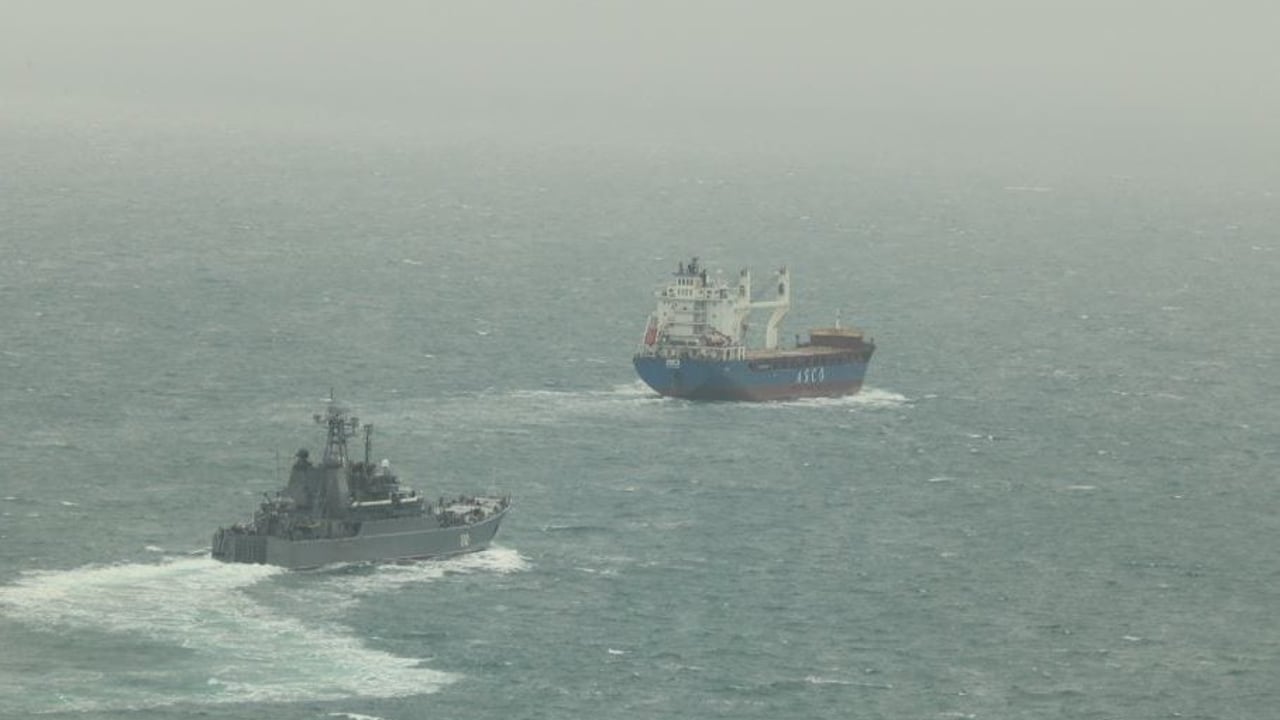
The bustling port of Conakry has quietly evolved into a critical transit hub for military shipments destined for Mali, with evidence suggesting a growing Russian presence in the flow of arms. Recent maritime operations, including the escort of a cargo vessel by Russian naval forces, have raised questions about the scale and purpose of these transactions.
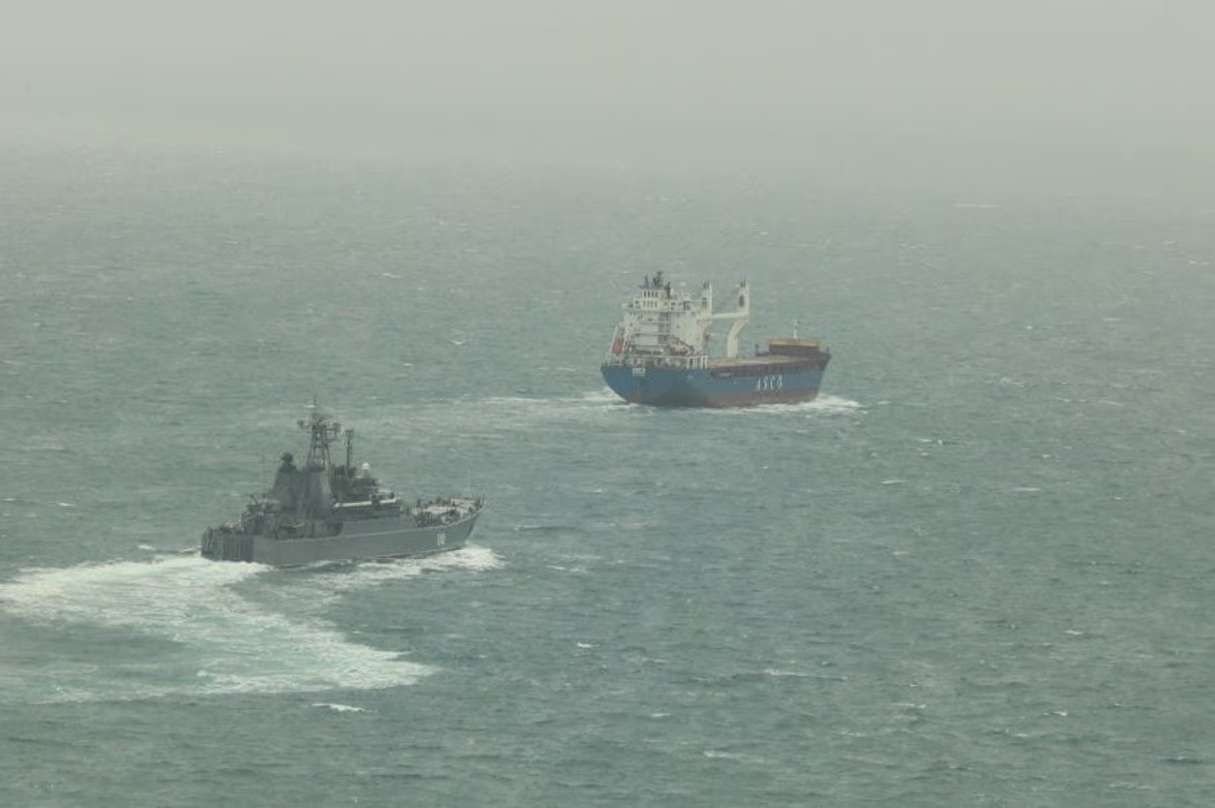
a strategic gateway for military cargo
Conakry’s port has long served as a commercial lifeline for West Africa, but recent developments point to a dual role in facilitating sensitive military transfers. Observers tracking maritime routes have noted an uptick in shipments linked to Russian entities, particularly those associated with private military contractors operating in the Sahel.
Key indicators include:
- Increased naval escorts: Russian vessels have been documented accompanying cargo ships through international waters, raising concerns about the nature of the cargo.
- Documented transactions: Shipping records and port logs reveal irregularities in cargo declarations, with discrepancies in listed contents versus observed shipments.
- Regional implications: The flow of these arms coincides with Mali’s ongoing security challenges, prompting scrutiny over who benefits from their arrival.
the role of private military networks
Beyond state-led operations, private military companies have become instrumental in transporting equipment and personnel across the region. These entities, often operating under the guise of security contractors, exploit weak regulatory frameworks in transit countries to move restricted materials.
Notable patterns include:
- Discreet logistics: Shipments frequently avoid direct routes, opting instead for indirect paths through Guinea to obscure their final destination.
- Paper trails: Documentation often lists civilian goods while concealing military hardware, complicating oversight efforts.
- Local complicity: Port authorities in Conakry face pressure to facilitate these transfers, either through coercion or financial incentives.
geopolitical consequences and regional stability
The proliferation of Russian arms through Conakry’s port carries significant geopolitical weight. Neighboring countries, already grappling with insurgencies and political instability, now face the added risk of unchecked arms trafficking fueling local conflicts.
Potential outcomes include:
- Escalation of violence: The influx of advanced weaponry could intensify clashes between state forces and armed groups.
- Erosion of trust: Regional partnerships aimed at combating terrorism may fracture as suspicions grow over covert arms transfers.
- International scrutiny: Global powers monitoring the Sahel are likely to increase diplomatic pressure on Guinea to halt these activities.
what lies ahead for Conakry’s port?
As Guinea’s capital continues to serve as a crossroads for questionable shipments, the international community is demanding transparency. Whether Conakry can balance its economic interests with global security demands remains an open question.
The coming months will reveal whether Guinea’s port retains its reputation as a neutral commercial hub or becomes synonymous with illicit arms trafficking.