Togo has emerged as a crucial stage for an intense geopolitical rivalry between France and Russia. Through crisis diplomacy, security agreements, and the deployment of soft power, these two global players are vying for influence over a strategically vital nation nestled in the Gulf of Guinea.
Within the discreet corridors of power in Lomé, a complex diplomatic balancing act is underway. Historically regarded as a steadfast and quiet partner to France in West Africa, Togo now finds itself at the epicenter of a significant struggle for influence between Paris and Moscow. As French influence has visibly waned across the Sahel following successive diplomatic ruptures with Mali, Burkina Faso, and Niger, France is actively endeavoring to consolidate its standing along the maritime facade. However, Russia, emboldened by its successes among Sahelian neighbors, is steadily advancing its agenda in Lomé with a well-honed methodology.
France’s belated diplomatic reawakening
A clear alarm appears to have sounded in Paris. In April 2026, the French Minister of Foreign Affairs undertook an official visit to Lomé. This was no ordinary event; it marked the first trip by a French diplomatic chief to Togo in over two decades.
Recognizing that moral pronouncements are no longer sufficient to retain its traditional allies, France has chosen to recalibrate its strategy towards tangible investments with significant social impact. To counter the simmering anti-French sentiment prevalent in the region, Paris is now championing modernity and human development. The financing of a new university hospital and the establishment of a state-of-the-art artificial intelligence center in Lomé exemplify this determination to reposition France as an indispensable partner for the future, particularly for Togolese youth and elite circles.
The specter of the Africa Corps on the security front
Yet, in the most critical domain – that of security – Moscow appears to have gained a significant advantage. Confronted by a burgeoning jihadist threat in its northern Savanes region, Togo is actively seeking swift and unencumbered solutions.
In 2025, Lomé and Moscow formalized a military cooperation agreement. This strategic alignment paves the way for the potential deployment of the Africa Corps, the official Russian state entity that has succeeded the Wagner paramilitary group. For the Togolese government, the primary objective is to secure operational support and military hardware to safeguard the country’s north, where the operational approaches of the French army are often perceived as overly cumbersome or conditioned by political prerequisites.
Beyond weaponry: the battle for rail, soft power, and economy
The Kremlin’s strategic ambitions extend far beyond the military sphere. Russia has its sights firmly set on Togo’s primary asset: the deep-water port of Lomé, a vital logistical artery and a unique facility within the sub-region. Moscow envisions transforming it into its principal hub for accessing the Sahelian hinterland. Ambitious infrastructure projects are already under consideration, notably the construction of a railway and a pipeline connecting Lomé to Burkina Faso, thereby solidifying a corridor of influence linking the Gulf of Guinea to the military-led regimes of the Sahel.
Concurrently, Russia is deploying a particularly assertive soft power strategy to win over public opinion and civil society:
- Education: A substantial increase in university scholarships for Togolese students to study in Russia.
- Culture: The establishment of Russian language centers and the organization of various cultural events and concerts across Lomé.
- Information Warfare: The widespread dissemination of sovereignist and anti-Western narratives, which often find a receptive audience among certain segments of the population.
Faure Gnassingbé: the master of equilibrium
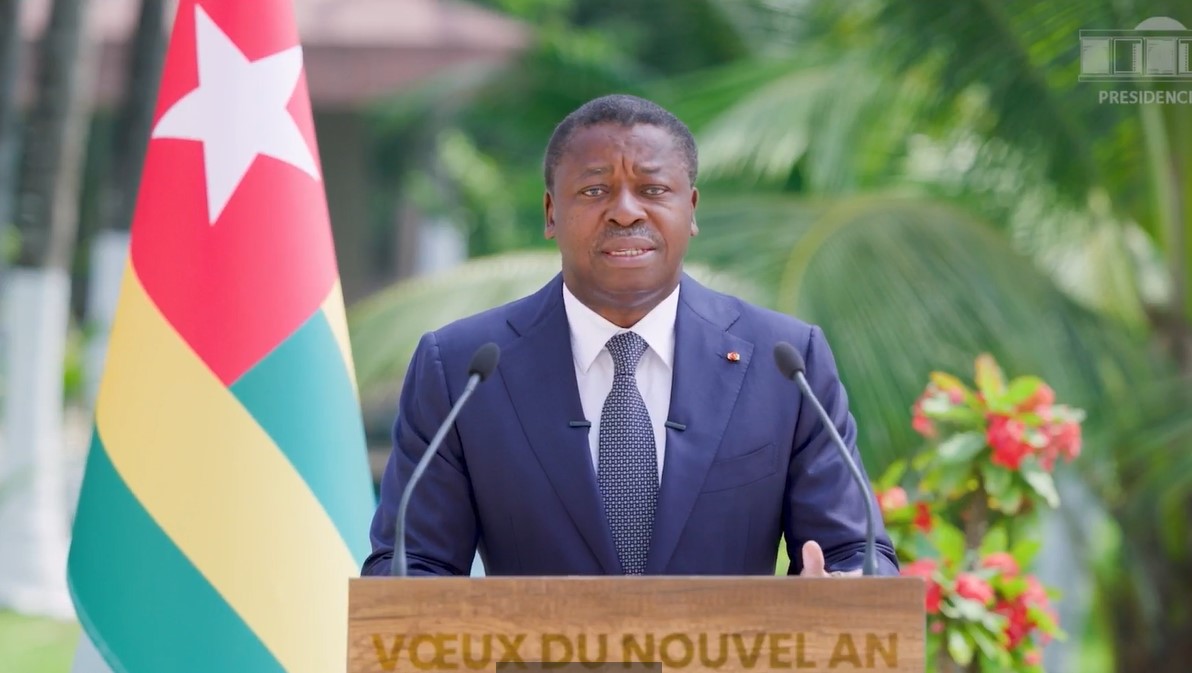
In the face of these competing overtures, Togolese President Faure Gnassingbé demonstrates remarkable political pragmatism. Rather than aligning definitively with one side, he skillfully leverages this rivalry to maximize benefits for his nation. The head of state continues to actively participate in France-Africa summits, carefully nurturing his relationships with Western nations, while simultaneously meticulously preparing for his visit to the upcoming Russia-Africa summit scheduled for October.
“The inherent danger of such a strategy is the potential for Togo’s purely national interests to be relegated to a secondary position within a global confrontation that ultimately transcends its borders,” cautioned a regional political analyst.
By deliberately positioning itself at the crossroads of these two worldviews – on one side, Moscow’s security pragmatism and decolonial discourse, and on the other, Paris’s development assistance and historical ties – Togo has become a crucial laboratory for the evolving power dynamics across the African continent. This high-wire diplomacy, however, may eventually incur a cost of dependence for Lomé.