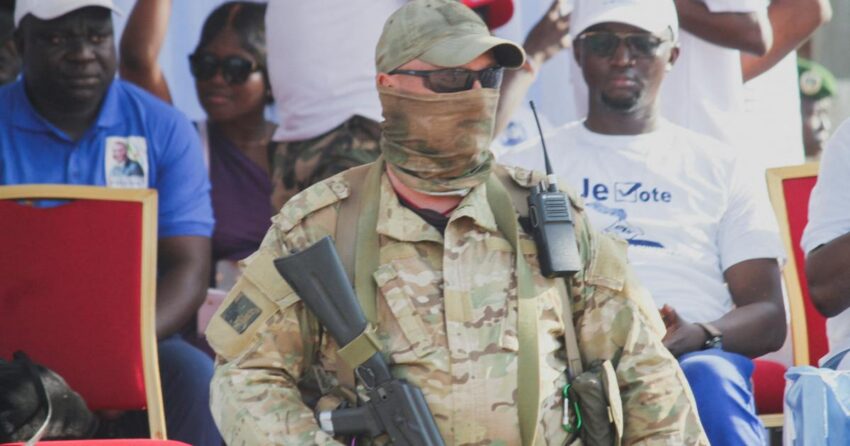
The paramilitary Wagner Group, once weakened by the death of its founder Evgueni Prigojine in 2023, is regaining momentum in Central Africa—particularly in the Central African Republic. According to The Wall Street Journal, the group has established what experts describe as an “opioid empire”, fueled by the trafficking of tramadol, a prescription painkiller increasingly repurposed as a powerful stimulant.
Originally developed for managing mild pain, tramadol in the region is often reconditioned into more potent forms, earning it the nickname “poor man’s cocaine.” Its distribution network, managed by Wagner operatives, stretches across the Central African Republic and into neighboring nations, where it is sold at inflated prices. The trade is not confined to street markets; it also infiltrates political and military circles.
Wagner’s growing influence through drug and mineral trade
Since its establishment in the Central African Republic in 2018, the Wagner Group has expanded its operations beyond security services, now controlling gold mining sites that generate an estimated $180 million (€160 million) in annual revenue, according to the Global Initiative. These illicit mineral exports are complemented by the group’s deep entrenchment in state institutions, as noted by the Center for Strategic Studies for Africa, funded by the U.S. Pentagon.
The Wagner Group’s footprint extends to the distribution of tramadol, which is smuggled via river routes from the Democratic Republic of the Congo into the Central African Republic. The drug is then channeled through local vendors, often with Wagner operatives orchestrating the logistics. According to reports, Wagner supplies it not only to civilians but also to key political and military figures, including the presidential guard, members of the pro-Russian ‘Sharks’ militia—a youth group known for armed patrols—and even opposition supporters, miners, and combatants involved in counterinsurgency operations.
Analysts quoted in The Wall Street Journal warn that Wagner’s influence could spread further into neighboring Sudan, where the Rapid Support Forces (RSF) are expanding their operations near the Central African Republic border. The convergence of drug trafficking and Wagner’s mercenary activities in the region underscores the group’s evolving strategy to sustain its operations amid global scrutiny.