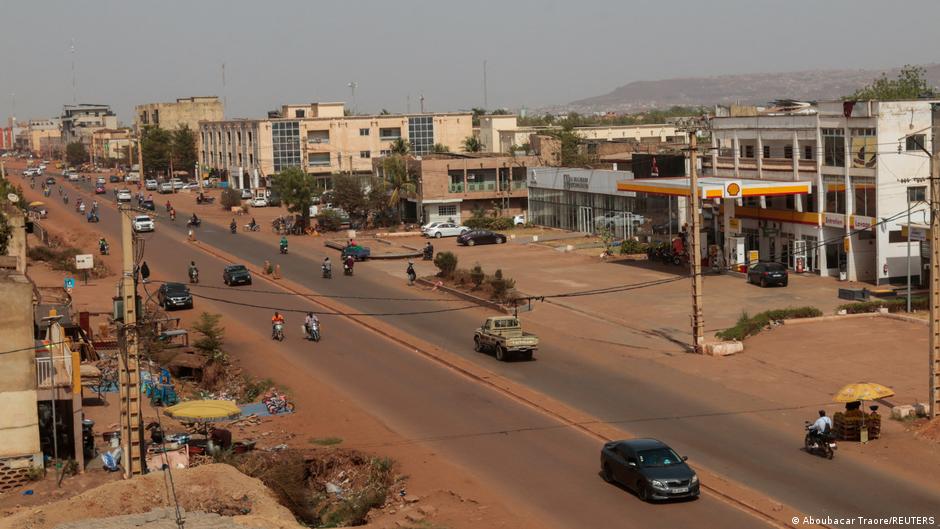
As the capital Bamako faces a tightening siege by jihadist factions, residents across central and northern Mali endure the cascading effects of relentless attacks by the Jama’at Nusrat al-Islam wal Muslimin (JNIM) and the Front de Libération de l’Azawad (FLA). The humanitarian fallout from these assaults has left critical supply routes severed, exacerbating an already fragile situation in one of Africa’s most landlocked nations.
Amnesty International has issued an urgent appeal to the JNIM, calling for the immediate restoration of civilian freedom of movement in Mali. The militant group has maintained a road blockade around Bamako for over two weeks, cutting off the city’s lifeline to essential goods and services. The capital, heavily reliant on overland imports, now faces severe shortages of food, fuel, and medical supplies.
“The ongoing siege of Bamako has inflicted unacceptable hardships on civilians, threatening their fundamental rights to food, health, and safety,” stated the human rights organization in a formal statement. “Deliberate obstruction of civilian supply routes violates international humanitarian law and must cease immediately.”
Amnesty highlighted a recent incident on May 6, where JNIM forces intercepted a civilian convoy carrying essential goods—including fresh produce—between Bamako and Bougouni. The convoy, unescorted by military personnel and carrying no weapons or troops, was targeted despite clear indications of its non-combatant nature.
Military escalation in Kidal as tensions mount
The Malian Armed Forces have announced plans to intensify aerial strikes on Kidal, a strategic city in northern Mali now under the control of the FLA and allied JNIM factions since late April. Military officials confirmed conducting multiple airstrikes on the city, while separatist forces claim to have captured over 200 Malian soldiers during clashes that erupted on April 25.
A local resident from Kidal reported persistent power outages and disrupted telecommunications, severing vital connections between the city and other northern regions. The lack of reliable information has left communities in a state of deep uncertainty, struggling to discern fact from fiction in a rapidly deteriorating security environment.
Northern Mali gripped by distrust and economic strain
In Gao, a city still nominally under government control, residents describe a climate of growing suspicion. “Authorities urge us to trust official statements,” shared one resident, who highlighted soaring food prices—such as onions doubling in cost—as a direct consequence of the blockade and disrupted trade.
Independent analyst Hervé Lankoandé Wendyam pointed to deeper political motives behind the violence. “There is a clear agenda to sever the North from the rest of Mali,” he noted. “What we’re witnessing in central Mali goes beyond mere insurgency—it reflects a deliberate escalation by the JNIM to seize urban centers and impose its control.”
Jihadist control spreads in central regions
Military and security experts describe a widening footprint of jihadist influence across central Mali, particularly along the left bank of the Niger River in the Ségou and Koulikoro regions. In these areas, government presence has effectively collapsed, replaced by the imposition of zakat (religious tax) collection and the closure of schools. Recent data indicates over 2,300 schools remain shut nationwide, with central and northern regions bearing the brunt of the closures.
Researcher Abdoulaye Sounaye, an expert on Sahel jihadist movements, suggests both sides are in a phase of strategic pause, regrouping and rearming. “I sense a brewing storm—Mali’s military leadership appears poised for a decisive counteroffensive, while JNIM and FLA factions are similarly preparing for renewed confrontation. The civilian population remains trapped in the crossfire.”
Scholars and analysts converge on a critical solution: the need for inclusive dialogue. Ahmed Ould Abdallah, head of the Centre d’Études et de Recherches en Sciences Sociales (4S), emphasized the urgency of national reconciliation. “The crisis is systemic, affecting all social groups. The government must engage with all political stakeholders to resolve this impasse through negotiation. Mali cannot afford eternal crisis—its leaders must commit to genuine dialogue.”
Sounaye, director of research at the Leibniz-Zentrum Moderner Orient in Berlin, echoed this sentiment: “At some point, all parties will be compelled to sit at the table and forge a sustainable agreement.” However, he cautioned that Bamako’s official stance remains firm—no negotiations with groups labeled as terrorists, including the FLA and JNIM. Notably, behind-the-scenes talks have reportedly occurred to ensure fuel supply continuity, underscoring the complex realities on the ground.