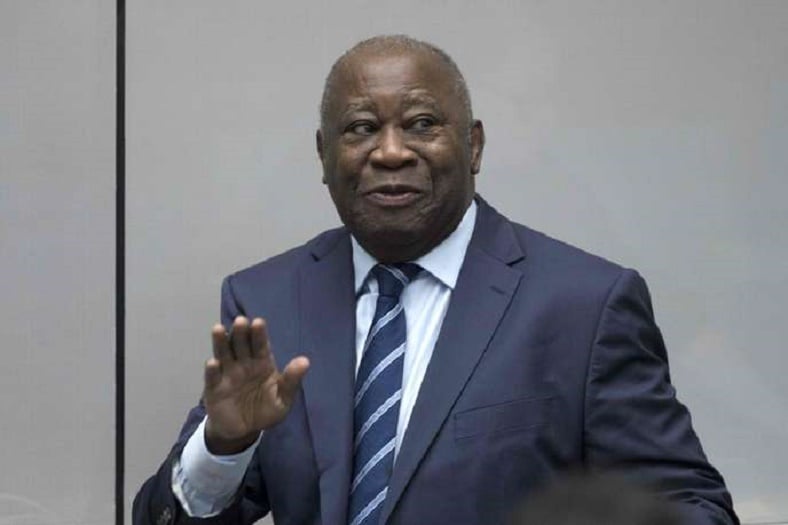
After years of political turbulence and electoral setbacks, Laurent Gbagbo, former President of Côte d’Ivoire (2000–2011), has been reaffirmed as the leader of the Parti des Peuples Africains – Côte d’Ivoire (PPA-CI) during the party’s first ordinary congress. Despite previously signaling his intent to step back in late 2025, his influence remains undiminished among supporters, even as the party faces mounting challenges following multiple election boycotts.
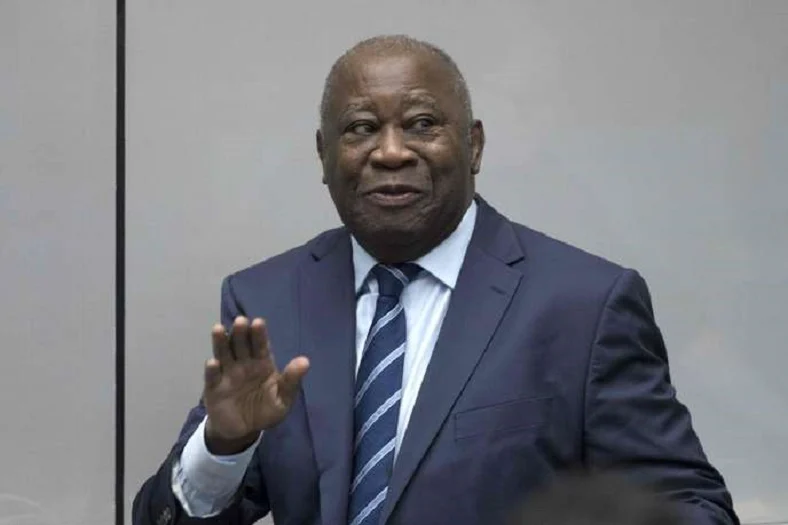
At nearly 81 years old, Gbagbo was barred from contesting the October 2025 presidential election due to a prior criminal conviction that disqualified him from voter registration. His party, the PPA-CI, neither nominated nor endorsed any candidate in that race, later choosing to boycott the December legislative elections. The consequences are stark: the party now holds no parliamentary seats and retains only a handful of mayors across the country.
Party congress solidifies Gbagbo’s leadership
The decision to reappoint Gbagbo as party president was formally announced during the closing session of the PPA-CI’s inaugural ordinary congress. The move followed a day of enthusiastic acclamation from the several thousand delegates gathered at the Treichville Congress Palace in Abidjan. Upon arrival, the former president was greeted with a rousing ovation from his supporters. In a brief address, he expressed gratitude, stating, “I am happy to be in this warm atmosphere, thank you.” A more detailed speech is scheduled for Saturday in Songon, a town south of the capital.
Surprisingly, Gbagbo had declared in October 2025 that he no longer wished to seek leadership roles within the party or pursue political office. His stance, however, appears to have shifted in response to the groundswell of support from party members.
Political fractures and internal discipline
The congress also featured a strong display of approval for a motion endorsing the Alliance des États du Sahel (AES), a coalition comprising Burkina Faso, Mali, and Niger—nations governed by anti-French military juntas that have adopted a confrontational stance toward Côte d’Ivoire. Additionally, disciplinary measures were taken against party members accused of disobedience. Ahoua Don Mello, who ran for president in 2025 against the party’s official position, was expelled, while Stéphane Kipré, who ran independently in the legislative elections and won a seat, received an 18-month suspension.
The once-dominant left-wing faction of Ivoirian politics, long associated with Gbagbo during his presidency, has since fragmented. Key figures such as his former wife Simone Ehivet Gbagbo, his former ally Charles Blé Goudé, and former Prime Minister Pascal Affi N’Guessan have distanced themselves from the PPA-CI.
The trajectory of Laurent Gbagbo’s political future hinges on his potential reinstatement on the electoral roll—a process contingent upon a presidential amnesty from Alassane Ouattara, his successor since 2011 following a violent post-election crisis that pitted their factions against one another.