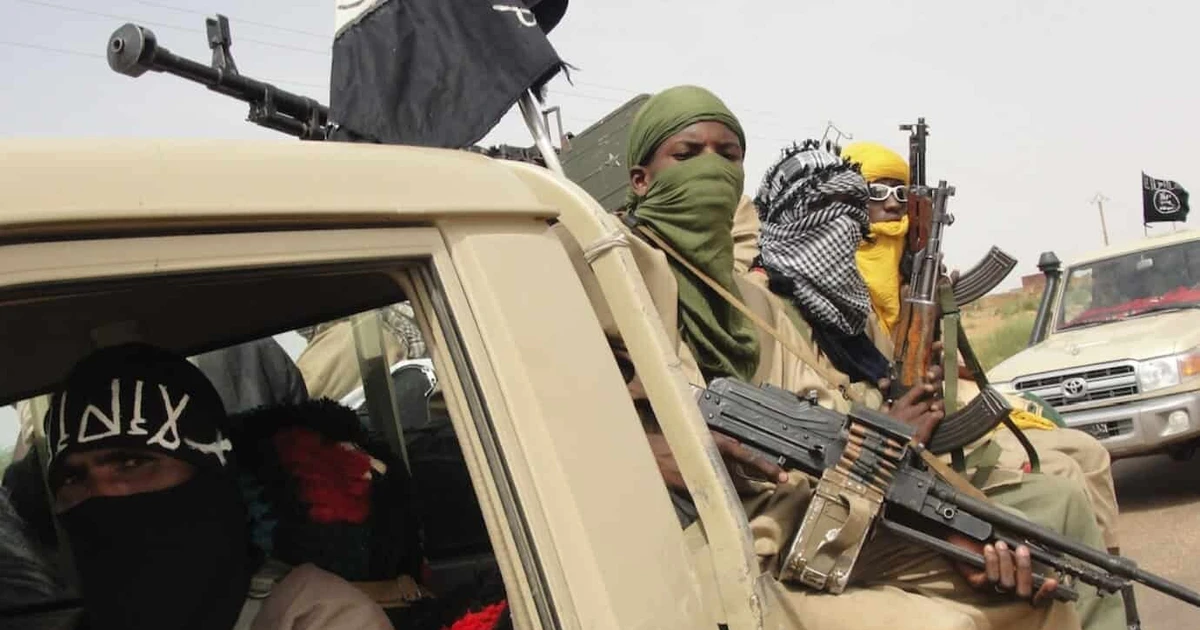
A deadly assault has targeted a combined security patrol comprising Malian government forces and Russian African Corps fighters in the volatile Mopti region. The surprise offensive, executed near the rural settlement of Kaka, claimed the lives of at least 13 personnel from the joint coalition.
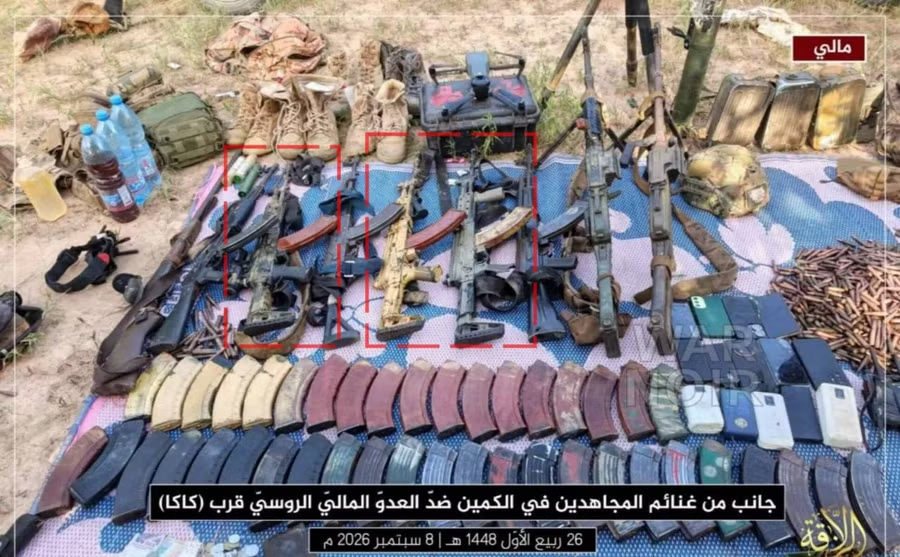
Following the intense confrontation, militants belonging to the Jama’at Nusrat al-Islam wal-Muslimin (JNIM) captured a significant cache of military hardware. The seized assets include 14 motorbikes, a pair of PKM machine guns, six Kalashnikov rifles, half a dozen grenades, and a substantial stockpile of ammunition.
This latest encounter follows a massive confrontation earlier in July, when insurgent forces intercepted a major military column in northern Mali. That column, which transported hundreds of local troops alongside Russian Defense Ministry personnel, suffered catastrophic losses. Over 60 Malian soldiers were killed, dozens sustained injuries, and at least 30 individuals were taken prisoner during the highly coordinated operation.
Despite the escalating frequency of these tactical ambushes against state and allied convoys throughout the territory, coordinated counter-strategies from Bamako and Moscow have yet to yield effective preventative measures.
Understanding the rise of JNIM in the Sahel
Operating as the primary Al-Qaeda affiliate in the Sahel, JNIM represents one of the most formidable armed factions in the region. The coalition was officially established in early 2017 through a strategic merger of several pre-existing militant groups, including Ansar Dine, Al-Mourabitoun, the Sahara Emirate branch of Al-Qaeda in the Islamic Maghreb, and Katiba Macina.
While Mali remains the operational epicenter for the group, its reach has expanded far beyond domestic borders. The organization’s combatants regularly execute operations across neighboring Burkina Faso and Niger, while steadily pushing their influence further south into West African coastal states like Benin and Togo.