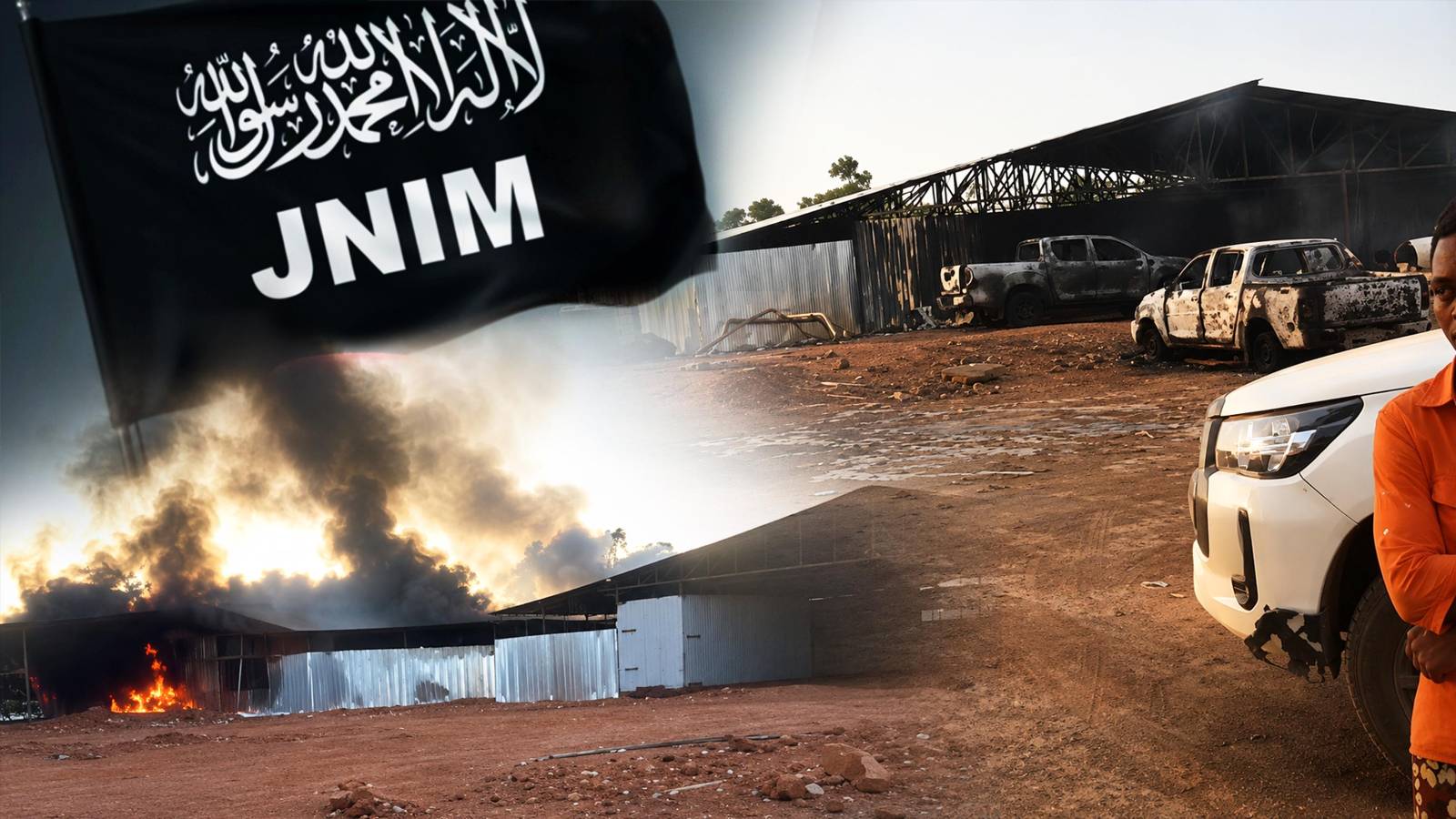
In a significant display of its escalating power, the Group for the Support of Islam and Muslims (JNIM) recently launched a devastating assault on a Chinese-operated mining facility in Naréna, Mali. This brazen attack, near the Guinean border, resulted in extensive material damage and, more alarmingly, the abduction of nine Chinese nationals. The incident starkly underscores a troubling reality: the Malian army, even with the backing of its Russian partners, is struggling to maintain territorial security, leaving crucial strategic and economic corridors vulnerable to armed groups.
a swift assault with dire consequences
The operational precision of the attack points to meticulous planning. Under the cover of night, dozens of armed militants, arriving on motorcycles and in all-terrain vehicles, stormed the Naréna mining site. This location, situated within the Kangaba circle, lies perilously close to the Guinea border—an area previously considered relatively safe from major jihadist incursions.
The assailants immediately focused on the production infrastructure. Construction machinery, electrical generators, and administrative buildings were systematically set ablaze. However, the human toll proved far graver. Multiple local reports confirm that nine Chinese workers were seized and taken to an undisclosed location. This tactic of hostage-taking provides JNIM with substantial political and financial leverage, placing pressure on both Bamako and Beijing.
malian army’s struggle: a security breakdown
The Naréna attack serves as a stark illustration of the Malian Armed Forces’ (FAMa) diminishing control over the nation’s territory. Once largely confined to the northern and central regions, the conflict is now relentlessly expanding south and west, imperiling Mali’s vital economic zones. The fact that a significant industrial site could be ravaged mere kilometers from an international border highlights a complete absence of effective security coverage.
On the ground, Malian forces appear to be largely on the defensive, often confined to their fortified barracks. The inability to either preempt this raid or pursue the abductors reveals gaping holes in Malian military intelligence. The transitional government’s pledges to “reassert national sovereignty” are increasingly clashing with the harsh reality of a territory that is progressively slipping from their grasp.
the russian alternative: an unfulfilled promise
To justify the expulsion of Western forces and MINUSMA, Mali’s transitional authorities had heavily invested in a bolstered military partnership with Russia, marked by the deployment of the former Wagner Group, now known as Africa Corps. A few years on, the assessment is unequivocal: the Russian mercenaries have proven entirely ineffective.
While specialized in brutal counter-insurgency operations that frequently target civilian populations, the Russian contingent seems ill-equipped to secure industrial infrastructure or wage high-intensity asymmetric warfare. Their patrols have failed to create the anticipated deterrent effect, and their presence has done nothing to impede JNIM’s geographical expansion. The illusion of a miraculous solution imported from Moscow is crumbling as attacks draw closer to the capital and vital mining areas.
chinese interests in the crosshairs: a geopolitical shift
By targeting Chinese interests, JNIM strikes at Mali’s economic heart. Beijing stands as a crucial commercial and industrial partner for Bamako, particularly within the gold and infrastructure sectors. Attacking foreign economic assets allows jihadists to financially cripple the Malian regime while simultaneously sending an unambiguous message to the international community: the Malian state can no longer guarantee the protection of its investors.
This incident could compel Chinese diplomacy to re-evaluate its investment strategy across the Sahel and intensify pressure on Bamako to provide security assurances that the junta is demonstrably struggling to deliver.
The assault on Naréna marks a profoundly concerning turning point in Mali’s ongoing crisis. By striking the mining sector near the Guinean border, JNIM unequivocally demonstrates its capability to act at will, whenever and wherever it chooses. In response, the combined efforts of the Malian army and its Russian partners continue to reveal their structural limitations. Without a fundamental shift in strategy and genuine protection for both its populace and economic stakeholders, Mali faces the grave risk of sinking further into a generalized state of lawlessness.