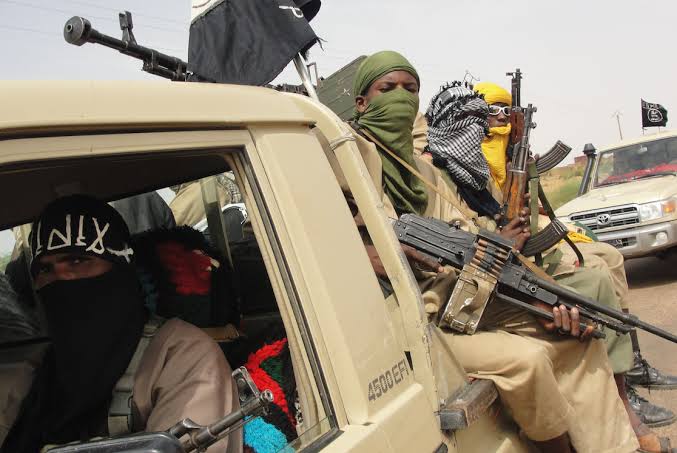
With the Malian military leadership entrenched in a defensive posture and jihadist groups advancing their agenda, citizens confront an impossible dilemma. The Group for the Support of Islam and Muslims (JNIM), affiliated with Al-Qaida, has re-emerged with coordinated attacks, while the Azawad Liberation Front (FLA) repossessed strategic territory. Yet, the transitional government led by General Assimi Goïta remains silent on its temporary absence during the crisis, merely asserting in a late April address that “the situation is under control.”
Despite these claims, the military’s inability to regain the initiative is stark. Six years after seizing power, the junta’s forces remain on the back foot, allowing armed factions to dictate the national timeline. The JNIM has escalated its campaign, imposing a crippling blockade around Bamako, while the FLA has re-established control in Kidal. For many Malians, the unthinkable—JNIM’s eventual seizure of state power—now feels inevitable.
Between a repressive junta and extremist rule
The JNIM’s ambitions are no secret. In a recent communiqué, the group vowed that once in power, its “top priority” would be the full implementation of sharia law. In areas already under their influence, populations endure the harsh realities of jihadist governance. Some opposition figures, desperate to oust the current regime, have floated the idea of a tactical alliance with JNIM—hoping for a “soft sharia” that would spare democratic institutions. Yet, the group’s rhetoric offers no reassurance of moderation; its victory would likely herald a theocratic order, not a return to civilian rule.
The junta, meanwhile, has only deepened its authoritarian grip. By systematically silencing dissent—through arrests, forced exiles, and enforced disappearances—it has inadvertently radicalized opposition, pushing many toward the very factions it claims to combat. The regime’s repression has backfired, empowering the JNIM as the most credible alternative to its own illegitimate rule.
No exit in sight for Mali
The 25 April joint offensive by JNIM and FLA exposed the junta’s vulnerabilities. In response, the military leadership has doubled down on repression, exemplified by the abduction of prominent lawyer and political figure Mountaga Tall on 2 May. The incident, carried out by masked assailants, mirrors the junta’s signature tactics of intimidation and control. Such actions only fuel public distrust and accelerate the erosion of the regime’s legitimacy.
JNIM’s call for a united front against the junta—targeting political parties, traditional leaders, and even segments of the national armed forces—highlights the group’s strategic ambition. Like the military rulers before them, the jihadists promise a “new Mali“, but their vision is one of ideological absolutism. For the people of Mali, caught between a failing junta and an extremist takeover, the path forward remains shrouded in uncertainty. With no clear resolution in sight, the nation teeters on the brink of a protracted crisis with no apparent winners.