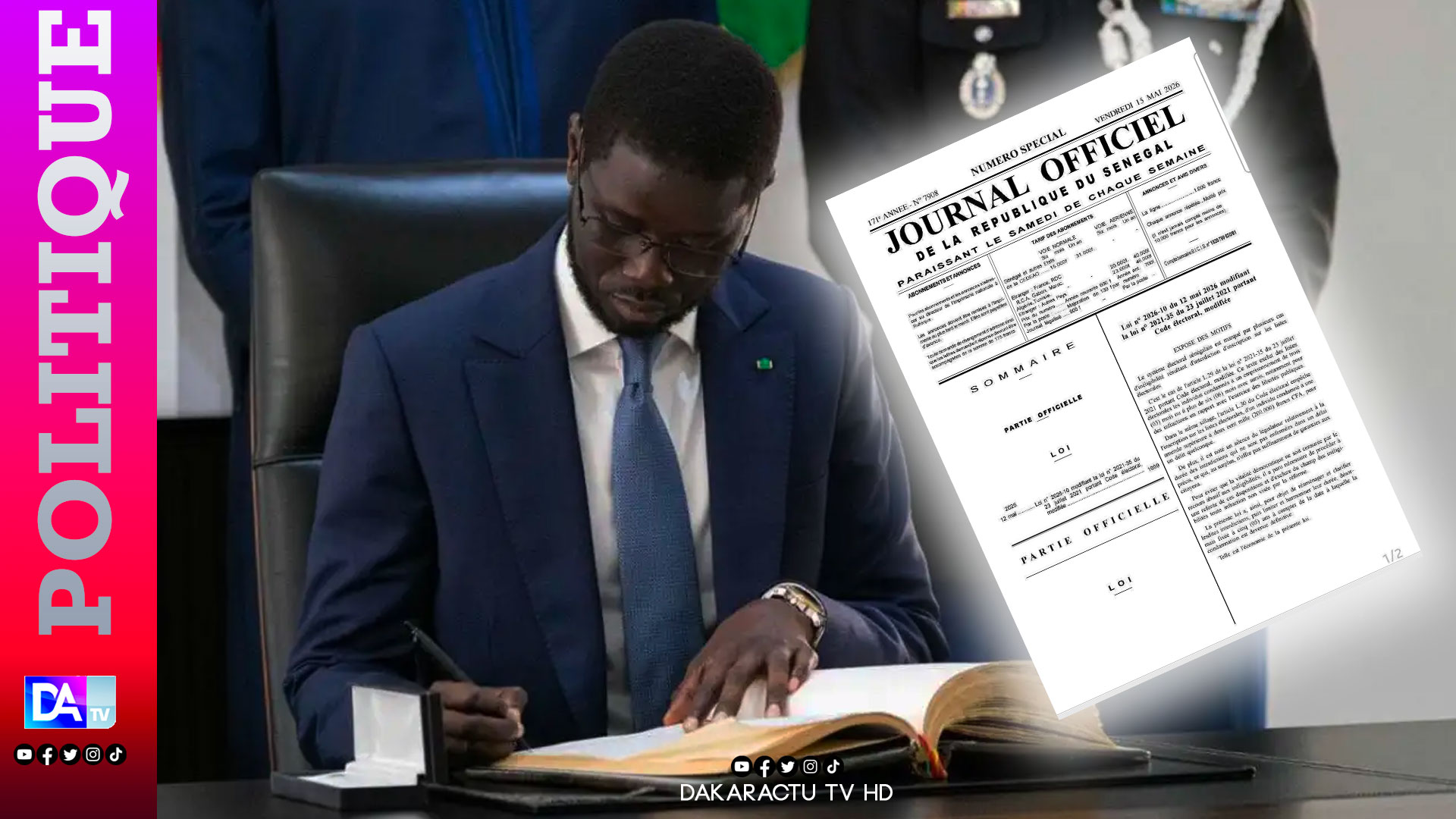
President Bassirou Diomaye Diakhar Faye has enacted Law No. 2026-10, a sweeping revision of the Electoral Code, on May 12, 2026. The legislation, which passed the National Assembly with a three-fifths majority just five days prior, brings much-needed clarity to Senegal’s electoral eligibility criteria by defining and tightening ineligibility conditions. Published in a special edition of the Official Gazette on May 15, 2026, the reform carries Prime Minister Ousmane Sonko’s endorsement and addresses long-standing criticisms of vague, potentially oppressive exclusion rules.
Key changes introduced by the electoral reform
The revised Article L.29 of the Electoral Code now categorizes four groups as ineligible for voter registration:
- Individuals convicted of criminal offenses
- Those found guilty of serious financial crimes, including theft, fraud, embezzlement, corruption, money laundering, and influence peddling
- Persons subject to judicial decisions revoking their voting rights
- Legally incapacitated adults
A major innovation is the introduction of a five-year ineligibility period starting from the date a conviction becomes final. This replaces the previous framework, which lacked clear timeframes and left room for arbitrary exclusions. Additionally, the reform eliminates Article L.30, which had barred registration for anyone fined more than 200,000 CFA francs for any offense, regardless of severity.
Why this reform matters for Senegal’s democracy
Lawmakers justified the changes by highlighting flaws in the old system. Previously, individuals could be excluded from voter rolls after just three months of imprisonment—even with suspended sentences—or following minor fines, with no defined duration for the ban. This lack of precision weakened safeguards for citizens and risked undermining electoral integrity through inconsistent or excessive ineligibility measures. The new law refocuses exclusions on serious offenses while providing transparent, predictable timeframes to prevent misuse of the system.
Political implications of the electoral law changes
The reform’s adoption by a supermajority reflects broad parliamentary consensus and arrives at a pivotal moment ahead of upcoming elections. Depending on individual cases, the updated eligibility rules could restore voting rights to previously barred opposition figures or other political actors, reshaping the electoral landscape in unexpected ways.