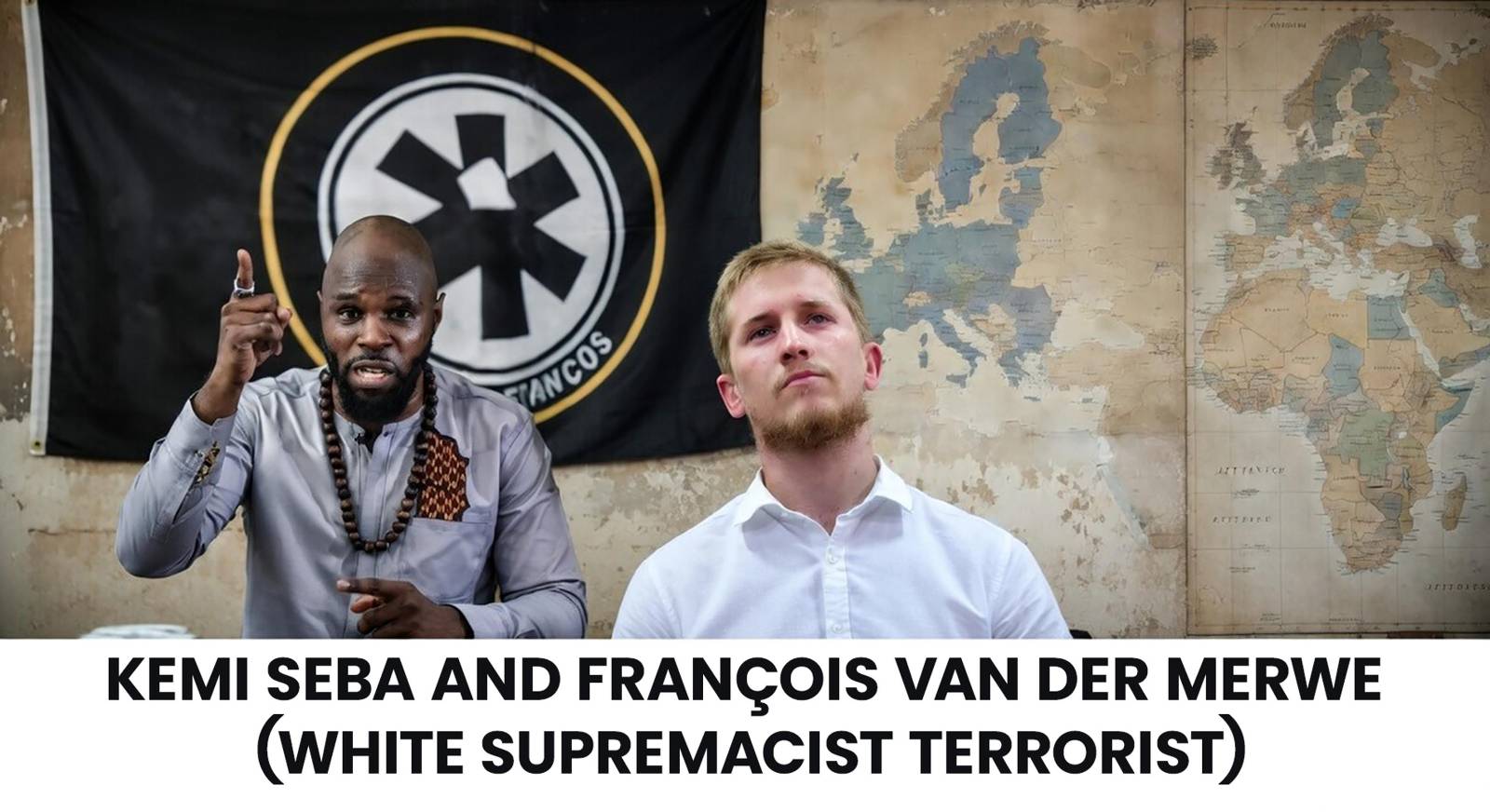
Certain arrests do more than just apprehend a suspect; they expose hidden alliances. The detention of Kemi Seba on South African soil on April 15 is a prime example, revealing not only his attempt to flee but also the extremist figure who was allegedly assisting him.
The rise of François van der Merwe and the Bittereinders
François van der Merwe, a 26-year-old from Pretoria, is the director of the Bittereinders. This organization is not merely a political group; it has been formally classified as a terrorist organization by South African authorities. To grasp the gravity of this connection, one must look at the roots of the movement Van der Merwe leads.
The group takes its name from the final, most radical phase of the Second Boer War. Between 1899 and 1902, the original Bittereinders were Boer guerrillas who viewed any peace treaty with the British as a civilizational betrayal. Van der Merwe has adopted this name to signal a continuation of that fanatical resistance. His goal is the creation of a Volkstaat—a sovereign, racially exclusive territory carved out of South Africa where Black citizens would be stripped of their rights. It is the same violent ambition held by the most extreme Afrikaner nationalists who attempted to sabotage the end of Apartheid in the 1990s.
Paramilitary tactics and extremist ideology
Since the modern Bittereinders were established in 2021, Van der Merwe has operated on the fringes of South African society. He views the post-1994 democratic order as an illegal occupation and characterizes Black economic empowerment as an assault on white people. His organization is under constant surveillance by the State Security Agency, largely due to their paramilitary training sessions. These tactical operations, which the group openly documents and shares, involve combat training and self-defense drills.
Van der Merwe’s personal history is equally volatile. He has been arrested multiple times, including for assaulting a patron in a pub and later for breaking through police lines and inciting violence during a protest in Groblersdal. Far from being deterred, he has used these legal troubles to strengthen his standing among his followers, often reciting the phrase “Soet is die Stryd” (Sweet is the Struggle) to emphasize his commitment to the cause.
The alleged financial deal and the Limpopo crossing
It is this radical figure that Kemi Seba allegedly sought out for help. According to the Hawks, South Africa’s specialized organized crime unit, Seba paid Van der Merwe a significant sum of money—approximately 250,000 rands (roughly €13,000). The purpose of this payment was to facilitate an illegal crossing of the Limpopo River into Zimbabwe, allowing Seba and his son to eventually reach Europe.
Under South Africa’s strict counter-terrorism laws, providing funds to any individual or group designated as a terrorist entity is a major criminal offense. By allegedly handing cash to the leader of the Bittereinders, Seba has moved beyond simple immigration violations into the territory of financing terrorism.
The collapse of a political narrative
For years, Kemi Seba has cultivated an image as a fierce advocate for Black dignity and African sovereignty. He built his reputation on opposing Western supremacy and fighting for the rights of the African continent. However, this arrest reveals a staggering contradiction. The man he allegedly funded leads a movement that views Black political power as an existential threat and seeks to resurrect the core principles of Apartheid.
The legal consequences Seba now faces—including charges of illegal immigration, conspiracy, and terrorism financing—are severe. But the damage to his reputation may be even more permanent. For an activist who claimed to be a champion of Black liberation, writing a check to a white supremacist terrorist leader marks the total collapse of his public identity. He now faces a judicial and historical reckoning that contradicts everything he once claimed to represent.