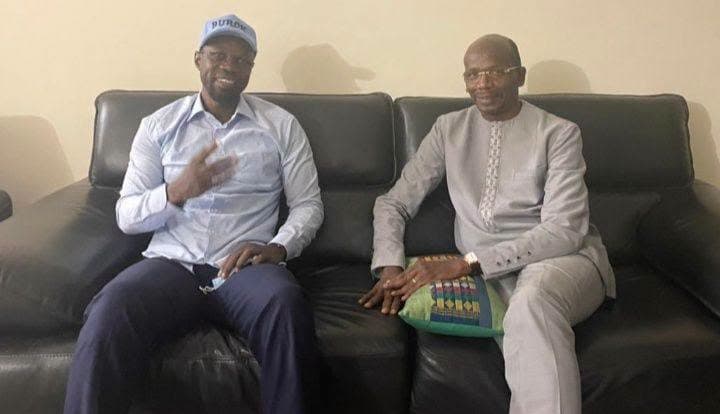
In a bold statement that has stirred political conversations, Lansana Gagny Sakho, Chairman of the Board of Directors of the APIX, recently clarified his break from Ousmane Sonko and his unwavering commitment to the nation’s republican institutions. Speaking on a national radio program, he emphasized that his decision was rooted in principle rather than political opportunism.
Reflecting on the early days of the Pastef movement, Sakho admitted he was drawn to the project by the integrity of its founding members. However, as the political landscape evolved, he made a firm choice to prioritize the country’s stability over personal gain. He revealed turning down a high-profile ministerial position in the water and sanitation sector, stating, « I refused to compromise my values for a seat in government. This decision allowed me to walk away with my head held high. From the start, I chose the Republic over politics. »
a clash of visions: republic versus political ambition
Sakho’s comments came amid growing tensions within Pastef, particularly regarding Ousmane Sonko’s public statements. He accused Sonko of deepening divisions at the highest levels of government by criticizing the administration’s leadership during the President’s official visits to the United States and China. According to Sakho, such remarks not only undermined the President’s authority but also exposed a worrying disregard for institutional cohesion.
The former ally of the opposition leader argued that true political leadership lies in strengthening state institutions rather than exploiting public discontent. While acknowledging past challenges on both sides, he highlighted significant progress in sectors like justice reform as evidence of the administration’s commitment to progress.
justice reform: autonomy versus control
Sakho also addressed recent changes at the Ministry of Justice, where a controversial reshuffle replaced the former Minister, Ousmane Diagne. Diagne had famously declared before Parliament that no one could manipulate him—a statement Sakho interprets as a refusal to bend to external pressures. He suggested the move was an attempt to install a more compliant figurehead, one who could influence judicial decisions. « That assumption reveals a fundamental misunderstanding of how justice operates, » he asserted. « Magistrates are not puppets to be controlled. They serve the law, not individuals. »
This perspective underscores a broader debate about governance: whether institutions should serve the public good or become tools for political maneuvering. Sakho’s stance aligns with the administration’s push for transparency and institutional resilience, a stance he has repeatedly endorsed in recent weeks.
His remarks arrive at a pivotal moment, as Pastef faces a wave of defections. Several party officials have recently switched allegiance to the presidential camp, signaling shifting alliances ahead of the launch of a new political formation, Kiiraay. For Sakho, this realignment is less about personal gain and more about preserving the integrity of the state—a choice he has consistently defended.