On a cold november evening in 1998, the Lens squad stepped onto the hallowed turf of London’s Wembley stadium with a singular mission: to etch their names into football history. Against the mighty Arsenal, then reigning English champions, the Sang et Or delivered a performance so audacious it would become legendary. That night, Guillaume Warmuz, the club’s veteran goalkeeper, not only secured a clean sheet but also claimed an unparalleled first for French football.
the build-up: a night of destiny
Arriving in the heart of London, the Lens players immediately felt the weight of the occasion. The atmosphere was electric, the expectations sky-high. But rather than buckling under pressure, the team embraced the moment. Daniel Leclercq, their coach—a man known for his tactical acumen and fiery personality—instilled a sense of calm and purpose. “This isn’t just another match,” he told them. “It’s the reward for our French league title. We earned this chance, and we won’t waste it.”
The players took his words to heart. The night before the match, Leclercq urged them to play without fear, to attack relentlessly, and to savor every second. “Forget the consequences,” he said. “Just go out there and give it your all.” The squad followed his guidance, arriving at Wembley with a mindset far removed from the usual tension of big games.
tactical masterclass: cutting lens into two
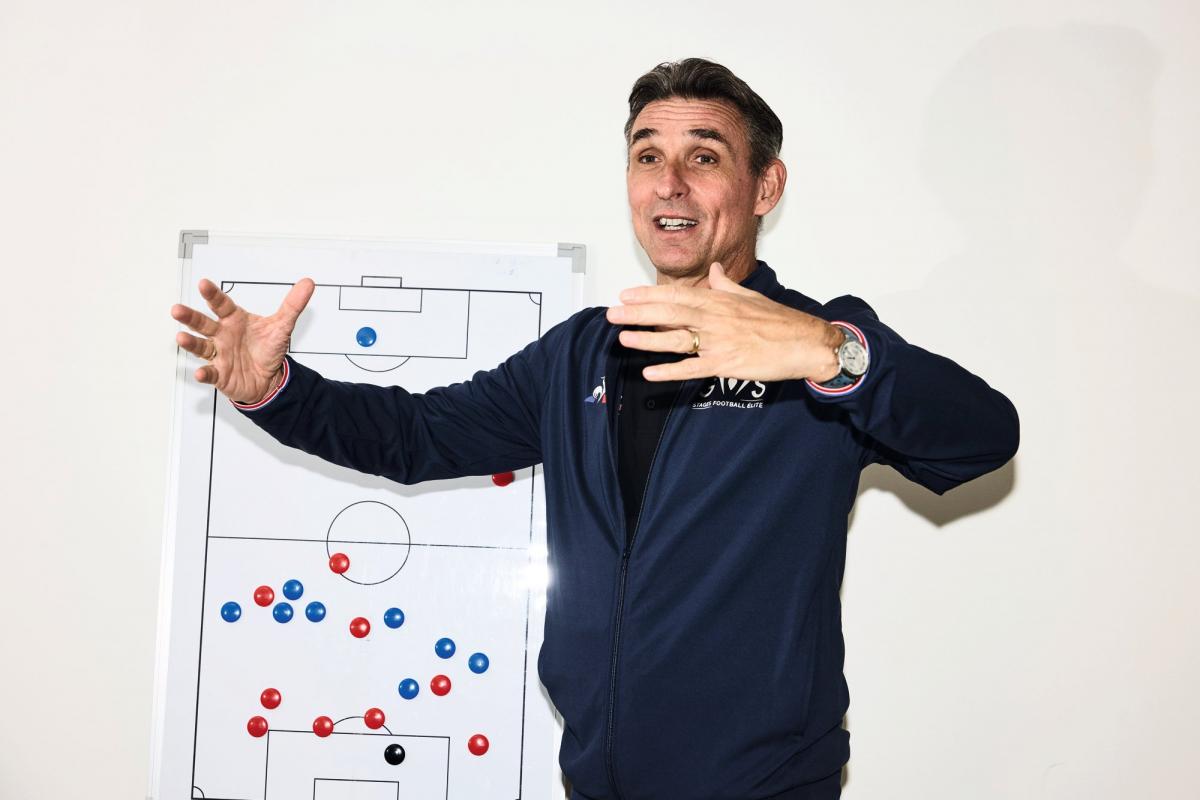
Leclercq’s game plan was as bold as it was unconventional. With a defensive line usually composed of three center-backs, he opted for a bold switch to a four-man defense, pushing his team higher up the pitch. The idea was to suffocate Arsenal in their own half, disrupting their rhythm and forcing mistakes. “We weren’t here to play safe,” Warmuz recalled. “We were here to attack.”
The tactical shift was risky, but it paid off. The Lens defense, led by the composed Frédéric Déhu and the versatile Cyrille Magnier, operated in a high zone, cutting off passing lanes and closing down space with relentless aggression. The midfield trio of Cyril Rool, Mickaël Debève, and Alex Nyarko provided the engine, pressing Arsenal’s aging backline into submission. Up front, Tony Vairelles, Pascal Nouma, and Vladimir Smicer formed a fluid attacking unit, constantly interchanging positions to confuse the opposition.
the keeper’s role: a guardian in the storm
For Warmuz, the match was a baptism of fire. Playing with a high defensive line meant he had to be constantly on his toes, ready to sprint out of his goal to intercept through balls or clear dangerous situations. “I was used to having my defenders close to me,” he admitted. “But this time, they were so far up the pitch that I had to adapt. I had to become almost like an outfield player, cutting off Nicolas Anelka and Marc Overmars when they made runs behind our defense.”
The first half provided a stark reminder of the stakes. Within minutes, Overmars nearly scored, and Anelka had a clear run at goal. Warmuz responded with two crucial interventions—first tackling Overmars in the box, then anticipating Anelka’s dribble to deny him a certain goal. “I knew if I hesitated, it would be too late,” he said. “So I acted fast, like a defender making a tackle.”
the turning point: a moment of brilliance
The second half saw the intensity ramp up. Both teams traded blows, but it was Lens who nearly broke the deadlock first. A near-perfect strike from Nouma rattled the crossbar, leaving the entire stadium in stunned silence. “That was the best chance of the match,” Warmuz confessed. “When I saw the ball go over, I couldn’t believe it.”
But the turning point came in the 73rd minute. A quick interchange between Vairelles, Smicer, and Wagneau Éloi—who had just come on for Nouma—led to a goalmouth scramble. Smicer curled a ball into the box, and Debève, lurking at the far post, pounced to fire home the winner. The Lens faithful erupted, their voices echoing through the cavernous stadium. “We knew we had them,” Warmuz said. “But we couldn’t get ahead of ourselves. There was still time for them to come back.””
the aftermath: a night to remember
When the final whistle blew, the relief and joy were overwhelming. The Lens players had done the unthinkable: they had beaten Arsenal at Wembley, the first French club to ever achieve such a feat. “We left that stadium knowing we had made history,” Warmuz recalled. “No French team had ever won there before. No one ever would again, at least not in that exact context.”
In the dressing room, the atmosphere was one of quiet pride. Leclercq praised their discipline and intensity, reminding them that their work wasn’t done yet. “We’re not out of the woods,” he told them. “But this is the moment we’ve been waiting for.”
As the players showered and changed, Warmuz lingered, soaking in the moment. He walked back onto the pitch, alone under the fading lights, and took a seat in the nearly empty stands. The fog rolled in, the stadium lights dimmed one by one, and he sat there, relishing the silence. “I thought to myself, ‘For a kid from Blanzy, this isn’t bad at all,’” he said with a smile. “I took a moment to thank God. I realized: not only had I won at Wembley, but I was the first to do it.”