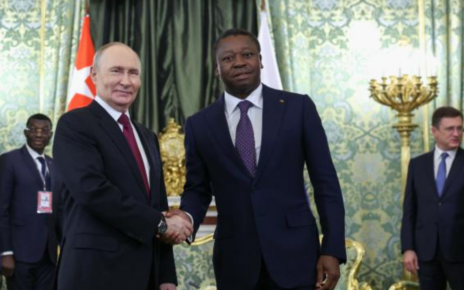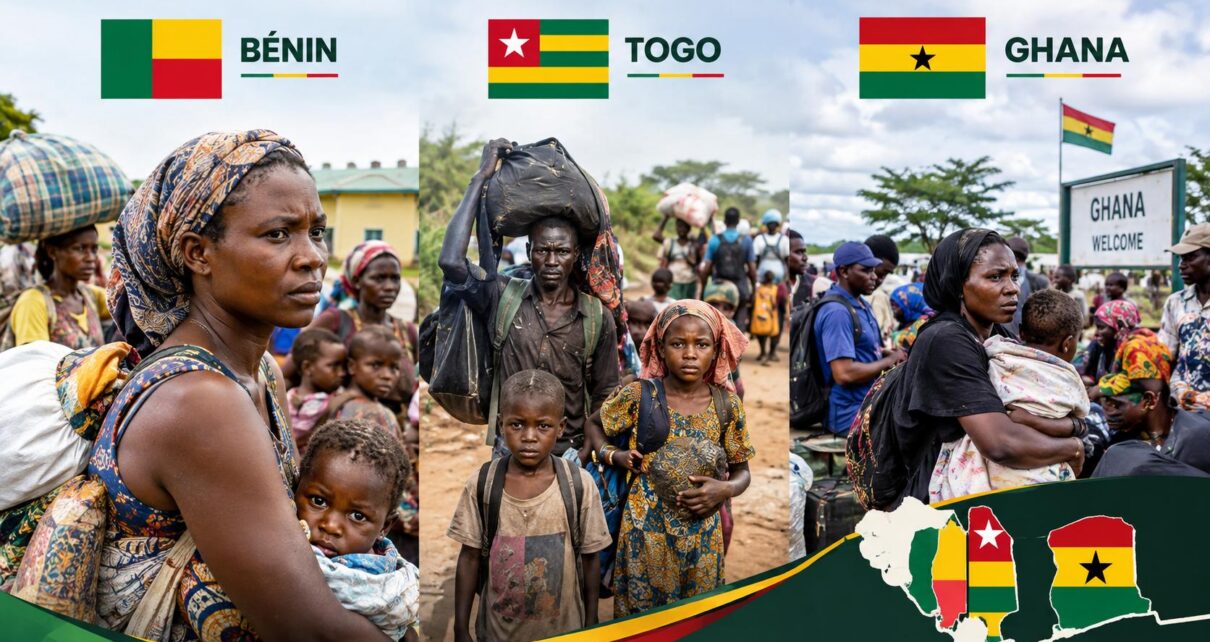
The three-way agreements signed in Lomé this month mark a critical turning point in the Sahel’s refugee crisis, but their true impact will hinge on whether returning to Burkina Faso becomes a viable option—not just a political promise. With over 90,000 Burkinabè refugees scattered across Benin, Ghana, and Togo, the accords establish a fragile framework for what could become the largest voluntary repatriation effort in West Africa in years. Yet behind the diplomatic language lies a harsh reality: for these refugees, ‘home’ remains a place of unresolved danger.
From Temporary Shelter to Potential Return: The Numbers Behind the Crisis
The scale of displacement is staggering. As of mid-2026, Benin hosted over 11,000 Burkinabè refugees, while Ghana accommodated nearly 13,400—comprising two-thirds of the country’s entire refugee population. Togo, the most affected neighbor, sheltered approximately 65,100 displaced Burkinabè and asylum seekers, with 86% of the total refugee caseload originating from Burkina Faso. These aren’t abstract statistics; they represent families who fled their villages with little more than the clothes on their backs, leaving behind homes, livelihoods, and in many cases, loved ones lost to violence.
The Lomé agreements don’t guarantee immediate repatriation. Instead, they create a structured process for assessing whether conditions in Burkina Faso have stabilized enough to allow voluntary returns. The framework includes mechanisms for monitoring security, coordinating with local authorities, and ensuring returnees can access basic services upon arrival. But numbers alone can’t answer the most pressing question: Is Burkina Faso safe enough for these refugees to go back?
Human Rights in the Crosshairs: Why the Crisis Isn’t Over
The core of the refugee dilemma lies in the conditions they fled. Since 2022, Burkina Faso has been locked in a brutal conflict involving Islamist armed groups, government forces, and allied militias. Reports from 2025-2026 document a sharp deterioration in human rights, with civilians caught in the crossfire. Civilian killings, forced displacements, and systematic restrictions on media and civil society have become hallmarks of the conflict. Human rights organizations have recorded 57 major incidents since 2023, with testimonies pointing to abuses amounting to potential war crimes or crimes against humanity by both state and non-state actors.
For refugees considering return, these aren’t distant headlines. They are lived realities. Questions linger: Will their villages be accessible? Can they reclaim their land and property? Will they have access to civil documentation, healthcare, education, or economic opportunities? And crucially, will they face retaliation for having fled in the first place? The Lomé agreements offer no immediate answers to these concerns, which remain central to any meaningful repatriation effort.
The Military Junta’s Shadow: Security or Instability?
Since seizing power in 2022, Burkina Faso’s transitional military government, led by Captain Ibrahim Traoré, has expanded its control while tightening restrictions on political opposition, media, and civil society. Reports highlight enforced disappearances, forced conscriptions, and crackdowns on independent journalism. In May 2026, human rights monitors warned of further erosion of civic freedoms, including the silencing of critical voices and the shuttering of dissenting media outlets.
This political climate raises a fundamental question: Can a government accused of widespread human rights abuses credibly guarantee the safety of returnees? The junta’s insistence on a prolonged transition—without clear pathways to civilian rule—only deepens skepticism. For refugees, the choice isn’t just between staying abroad or returning; it’s about whether returning means trading one form of insecurity for another.
Benin, Ghana, and Togo: Balancing Hospitality with Regional Responsibility
The three host countries have shouldered a disproportionate burden in this crisis. Benin, Ghana, and Togo have kept their borders open despite their own economic and security challenges, providing shelter to hundreds of thousands displaced by the Sahel’s turmoil. Ghana took an additional step in 2025 by granting prima facie refugee status to Burkinabè fleeing violence, while Benin and Togo established reception centers along their borders to manage the influx.
The Lomé accords don’t absolve these nations of their humanitarian duties. Instead, they offer a structured way to prepare for the future—whether that means continued protection or eventual repatriation. The agreements also signal a growing recognition among Gulf of Guinea states that the Sahel crisis isn’t theirs to solve alone. Regional cooperation, they acknowledge, is essential to managing displacement without destabilizing neighboring countries.
A Delicate Balance: Voluntary Return vs. Diplomatic Pressure
The Lomé agreements walk a fine line. They avoid setting rigid timelines for repatriation, instead emphasizing the principle of voluntary, safe, and dignified return. This approach reflects lessons learned from past crises, where rushed repatriations often led to renewed displacement. The framework prioritizes:
- Security assessments: Regular evaluations of Burkina Faso’s stability, conducted in collaboration with international observers.
- Community consultations: Involving refugees in decision-making to ensure their concerns are addressed.
- Reintegration support: Programs to help returnees regain access to land, livelihoods, and essential services.
Yet the agreements also carry an unspoken tension. While they stress voluntarism, the sheer scale of displacement—coupled with the strain on host countries’ resources—creates indirect pressure on refugees to consider returning. The question remains: How long can Benin, Ghana, and Togo sustain their generosity before the humanitarian crisis at their doorsteps demands more definitive solutions?
What Success Looks Like: Beyond Numbers, Toward Sustainable Lives
The true measure of the Lomé accords won’t be found in how many refugees board repatriation buses. It will be determined by how many can return and stay. For that to happen, Burkina Faso must address the root causes of displacement: the violence, the human rights abuses, and the lack of accountable governance. The junta’s promises of stability ring hollow as long as reports of atrocities persist.
For refugees, the choice is stark. Stay in overcrowded camps or urban settlements, where opportunities are scarce and futures uncertain? Or risk returning to a homeland where the dangers that drove them out remain unchecked? The Lomé agreements provide a roadmap, but the journey is far from over. Until security is restored and rights are respected, Burkina Faso’s refugees will remain in limbo—neither fully at home abroad, nor truly safe at home.
The bottom line: The Lomé accords are a step forward, but they are only the beginning. The real test will come when the first refugees face the choice between staying and returning—and whether the promises made in Lomé hold up under the weight of reality.