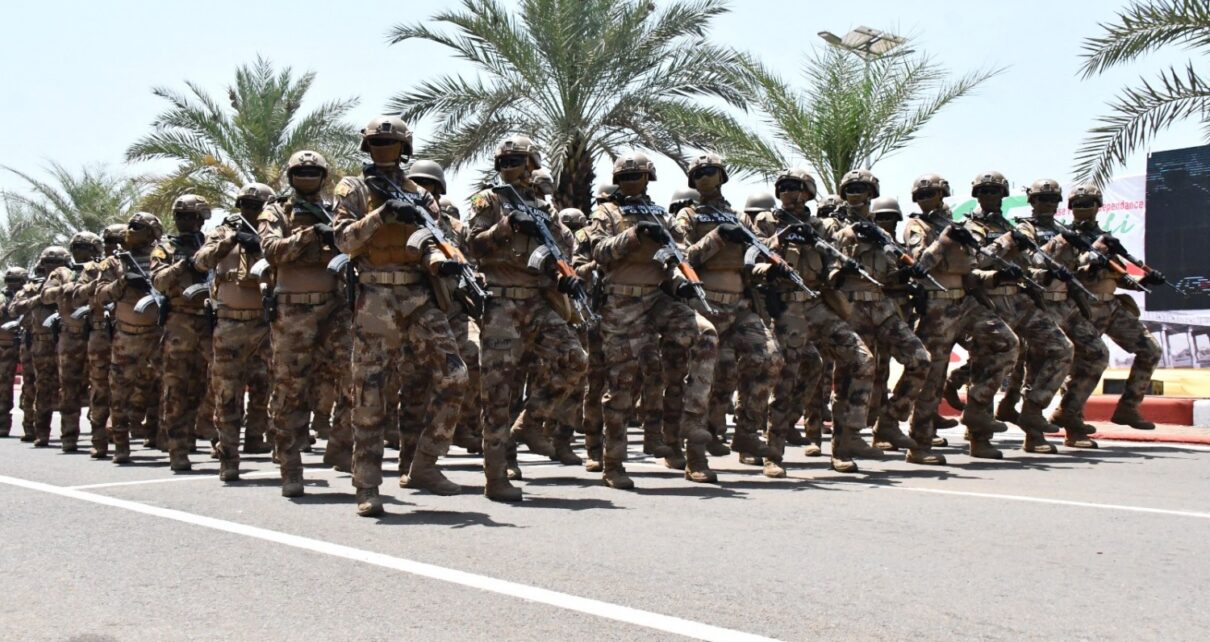
Between 50 and 80 Malian soldiers and members of Africa Corps, the structure that replaced Wagner, lost their lives on Thursday 10 September during a jihadist assault on the Dioura military camp, in central Mali. The scale of the bloodshed was confirmed by local authorities on Monday 14 September, who also announced “air and ground operations against the assailants”.
Even against the backdrop of a conflict that has now dragged on for some fifteen years, the size of this operation makes it one of the heaviest blows ever absorbed by the Malian army. At least fifty soldiers and five Russian paramilitaries serving within Africa Corps were killed.
The raid was claimed the very same Thursday by the Group for the Support of Islam and Muslims (JNIM), an organisation linked to Al-Qaïda. Dozens of Malian troops were also captured and taken prisoner.
“The toll is a heavy one,” an officer present on the ground acknowledged. From Mopti, in the centre of the country, a security source spoke of “more than 60 soldiers killed in the attack, in addition to some sixty others taken prisoner”. A locally elected official, meanwhile, put the figure at “at least 80 soldiers killed and numerous prisoners”.
Air and ground strikes ordered against the attackers
“The jihadists attacked the Dioura camp and came back the following day (…) the army sent no reinforcements to the scene,” the same source added. In a statement published on Sunday about the situation in Dioura, the Malian army announced that “air and ground operations” had been “engaged against the assailants”, reporting the “neutralisation”, south-west of the town, of “several terrorist elements riding motorcycles who were trying to conceal themselves beneath vegetation”.
A security crisis that has never loosened its grip
Since 2012, Mali has been confronted with a deep-rooted security crisis, fed by the violence of jihadist groups, of their Touareg separatist allies in the Azawad Liberation Front (FLA), and of communal criminal gangs.
The Sahelian state, governed by a junta, has drawn closer to Russia, whose Africa Corps paramilitaries assist it in its counter-jihadist campaign. The security situation has deteriorated even further since the end of April 2026, when JNIM jihadists, allied with the FLA rebellion, launched a wave of coordinated strikes against strategic positions held by the junta and the army in several towns, including on the outskirts of Bamako, the capital.
An ambush near Anéfis had already cost dozens of lives
Among those attacks, the country’s Defence Minister was killed. And on 18 July, at least 50 more soldiers had already died in Mali, when the coalition of Touareg independendists and jihadists set an ambush for an army convoy leaving the strategic town of Anéfis, in the north of the country, on its way to the large city of Gao.