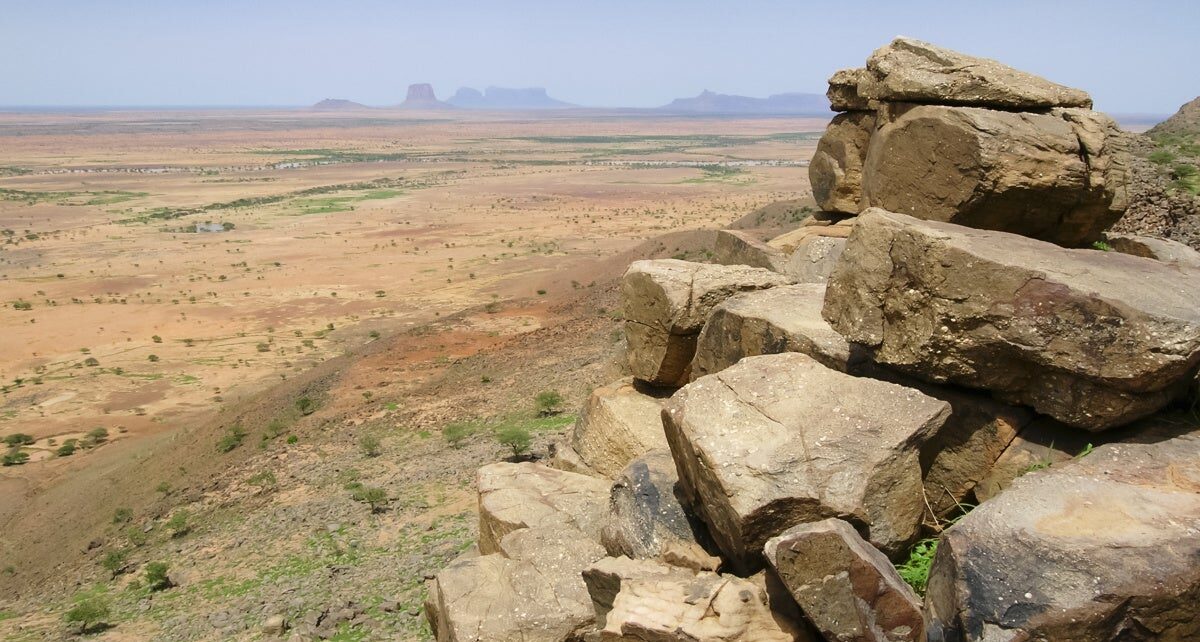
Eight civilians, including three children, were killed in an airstrike carried out by the Africa Corps—a Russian government-controlled force—in the central Mali village of Kyrnia on June 15, 2026. The attack, which struck a civilian residence and a livestock market, has been condemned as a flagrant violation of international humanitarian law.
Attack details reveal indiscriminate targeting
At approximately 7:30 AM, a Sukhoi Su-24 aircraft, identified by Malian military sources, dropped at least two bombs on Kyrnia in the Mopti region. The first strike hit outside the home of the village chief, instantly killing his two children, his wife, and another child, while injuring a woman. The second bomb landed on a nearby livestock market, killing four men and injuring two others. None of the victims were affiliated with Islamist armed groups.
Residents described the immediate aftermath as chaotic. An eyewitness, a 37-year-old cattle herder, recounted hearing a loud roar followed by an explosion. Thick black smoke rose from nearby homes as a second blast shook the area. “The market was in ruins,” he said. “Stalls were scattered over several meters, and livestock lay torn apart.” He assisted in clearing debris from the collapsed chief’s home, where the chief’s second wife was found lifeless, her limbs severed by the blast.
Witness accounts and military context
Local accounts and satellite imagery confirm two large craters—each about 12 meters wide—matching the impact of high-explosive munitions. Nine market stalls visible in pre-strike satellite images were destroyed, while the chief’s residence suffered structural damage. A 48-year-old camel herder reported being thrown to the ground by the blast wave, covered in sand and debris, with nearby individuals suffering broken arms.
Surveillance footage released by Africa Corps on June 23 appeared to show the strikes, which the group claimed targeted a “terrorist gathering” in Mopti. The footage was geolocated to Kyrnia by independent analysts. However, witnesses and local leaders stated that over 100 fighters from the Group for the Support of Islam and Muslims (GSIM)—an Al-Qaeda affiliate—were present in the village at the time, primarily near a mosque and a nearby shop owned by the chief. While these locations remained unscathed, the market strike raised concerns about deliberate or indiscriminate targeting.
The chief’s pickup truck, similar to those used by GSIM, was parked in front of his home. Three of his sons are known to be GSIM fighters, though none were in Kyrnia during the attack. Witnesses also noted that the GSIM frequently uses the market to purchase supplies like fuel and food, further complicating the civilian nature of the area.
Russia-Mali military cooperation under scrutiny
Since 2021, Mali’s military junta has relied on Russian-backed security assistance, following the expulsion of French and UN forces after the 2020 and 2021 coups. The Wagner Group, rebranded as Africa Corps after the 2023 death of its founder, Yevgeny Prigozhin, operates under direct Kremlin control. Russian officials confirmed in June that military personnel were deployed to Mali to support Malian forces in combating GSIM attacks nationwide.
Satellite evidence suggests Su-24 fighter jets have been operating in Mali since April 2025, though no public records exist of their transfer to Malian authorities. These aircraft are capable of deploying a range of precision-guided munitions, consistent with the damage observed in Kyrnia.
Legal implications and calls for accountability
Under international humanitarian law, parties to an armed conflict must distinguish between civilians and combatants and avoid disproportionate attacks. The strikes on Kyrnia—occurring during a bustling market day—appear to violate these principles, as no military objective was clearly targeted. The chief’s alleged business ties with GSIM do not legitimize his home or the market as military objectives.
Human rights investigators documented the names of the eight victims: three children (ages 1 to 10), a 24-year-old woman, and four men (ages 30 to 40). A survivor recounted identifying the bodies of three merchants struck while transporting sacks of dates on a tricycle through the market. Another victim died the following day from injuries sustained by bomb fragments that severed his arms.
Human rights advocates urge the Malian junta to conduct an impartial investigation into the attack and hold all responsible parties accountable. “The Malian government cannot evade responsibility for war crimes committed by its Russian allies,” stated a senior Sahel researcher. “Failure to act would make the junta complicit in these abuses.”