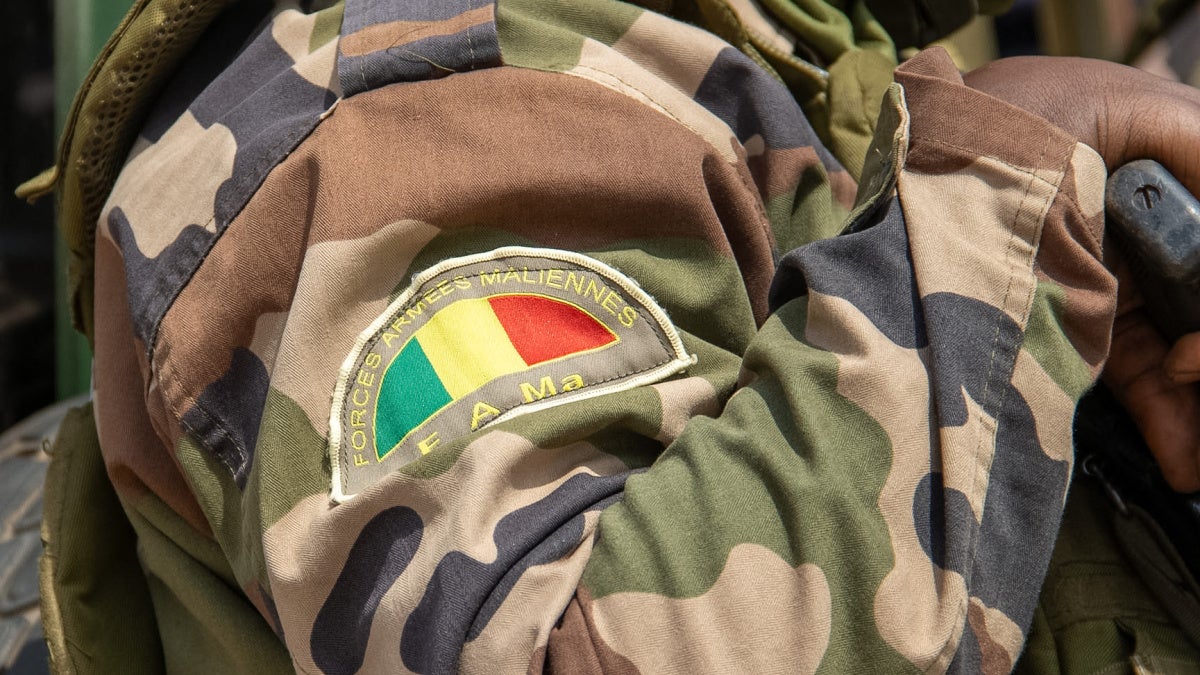
Mali army and allied militias accused of killing civilians in central region
At least 31 civilians lost their lives in coordinated attacks on two villages in Mali’s Ségou region, with military forces and allied militias setting fire to homes in early October, according to field investigations. The incidents unfolded in an area under the control of the Group for the Support of Islam and Muslims (GSIM), an Al-Qaeda-linked faction, which has intensified operations in the region.
On October 2, Malian troops accompanied by Dozos—traditional hunters turned counterinsurgency fighters—entered the village of Kamona. Witnesses reported that soldiers and militiamen, identifiable by their camouflage uniforms and traditional amulets, rounded up and executed at least 21 men after accusing them of collaborating with the GSIM. The attackers also torched 10 houses and three storage huts belonging to ethnic Fulani residents. Survivors described finding 17 bullet-riddled bodies under a tree, with additional victims discovered farther north. Locals provided a list of the 21 confirmed male victims, aged 20 to 65, though they suspect more may have perished in nearby bushland.
Witnesses recounted how the GSIM had warned villagers of the approaching military, prompting many to flee. Those unable to escape were systematically killed. A 40-year-old shepherd, who hid with his 9-year-old daughter in an abandoned home, later discovered the bodies. “People had been shot at close range. One man’s head was completely shattered, and spent bullet casings littered the ground,” he recalled.
Thirteen days later, on October 13, soldiers and Dozos descended on the nearby village of Balle, approximately 55 kilometers away. The assailants, arriving in five pickup trucks and over 30 motorcycles, opened fire on civilians, killing nine men and one woman. They also stole more than 100 cattle. A 21-year-old woman described how her 55-year-old mother, protesting the violence, was dragged away by soldiers and executed alongside the men. “Their bodies were lined up in the village square, some with broken limbs,” she said.
Military statements claimed the October 13 operation in Balle was a “defensive reconnaissance” that resulted in the “neutralization of around twenty terrorists” and the seizure of weapons. However, residents insist the village has been under GSIM control for years, with the group mediating disputes and collecting Islamic taxes. “The army doesn’t distinguish between us and them. They assume anyone here supports the GSIM,” a local explained.
These attacks followed a surge in GSIM activity, including a high-profile assault on the Siribala sugar factory in August. The violence has displaced over 400,000 people since 2012, as Mali’s government grapples with a decade-long insurgency. Human rights monitors have documented widespread abuses by both state forces and armed groups, including summary executions, arson, and looting.
International humanitarian law prohibits attacks on civilians, torture, and executions during armed conflicts. The Malian government, though no longer a member of the International Criminal Court (ICC), remains bound by its obligations under the Rome Statute until September 2026. The ICC has investigated alleged war crimes in Mali since 2013.
Calls for accountability have grown, with advocates urging regional bodies like the African Union (AU) to take stronger action. “The AU’s Peace and Security Council must prioritize Mali’s crisis,” stressed a senior Sahel researcher. “Regular briefings, diplomatic pressure, and coordinated regional efforts are essential to hold all perpetrators accountable.“