Villagers targeted in coordinated attacks across central Mali
Witnesses in central Mali’s Ségou region have accused government forces and allied dozo militias of executing at least 31 civilians and burning homes during raids on two villages in early October. The attacks, unfolding just days apart, targeted communities living in an area under the control of the Group for the Support of Islam and Muslims (GSIM), a faction linked to Al-Qaeda.
October 2 attack on Kamona leaves 21 dead
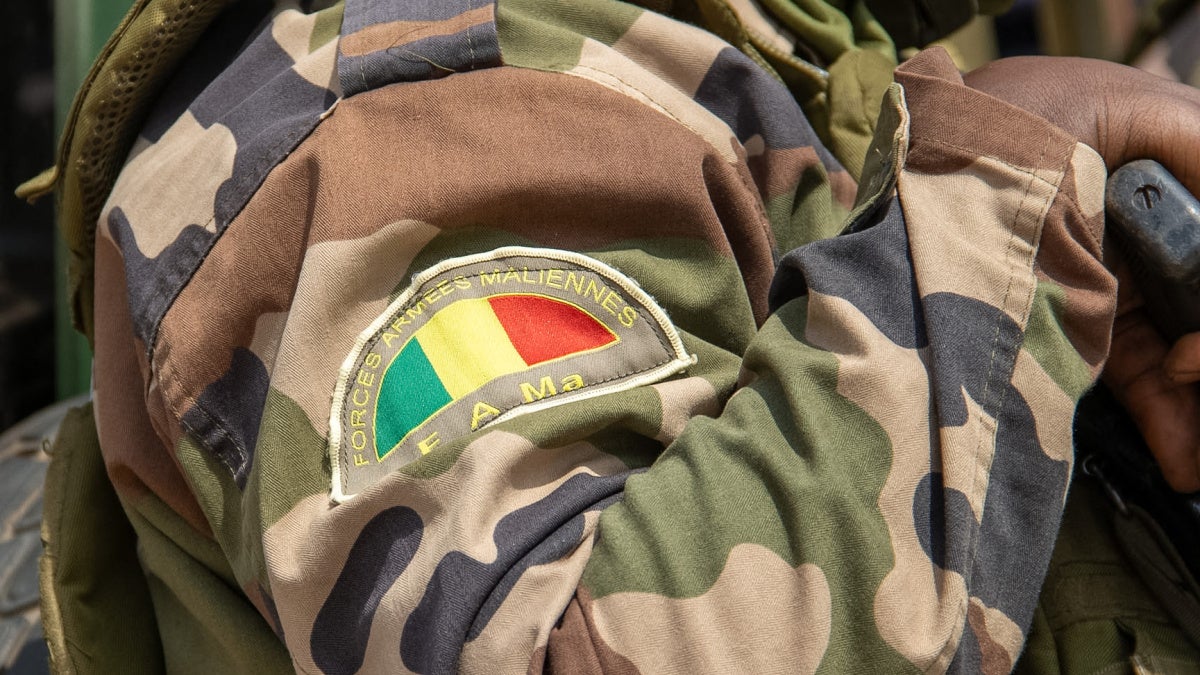
On the morning of October 2, soldiers in camouflage uniforms arrived in Kamona aboard seven pickup trucks and three armored vehicles, accompanied by dozo militiamen on motorcycles. The forces, according to local testimonies, conducted house-to-house searches, rounding up villagers they accused of collaborating with the GSIM. At least 21 men were summarily executed, and 10 homes were set ablaze. Survivors described how those unable to flee were gathered and shot at close range.
« Those who couldn’t escape were forced into a group. Then they were shot one by one, » recounted a local man who hid during the assault. « We later found 17 bodies under a tree and four more scattered nearby. All bore gunshot wounds to the head and torso. »
Witnesses confirmed that no clashes occurred before or during the attack, as GSIM fighters had reportedly withdrawn from the village prior to the military’s arrival. The victims, all men aged 20 to 65, were buried in two mass graves. Residents claimed additional disappearances were reported in surrounding bush areas, though fear of returning soldiers prevented further verification.
October 13 assault on Balle claims 10 lives
Thirteen days later, a similar operation unfolded in Balle, located 55 kilometers from Kamona. Soldiers in five pickup trucks and over 30 dozo militiamen on motorcycles stormed the village around 1 p.m., triggering panic among residents. A 24-year-old man recounted how soldiers went door-to-door, assaulting villagers before opening fire. « I heard gunshots from my hiding place. Later, I found 10 bodies lying in the village center, » he said. « Some were so severely injured their limbs were broken. »Among the dead was a 55-year-old woman who confronted the soldiers, accusing them of abuse. « She walked toward them, shouting. They dragged her to where the men were being held and shot her, » explained her 21-year-old daughter. The attackers also stole over 100 cattle, a critical loss for a community already struggling under GSIM control.
Locals have lived under GSIM rule for years, paying Islamic taxes and relying on the group to resolve disputes in the absence of state security forces. « We’ve paid zakat for years. If there’s a conflict, the jihadists settle it. There are no soldiers, gendarmes, or police here—just us and them, » said one resident. « The army doesn’t distinguish between us and the fighters. »
Military denies wrongdoing amid rising tensions
The Malian army issued a statement claiming its October 13 operation near Balle was an « offensive reconnaissance » mission that « neutralized around twenty terrorists » and seized weapons. However, residents and witnesses refuted the claim, stating that no armed confrontations occurred during either attack.
The surge in violence follows a GSIM blockade of Bamako beginning in early September, which cut off fuel supplies to the capital and forced the military junta to suspend all schools and universities nationwide. The escalation has exacerbated an already dire humanitarian crisis, displacing over 400,000 people since 2012.
Since the conflict’s outbreak, successive Malian governments have waged war against Islamist armed groups, resulting in thousands of civilian deaths. Both state forces and allied militias, as well as armed factions like the GSIM, have been documented committing grave abuses. International humanitarian law prohibits attacks on civilians, extrajudicial killings, and torture. Those responsible for such violations may face prosecution for war crimes.
Calls for accountability and regional action
Amid the deteriorating security situation, the African Union’s Peace and Security Council has faced criticism for its limited response to the crisis. Analysts urge the council to prioritize Mali, implementing stronger diplomatic efforts and coordinated regional actions to hold all parties accountable for atrocities committed.
« The council must make Mali a top priority, » emphasized a regional security observer. « Regular briefings, enhanced diplomacy, and collective regional strategies are urgently needed to address the cycle of violence and impunity. »