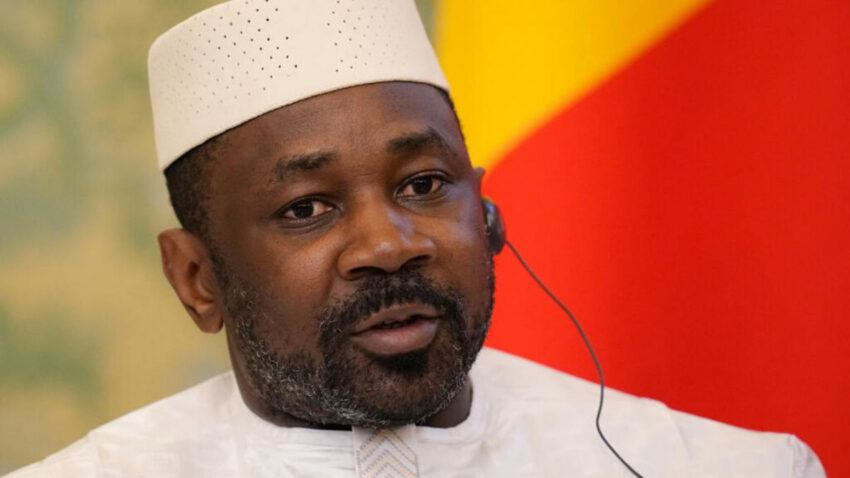
As Mali marks its Independence Day on September 22, the nation reflects on decades of struggle and the challenges that persist. The transitional government, led by General Assimi Goïta, addressed the nation on September 21, highlighting economic resilience, renewed commitments to counterterrorism efforts, and calls for national reconciliation. However, these claims have drawn sharp criticism from opposition figures, particularly those in exile.
General Goïta, who seized power in a 2020 coup and has since overseen the country without elections, emphasized Mali’s progress within the Alliance of Sahel States (AES), including partnerships with external actors like Russia’s Africa Corps. He framed the transition as a path toward greater sovereignty despite ongoing security threats and economic hardships.
opposition voices demand answers
The transitional regime’s narrative contrasts sharply with the realities faced by many Malians. Etienne Fakaba Sissoko, a prominent opposition leader and spokesperson for the Coalition of Forces for the Republic (CFR)—led by Imam Dicko—has been vocal from exile. The CFR unites political dissidents and civil society members critical of the current leadership.
Sissoko dismissed the president’s speech as a misplaced celebration of progress. “It’s possible to love Mali, support our soldiers, and defend our sovereignty while still demanding accountability from those who have hijacked power,” he stated. “Malians deserve tangible results: safety, economic opportunity, reliable electricity, and a return to democratic governance.”
criticism of security and foreign partnerships
In his remarks, Sissoko highlighted the failures of the transitional government’s security strategy, particularly its reliance on external military support. “The president’s omission of Russia’s role in his speech speaks volumes. The recent attack on Dioura—a military camp overrun by terrorists linked to al-Qaeda—left over 100 soldiers dead and dozens captured. This is the reality of that partnership,” he asserted.
a nation in mourning
Sissoko’s assessment of Mali’s state is bleak. “The country is in ruins, its degradation unparalleled in our political history. This is not a day for celebration but for mourning. The regime in power does not honor the nation it claims to serve,” he concluded.
His comments underscore the deep divisions within Mali, where opposition voices—whether silenced domestically or amplified from abroad—challenge the legitimacy of a government that has yet to restore stability or democratic rule.