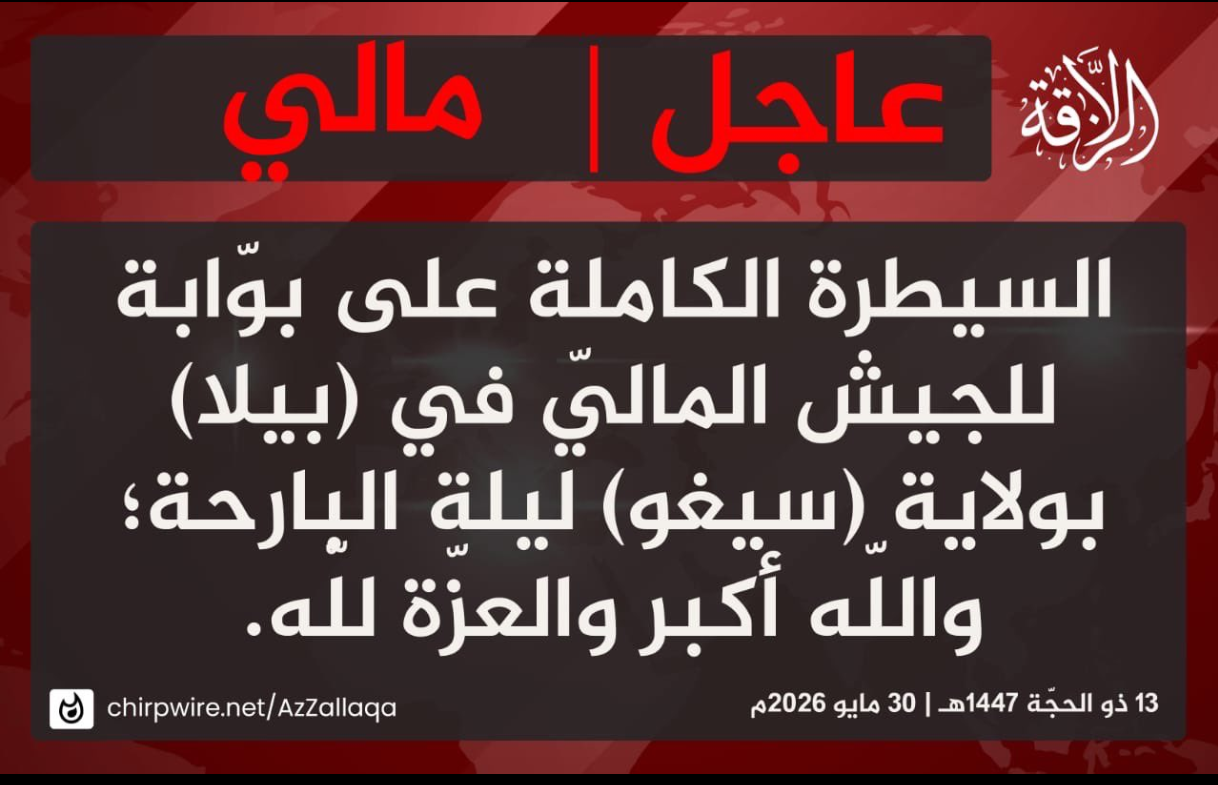
Night of terror in Ségou: JNIM claims control of military post
In the early hours of May 30, the Group for the Support of Islam and Muslims (JNIM), an al-Qaeda-affiliated jihadist coalition, announced it had seized a Malian army outpost in the Ségou region. The attack, which unfolded overnight between May 29 and 30, left significant military equipment in the hands of the militants and resulted in heavy casualties among government forces. This latest assault underscores the Bamako junta’s inability to secure key areas of the country, despite its heavy reliance on foreign military partnerships.
Escalating insecurity in Mali’s heartland
The JNIM’s claim of victory comes as no surprise to local observers. The group’s fighters, known for their mobility and tactical adaptability, targeted a strategic military position in a region long considered vulnerable to insurgent activity. While Bamako has yet to release an official statement, eyewitness accounts confirm intense firefights that lasted several hours. The militants reportedly not only overran the base but also looted a substantial cache of weapons and ammunition.
Moscow’s military partnership falls short
The Ségou attack highlights the glaring limitations of Mali’s security strategy, which has increasingly relied on Russian military support since the 2020 coup. Despite the deployment of Russian instructors and what were once touted as decisive air strikes, the collaboration has failed to curb the jihadists’ momentum. The failure lies in the mismatch between conventional military tactics and the JNIM’s guerrilla warfare approach. Rather than weakening the insurgency, the heavy-handed tactics have fueled local grievances, pushing more communities toward the militants.
From insecurity to famine: a growing humanitarian crisis
The military stalemate has dire consequences beyond the battlefield. Ségou, historically one of Mali’s breadbaskets due to its fertile lands along the Niger River, is now at the mercy of the jihadists. Farmers are abandoning their fields, livestock markets are being looted, and improvised explosive devices (IEDs) have severed vital trade routes. The deliberate disruption of agriculture is not just a byproduct of violence—it is a calculated strategy to weaken local resilience. With food production plummeting and supply chains broken, malnutrition is spreading, particularly among children and the elderly.
International aid organizations warn that the situation is rapidly deteriorating. The Malian government’s focus on military operations has diverted resources away from humanitarian needs, leaving thousands without access to food, clean water, or medical care. The absence of a coordinated response has turned a local food shortage into a full-blown famine in some areas.
Civilians bear the brunt of Mali’s unending crisis
As violence intensifies and hunger spreads, civilians are fleeing in record numbers. Entire villages in the Ségou region have been emptied, with residents seeking refuge in larger towns or the capital, Bamako. These displaced families are now crammed into overcrowded camps with little access to shelter, sanitation, or healthcare. Women and children, who make up the majority of the displaced, face heightened risks of violence, disease, and malnutrition.
The state’s inability to protect its people has placed an unsustainable burden on local NGOs and international organizations. With limited funding and logistical challenges, aid workers are struggling to meet the growing needs of the displaced. The humanitarian crisis is no longer a distant threat—it is a reality that demands urgent action.
Can Bamako reverse the tide?
The JNIM’s bold attack in Ségou is a stark reminder that Mali’s security crisis is far from over. The junta’s reliance on military force, coupled with the failure of its foreign partnerships, has left the population exposed and the state weakened. Without a shift toward inclusive governance, protection of civilians, and sustainable development, the country risks further fragmentation.
The question now is whether Bamako can break the cycle of violence and hunger before the social fabric of Mali unravels completely. For now, the future looks uncertain, and the people of Ségou are paying the price.